Best Bath for a Flapper Girl
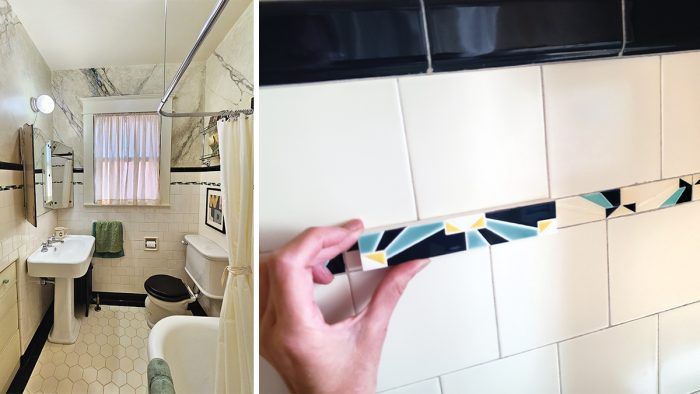
This bathroom offers a glimpse into the more glamorous past of an old house.

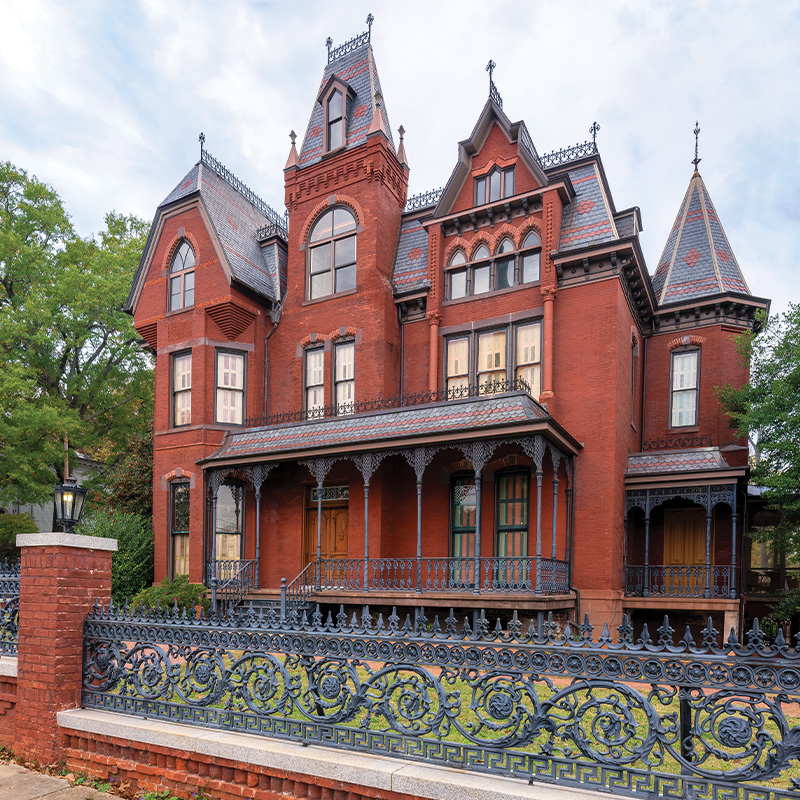
Our 1923 house is unassuming, a bungalow with Colonial Revival touches. When people step inside for the first time, though, they’re apt to look around in mild confusion and say, “It’s a mini Winchester Mystery House!” Remodeled and added onto in 1950 by the original owner, the house became a maze of strange closets and odd nooks. They’d stripped out the bungalow features: double-hung front windows, a built-in buffet, every inch of wood trim. A wall with French doors was knocked down, making the living and dining rooms an open space. Besides the remuddled mess, the house had fallen into disrepair. Yet we wanted to disentangle its history and restore it.
|
|
|
Beneath the Surface
The bathroom was the only room relatively untouched. Its sink and toilet had been replaced in 1950 but the originals were in evidence in a small attic bathroom. Tub, tile, and trim had survived. Leaks and neglect, however, had all but destroyed the walls and floor. In the shower, a poster hid a massive crack above tiles.
A previous owner had used rubber cement in lieu of new caulking. To make the bathroom usable, we quickly stabilized the subfloor, fixed the hole in the wall, caulked the tub, and repaired the grout. We also peeled off filthy wallpaper that extended onto the ceiling. That moment changed our plans….
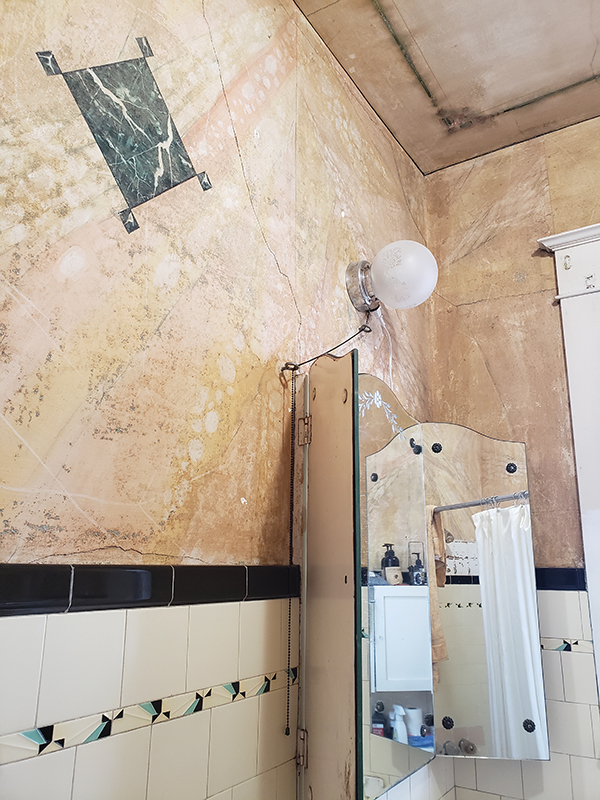
Beneath the ugly wallpaper, we found the remains of a hand-painted, faux-marble finish on the plaster. Stained with wallpaper glue, it was peeling and curling away from the wall. Even so, it was a breathtaking clue to what the house had been in the Roaring Twenties. I dubbed it my Flapper Girl bathroom. Eric and I knew we would restore rather than fully replace it.
|
|
|
Prioritizing Projects
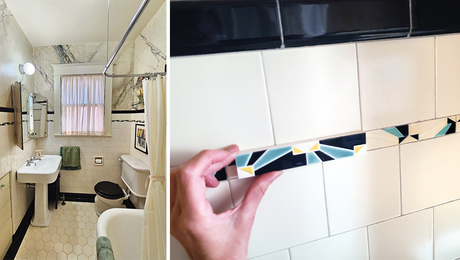
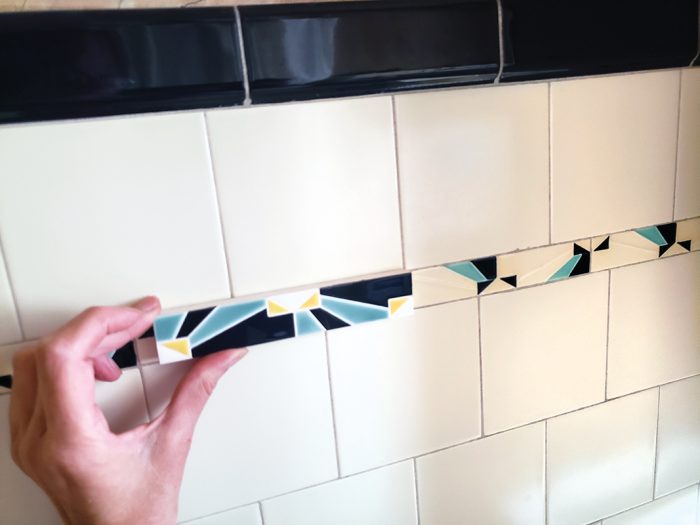
It would be years before we got to it. The kitchen needed immediate attention; the exterior needed work; we’d have to put a new bath upstairs before we could dismantle this one. When we were ready, knowing we’d have to virtually gut the room, we hesitated, as we couldn’t bear to lose the Art Deco accent tile.
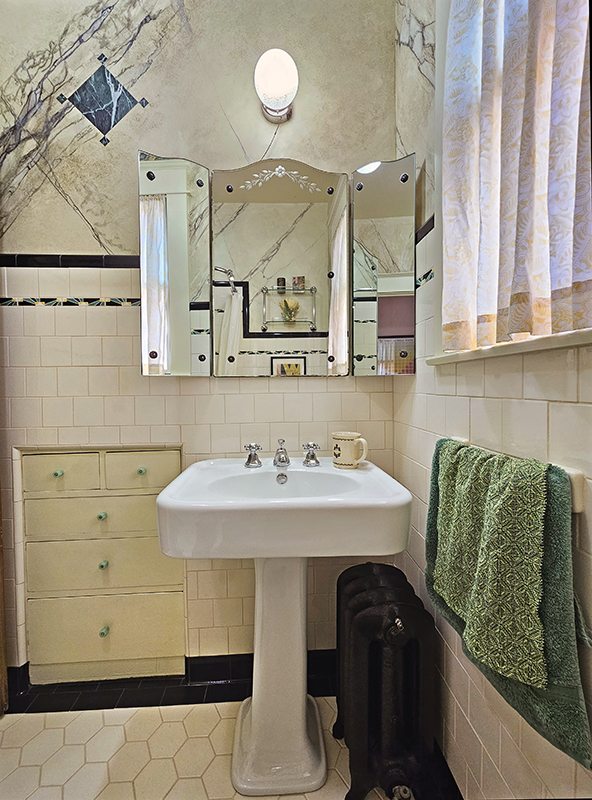
Just when we accepted that we’d have to make do with something similar, a friend stumbled across our exact tile pattern being reproduced by Mission Tile West, in California. Game on! Mission Tile West helped us conceptualize the room, addressing several design issues.
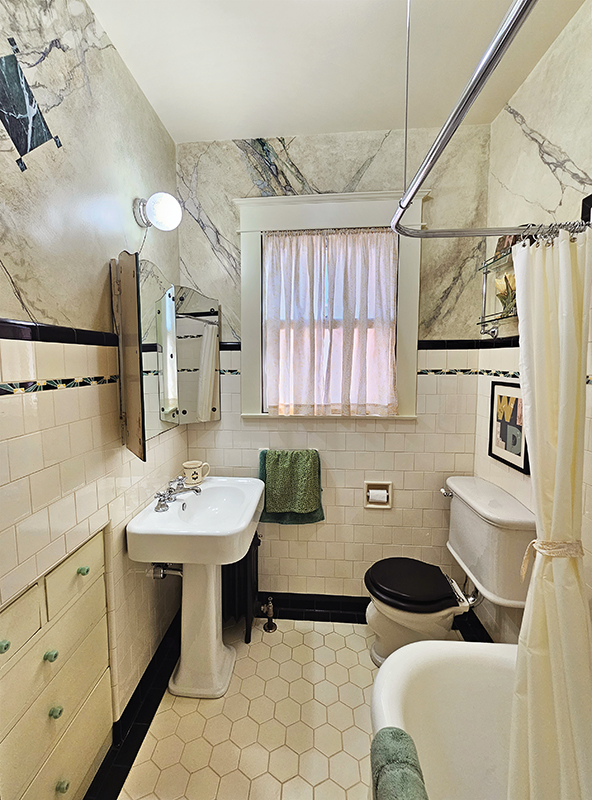
The old, golden floor tiles and the faux marble expressed in golds and pinks clashed with the green undertone of the wall tile. We removed the damaged gold floor, using a very pale yellow and black instead to tie it in with the walls.
A Faux Approach
After passing its flush test, our original 1923 Lydia toilet was fitted with new parts by DEA Bathroom Machineries. Now it was time to address the faux-marble finish. We’d taken photos of the original with the intention of reproducing it in a tweaked color palette.
Then we found Absolutely Faux; our painter told us she’d taken geology classes to understand how marble forms and offered to do a more realistic version. With three generations of geologists in my family, I agreed. We decided to honor the original artist’s green diamond. I’ll never lose the sense of awe I get every time I enter the bathroom. As for the rest of the house, we’re doing most of the work ourselves, one project at a time.
Resources
|
— Written by Kimberly Roberts with Eric Swanson.
RELATED STORIES