On a Victorian High
Inspired by their penchant for touring 19th-century house museums, a couple went looking for a spectacular mansion.

When Carla Minosh, a nurse practitioner, and Tom Belles, a corporate attorney, were looking for a restoration project, their hearts were set on a Victorian house. “I love the over-the-top-ness of Victorian architecture,” Carla says. “It’s stimulating.” “It was an interesting time in American history,” her husband adds. “The period after the Civil War was a time of growth and optimism, and the houses reflect that.”
A Perfect Fit
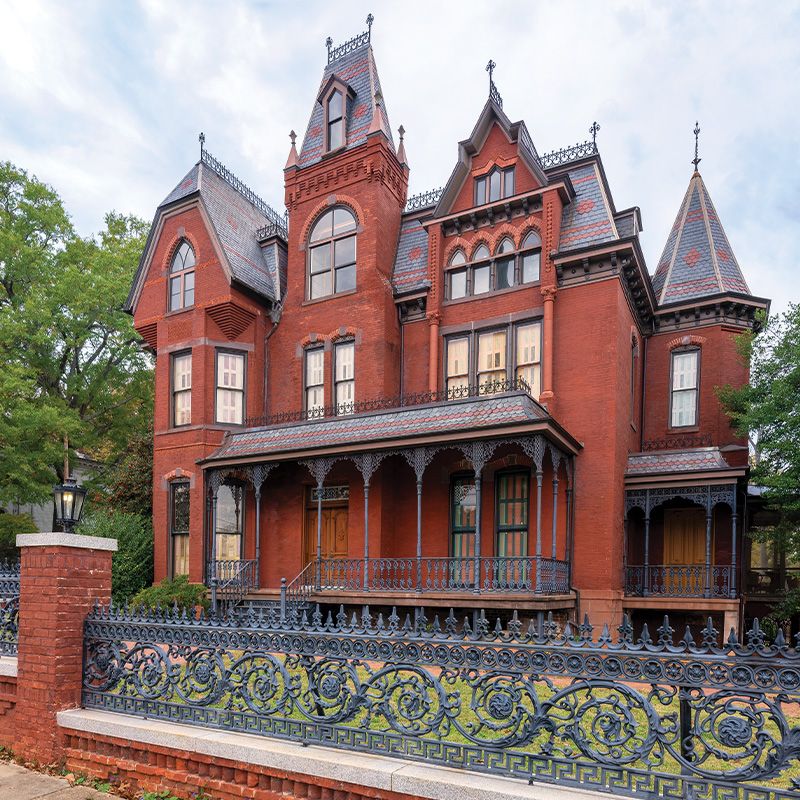
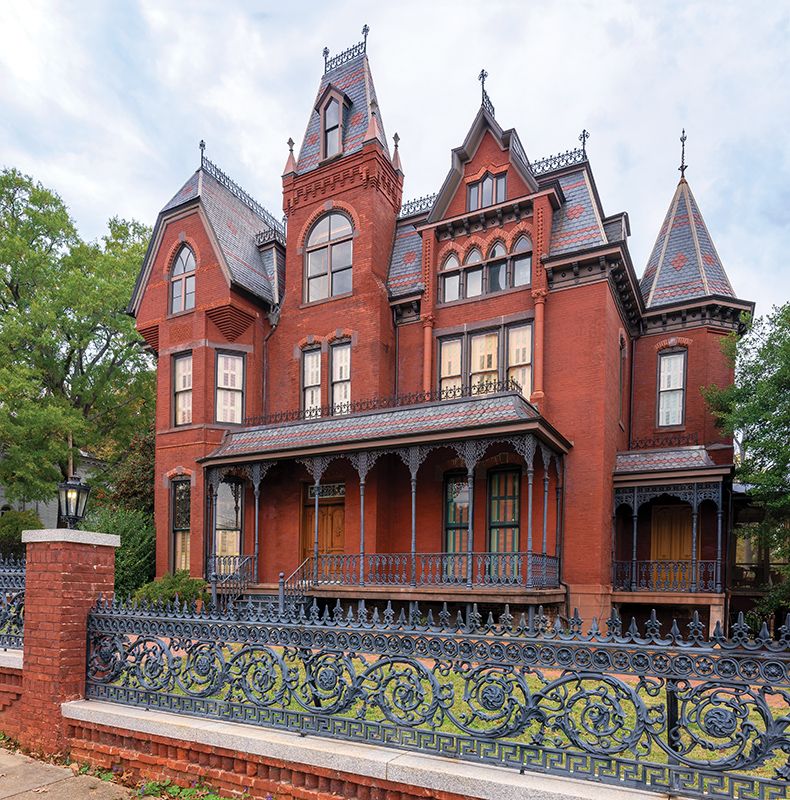
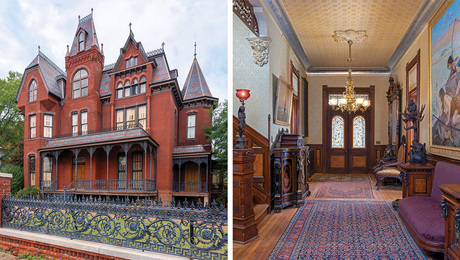
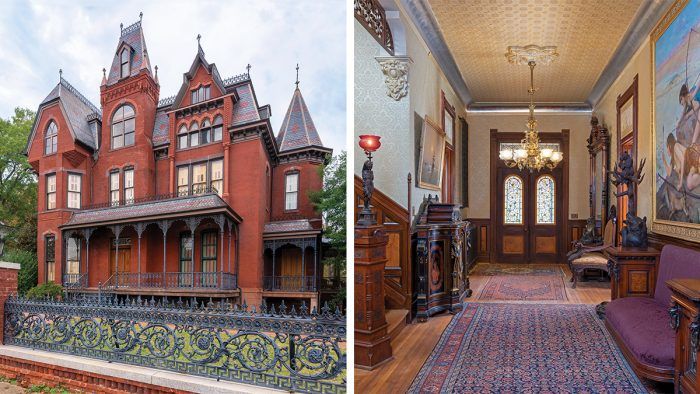
Searching from their previous home in northern Virginia, they found the house they wanted via a real-estate ad in the National Trust’s Preservation magazine. It’s in Danville, on Virginia’s southern border. The Sublett–Miller House, built in the 1870s of brick with a foursquare plan, was expanded in the 1880s to become a Victorian Gothic house with 8,000 square feet inside.
|
|
|
The house represents the optimistic, over-the-top character the couple loves. Its vertical orientation is expressed with porches, turrets, and towers, arched windows, a steeply pitched roof with multicolored slate tiles, metal cresting atop main and porch roofs, and lacy ironwork. The interior features 20 rooms (not counting baths) with 12-foot-high ceilings, 19th-century fireplaces, and a wealth of stained glass in transoms and windows.
Another attraction was the price. “Here, houses cost a fraction of those in northern Virginia,” Tom says. In addition, the house had always been occupied and was structurally sound. “We have 184 windows,” Tom says, “all of heart pine, and most were sound.”
|
|
|
Visits VictorianWhen Carla Minosh and Tom Belles go on vacation, they include tours of house museums. These, they say, especially influenced and inspired them: 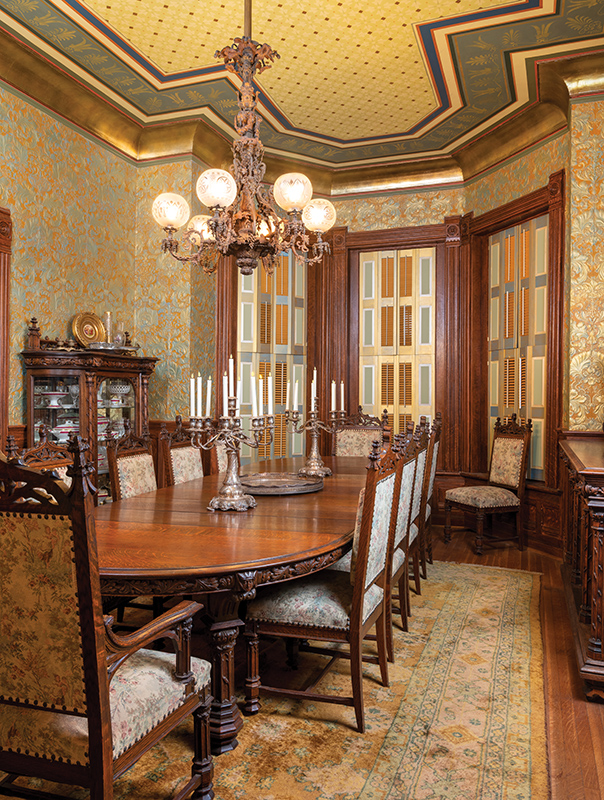
— Patricia Poore |
Incorporating Color
For years, the couple had toured High Victorian house museums, learning and finding inspiration. They wanted to re-create a historic mansion interior. Their restoration would take years: the entire house, inside and outside, was painted white! A former homeowner had wanted a white house as a backdrop for her flower gardens.
The owners considered painting over the white but found that quotes for a top-notch paint job came in close to the cost of stripping the brick. They used a masonry stripper recommended by the National Park Service; working in sections, two workers sprayed it on and kept it damp with misting overnight, then stripped paint the next day. It took an entire summer: no power washing, no harsh chemicals, no tools that would harm the brick.
|
|
|
System Upgrades
Next, they upgraded the plumbing and electrical systems, leveled floors, removed awkward closets, restored plaster walls and added tripartite wall treatments, and restored missing fencing and iron cresting. “When we bought the house, we didn’t know what we were getting into,” Carla says. “It was good that we had wiring, plumbing, and plastering to do before we could even think about decorating; it gave us time to learn.”
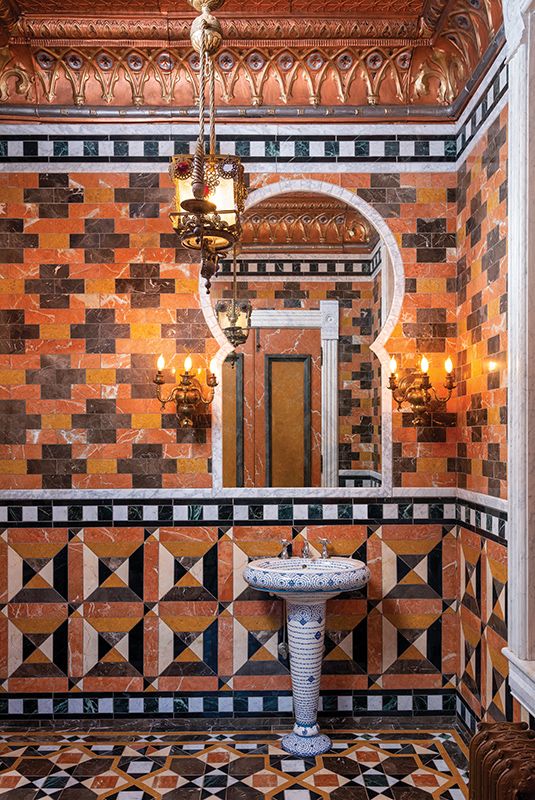
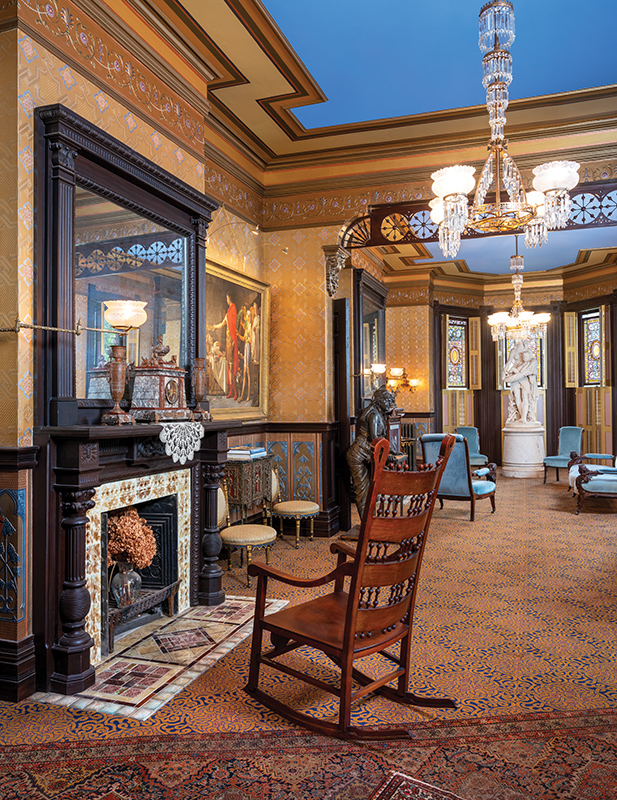
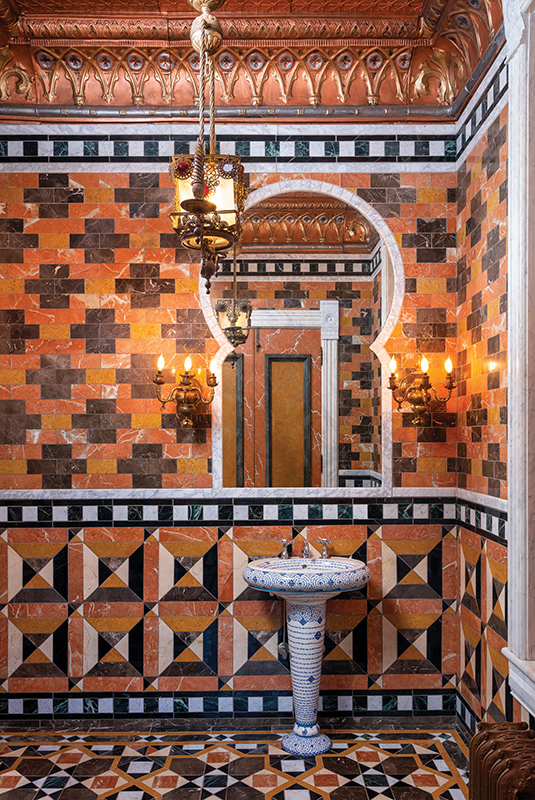
The front parlor had been walled off from the back parlor when a previous owner used it as a doctor’s office; Carla and Tom restored the original double parlors. They removed a tiny bathroom wedged below the stairs and, at the end of the hall, decorated a half bath as a Moorish fantasy with bold geometric tiles and an ogee-arched mirror. In many rooms, they used three period-appropriate, embossed materials in the field area above the dado: paper-based Anaglypta, linoleum-like Lincrusta–Walton, and pressed metal.
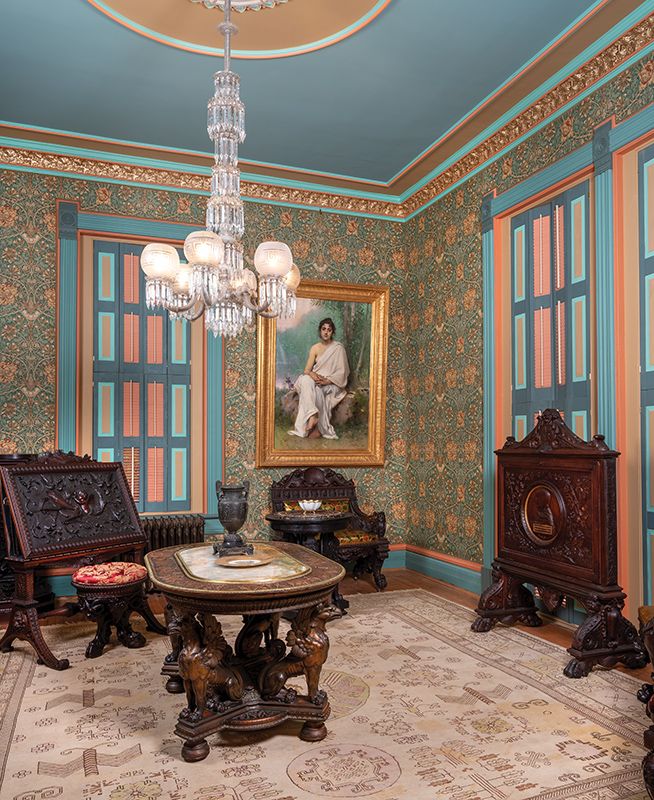
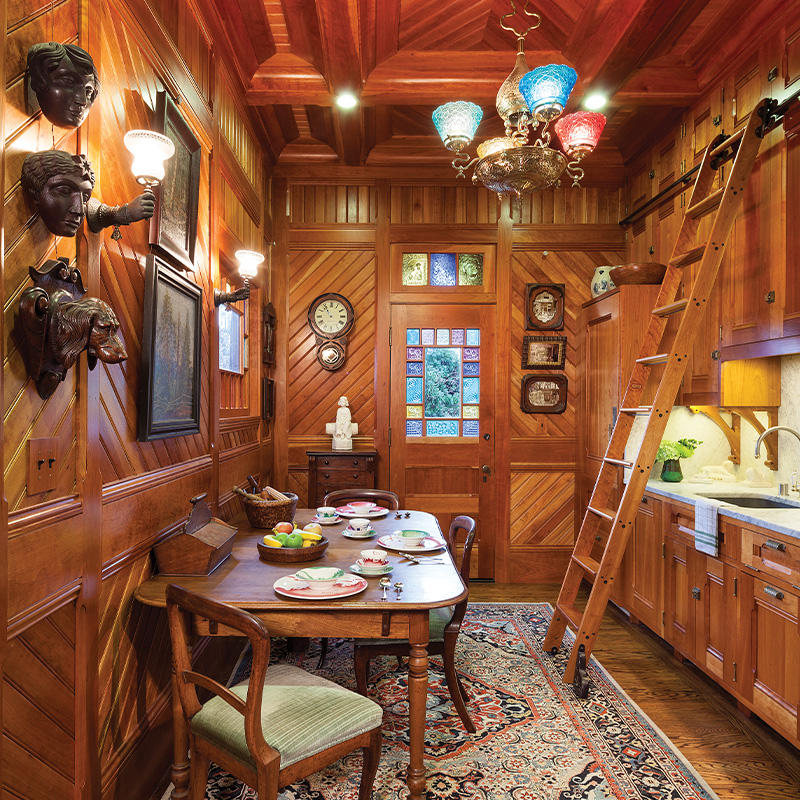
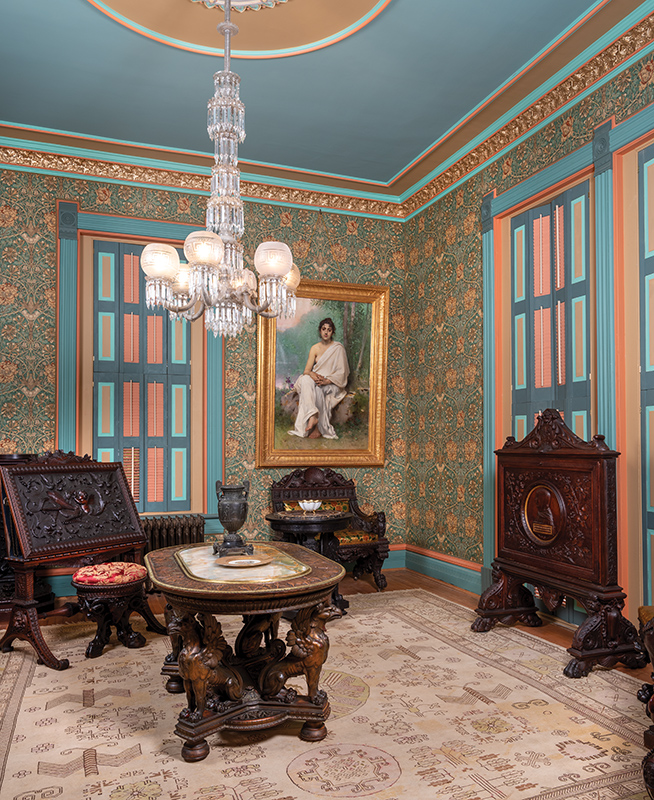
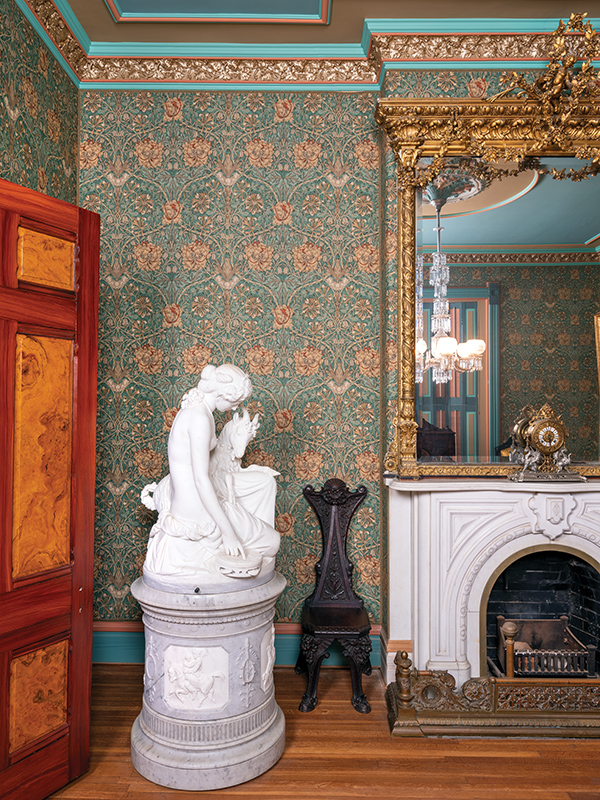
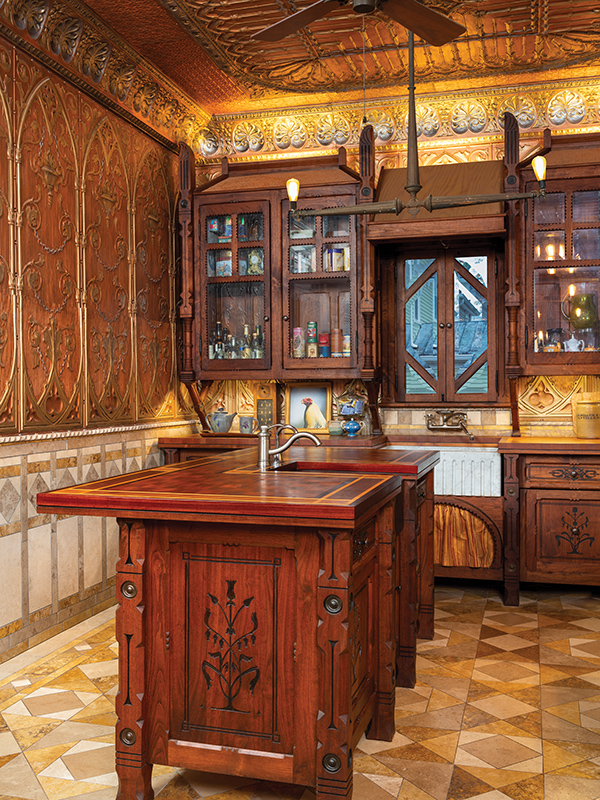
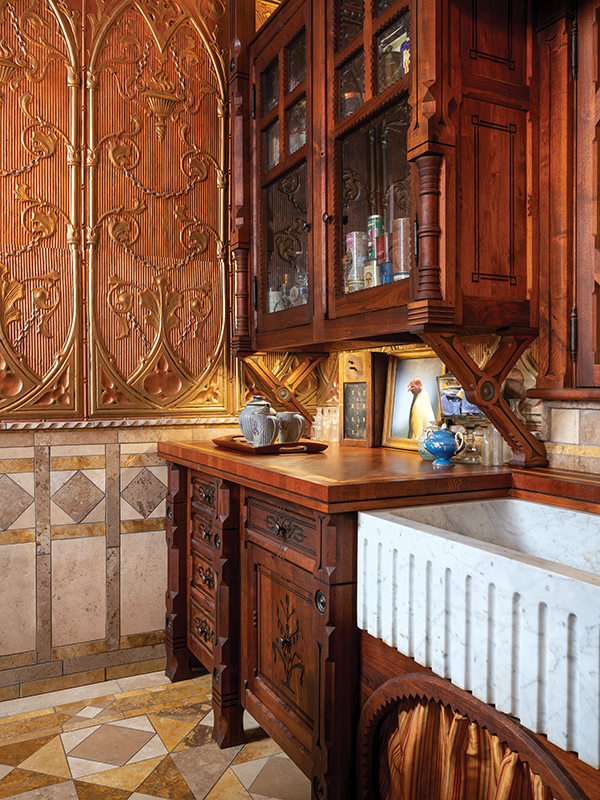
In the music room, the only downstairs room without a tripartite wall treatment, a William Morris–designed fabric lines walls. “Fabric reduced the echo,” Carlo says. “Morris colors determined woodwork colors.” She and Tom designed the revival kitchen in homage to Philadelphia architect Frank Furness (1839–1912), known for his High Victorian Gothic buildings. “The custom walnut cabinets are modeled after his cabinetry,” they explain. Two refrigerators hide inside a freestanding walnut cabinet that might have stood in an 1870s drawing room.
— Written by Regina Cole. Produced by Patricia Poore. Photos by Gridley + Graves.
RELATED STORIES
-
-
When these owners found the house, it wore heavy layers of white paint, inside and out. Removing it was a long, arduous process.
-
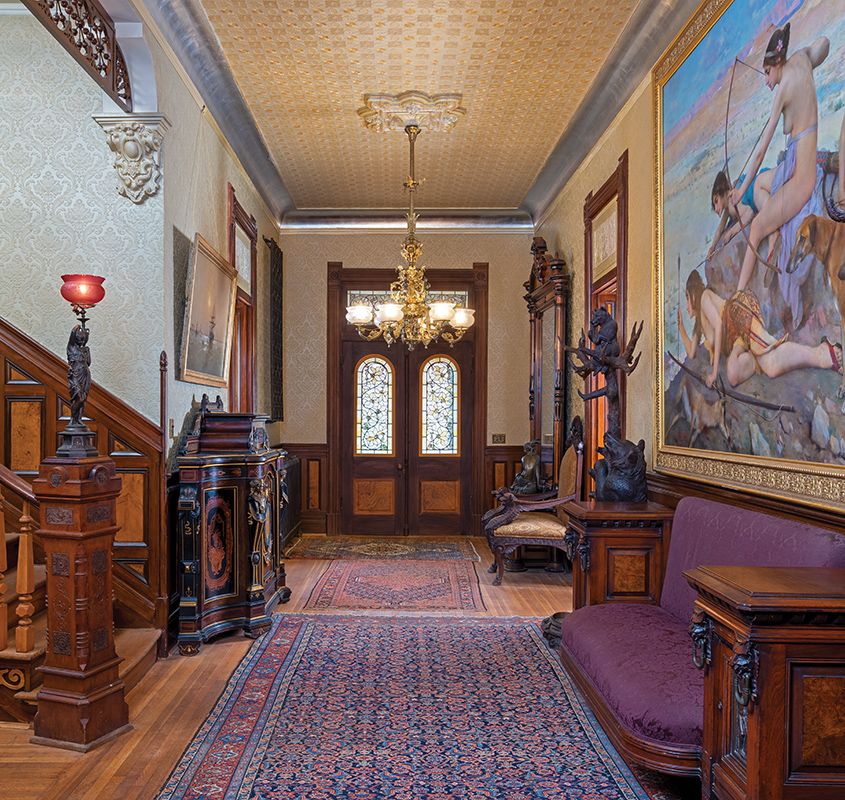
Glass Restored: At the entry, the interior set of doors had lost their stained-glass panels and transom. Homeowner Tom Belles made new glass panels with a design patterned after the intact exterior transom. When the house was built, during the 1870s, the staircase was at the center. Its orientation changed with the 1880s remodeling. The front doors open to a decorative vestibule and this second set of interior doors.
-
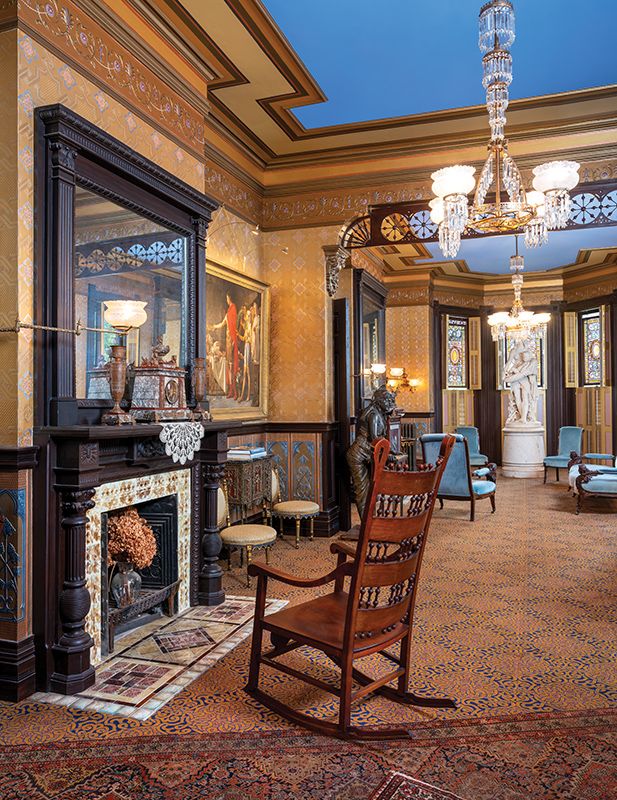
Double Parlors: Fireplaces date to the 1870s construction. ‘Seymour’ pattern Anaglypta is hung over a Gothic dado of Lincrusta. The frieze is ‘Diana’ Lincrusta, polychromed. Herter Bros. furniture joins an 1876 Italian marble statue.
-
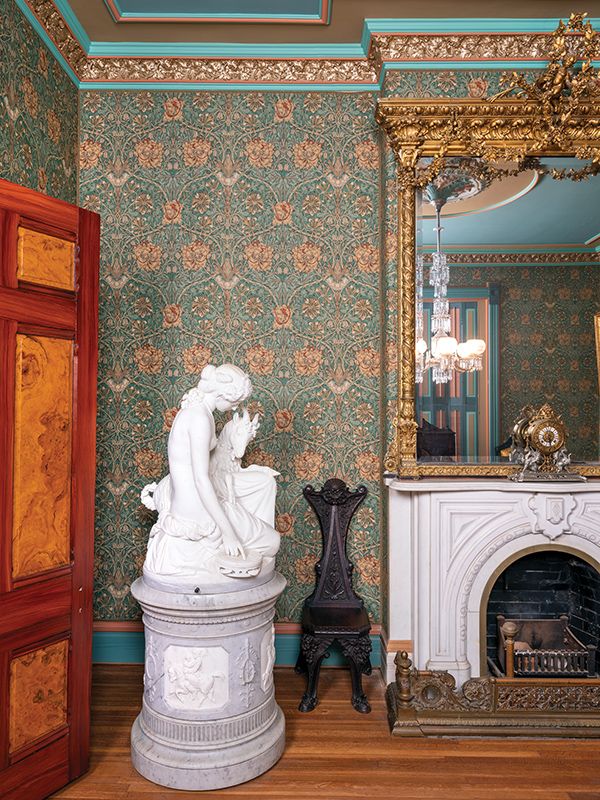
The music room’s walls are hung with ‘Honeysuckle & Tulip’, an 1876 fabric design by William Morris—an ideal choice.
-
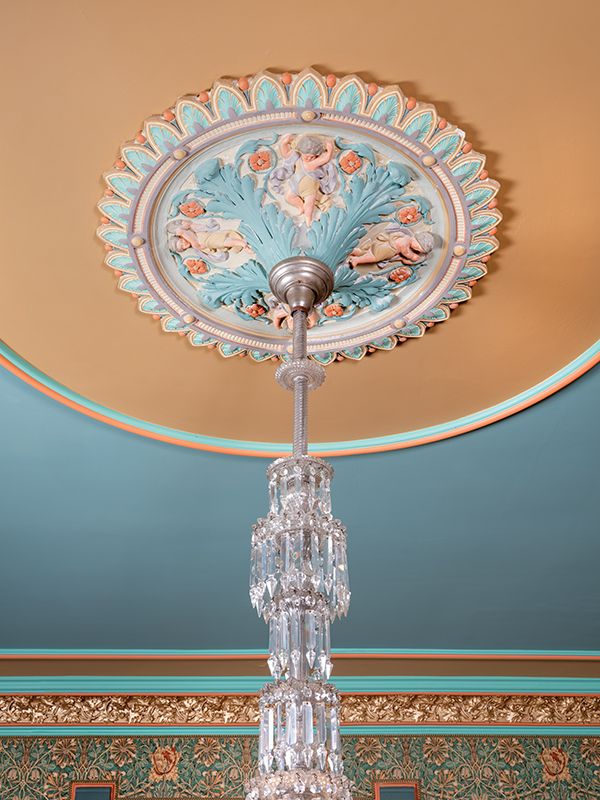
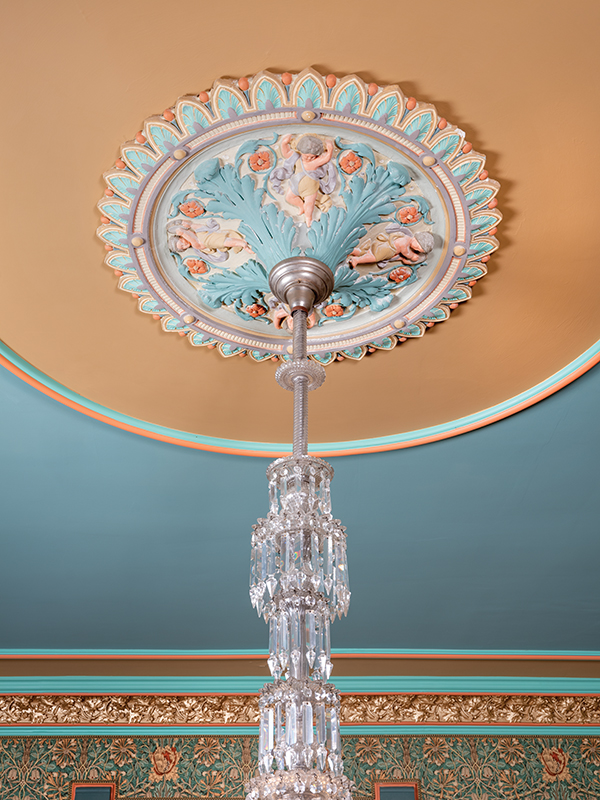
Colors for the frieze, ceiling, and medallion came from the Morris-designed fabric on the walls.
-
The homeowners seek out art scaled to the size of their rooms. In a corner of the music room is “Esmeralda and Djali” by 19th-century Italian sculptor Antonio Rossetti.
-
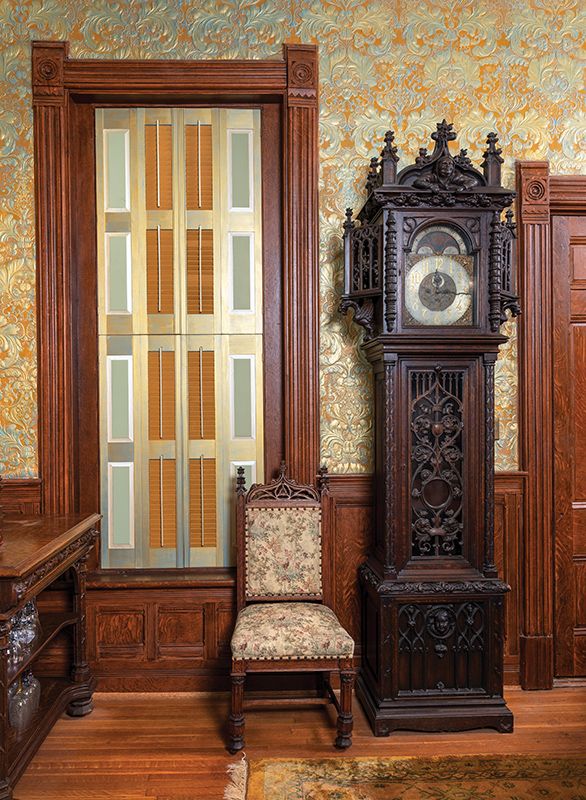
Woodwork was faux-grained to resemble quarter-sawn oak. The wood window shutters are painted to complement wall colors.
-
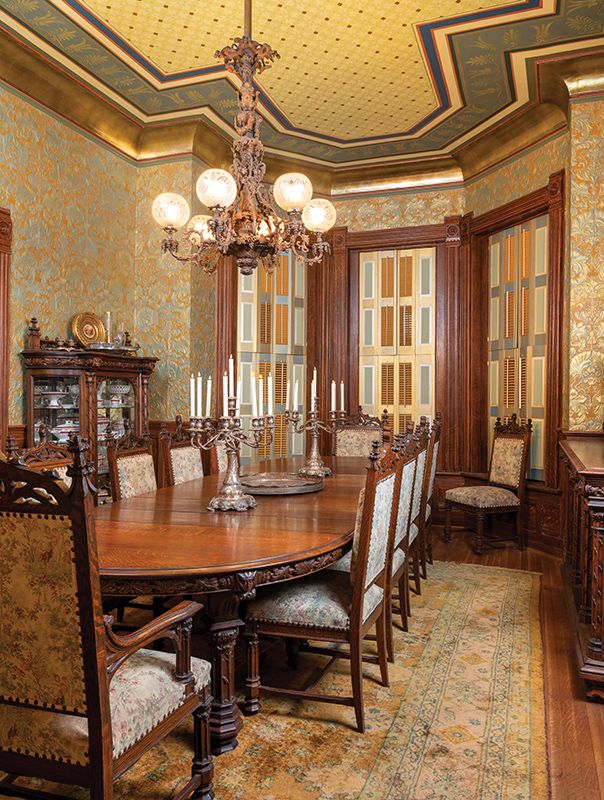
Color Harmony: The dining room has embossed Lincrusta in an Italian Renaissance pattern, painted with metallics; the cove was gold-leafed. The ceiling was hand-painted in an original design. Faux graining is by Compton Studios. Antique furniture in the dining room is by the Tobey Furniture Company of Chicago. The antique chandelier is by Hooper and Company of Boston.
-
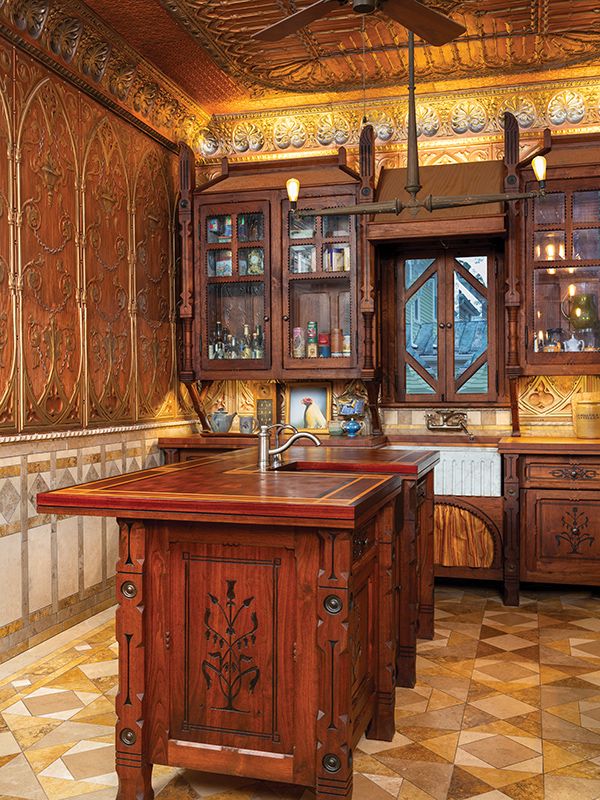
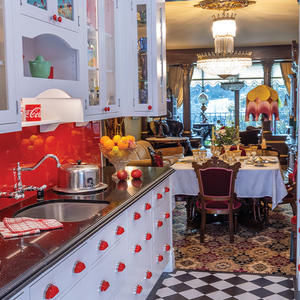
Furnished Kitchen: The homeowners designed a kitchen in full Victorian high style, not as an unseen service room. Custom cabinets with Eastlake or Victorian Gothic flourishes join fine finishes and hidden appliances. The island countertop has bloodwood, canary wood, maple, walnut, cherry, and wenge. Flooring is made up from 16x16-inch travertine tiles cut to size and installed by the homeowner.
-
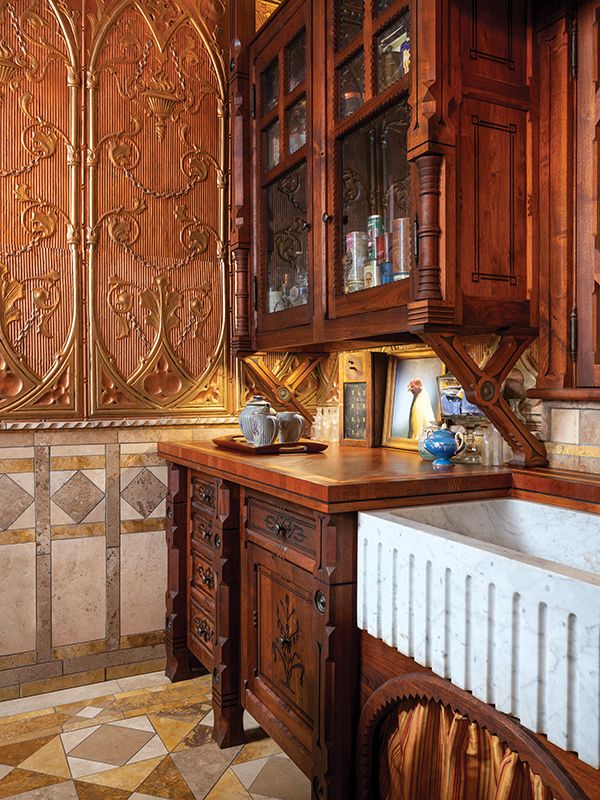
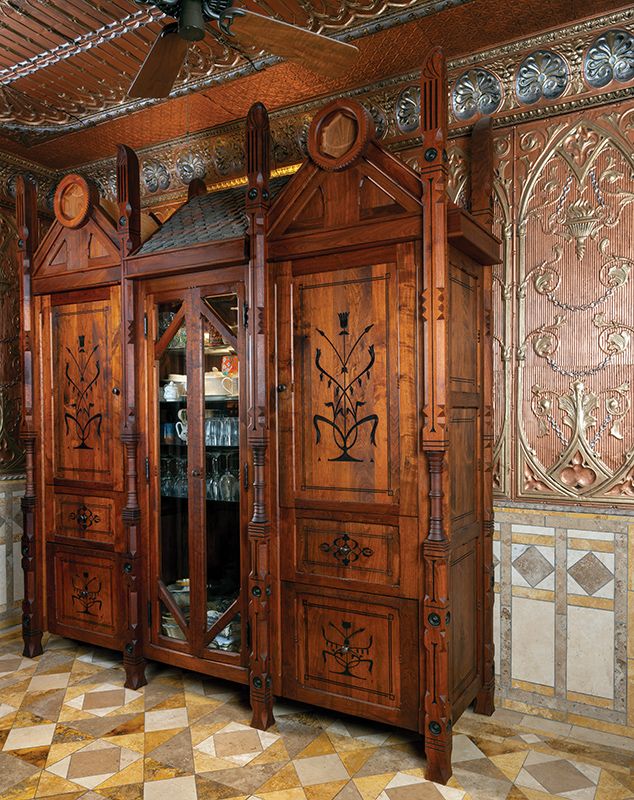
Inspired by the 19th-century Philadelphia Gothicist architect Frank Furness, the kitchen is furnished with walnut cabinetry and a decorative, pressed-metal wall covering. The Freestanding cabinet looks as if it came from an 1870s drawing room; it holds refrigerators. The pressed metal in the kitchen is from W.F. Norman, an original maker of “tin ceiling” still in business. Finished in metallic paint, it makes for a tough and fireproof kitchen surface.
-
This fanciful, carved and incised walnut cabinet was inspired by the work of Daniel Pabst, cabinetmaker to Frank Furness. In it sit two modern refrigerators, four freezer drawers, and shelves for display and pantry storage.
-
In a half bath at the end of the side hall, floor and walls are lined with tiles in an exu-berant Moorish design. Homeowner Tom Belles did all the tilework.
-
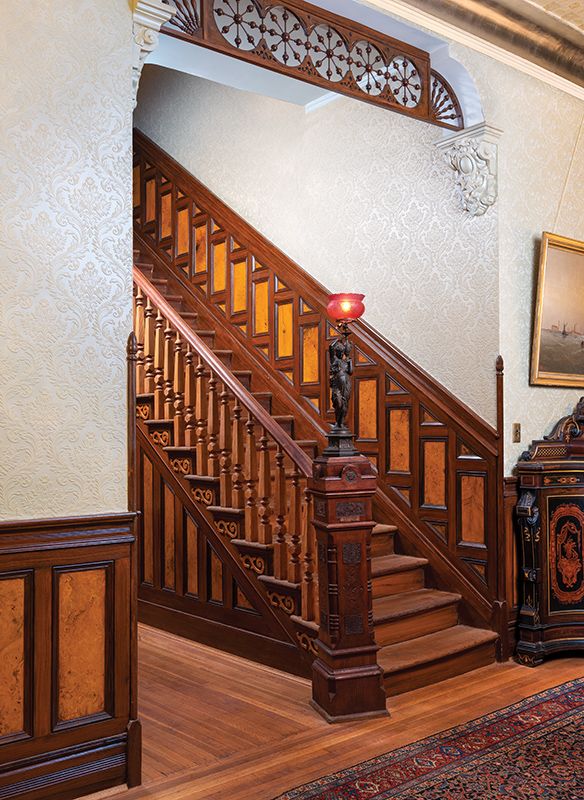
New custom fretwork separates the stair from the side hall. It matches fretwork commissioned to Rob Bennett wabashikiwoodworks.com to go between the parlors. Antiques are essential to authenticity in these rooms. Furnishings, light fixtures, and artworks date to 1865–1880 in most cases.
-
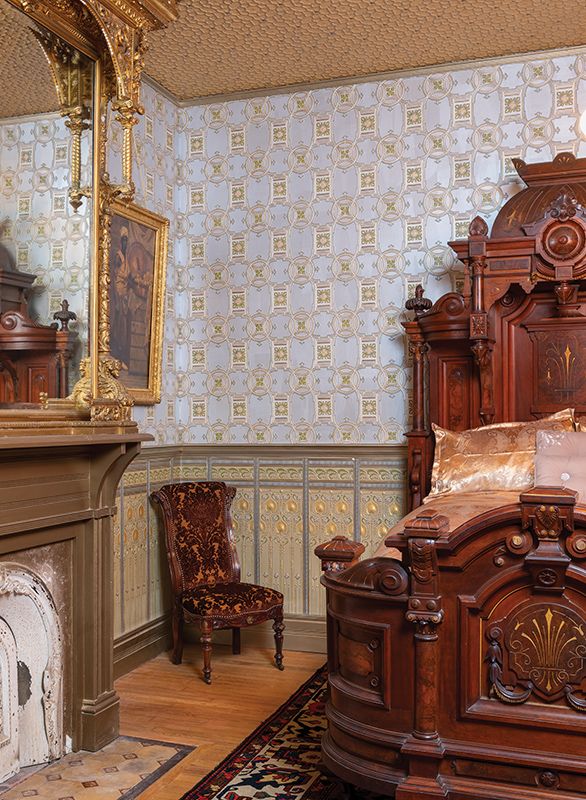
Enveloped: Well-chosen patterns, textures, and colors make a stately bedroom. The fill is Supaglypta; the dado beneath is Lincrusta in an Edwardian pattern; the ceiling is Lincrusta. The furniture suite is by F.M. Holmes, Boston. The primary bedroom is furnished with a magnificent American Renaissance Revival bedroom suite—which came from the famous Carson Mansion in Eureka, California.