Brookside Evolved
A Colonial-era house expanded in the 1830s was restored by the removal of boxy 20th-century add-ons while the old dairy barn became a complementary living space.

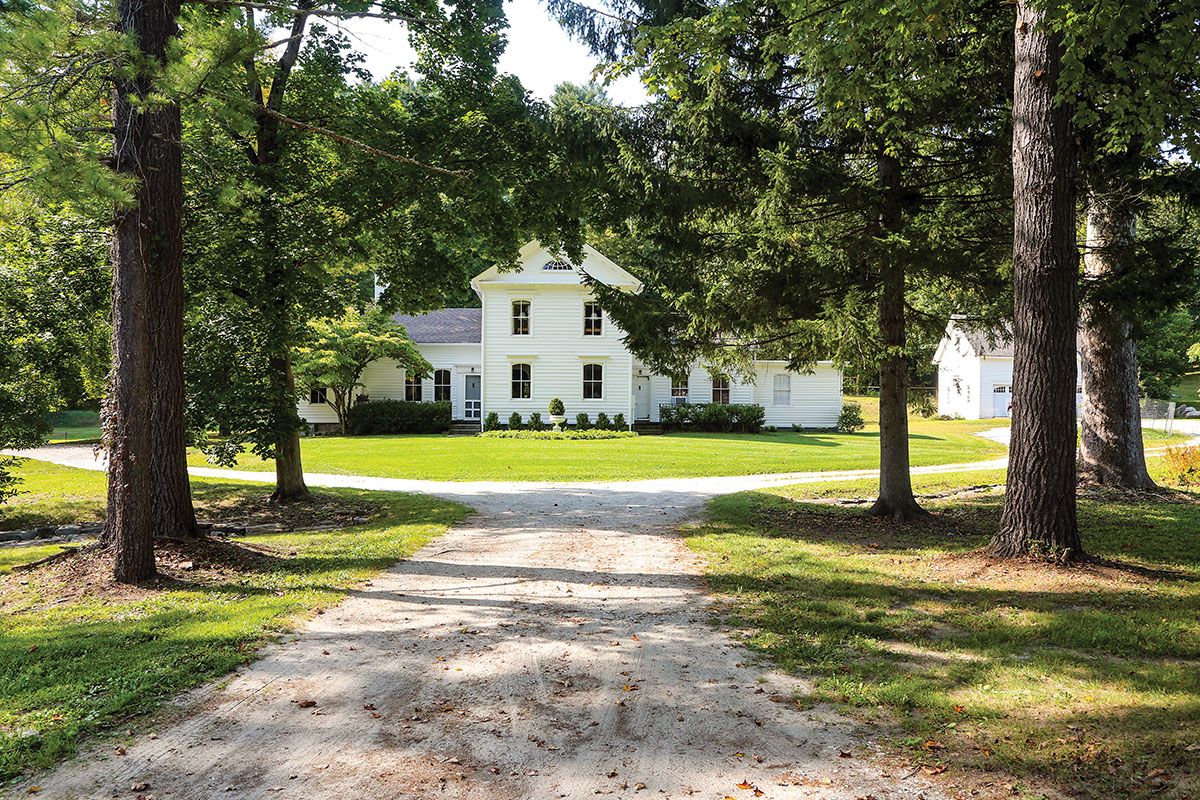
“Why is it so cheap?” That was Michael Carter’s first thought when he saw the house. During the pandemic lockdown, the Boston-based interior designer had been looking for a house to restore for resale. His real-estate search led him to a historic structure in the village of Lime Rock, part of the town of Salisbury in northwestern Connecticut. With an original section built in 1767 and a substantial Greek Revival addition dating to the 1830s, the house had a façade distinguished by an appealing symmetry. Its 20th-century additions were at the rear. Carter abandoned his original plan, deciding to restore the house as the primary residence for himself and his husband, David Rousseau, a veterinarian.
|
|
|
A Diamond in the Rough
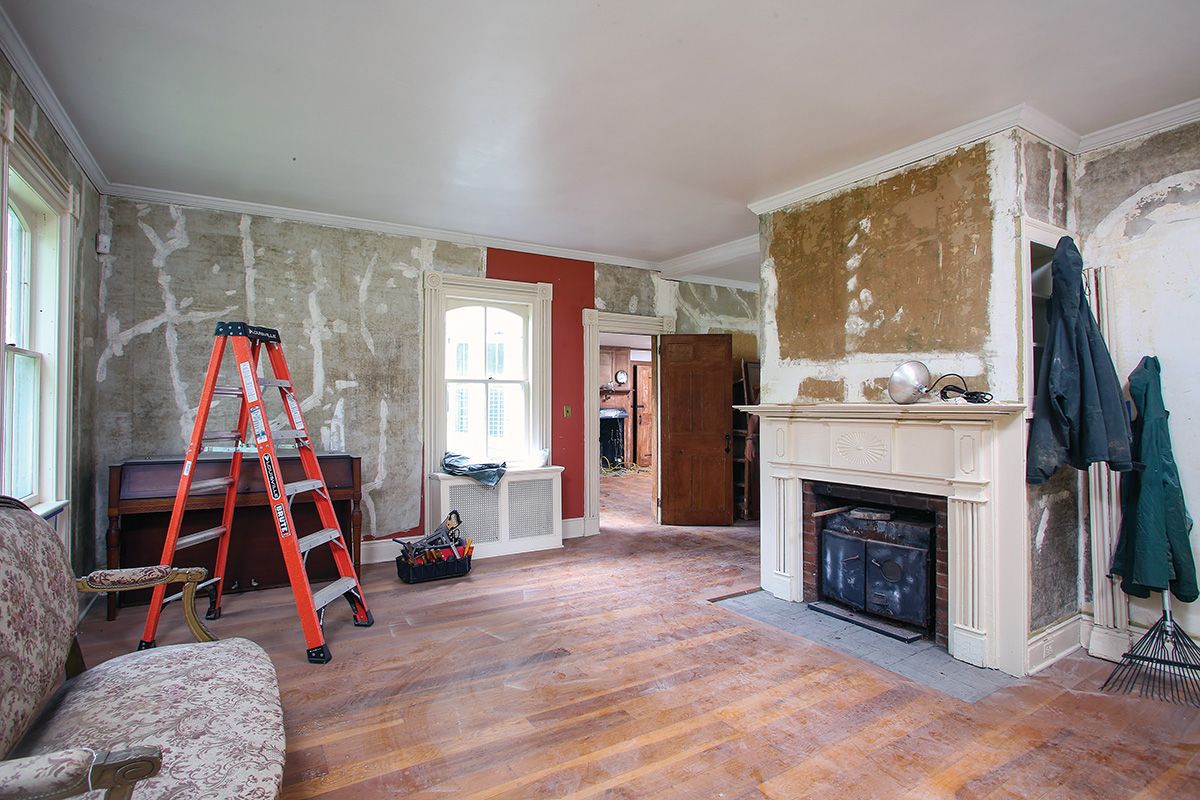
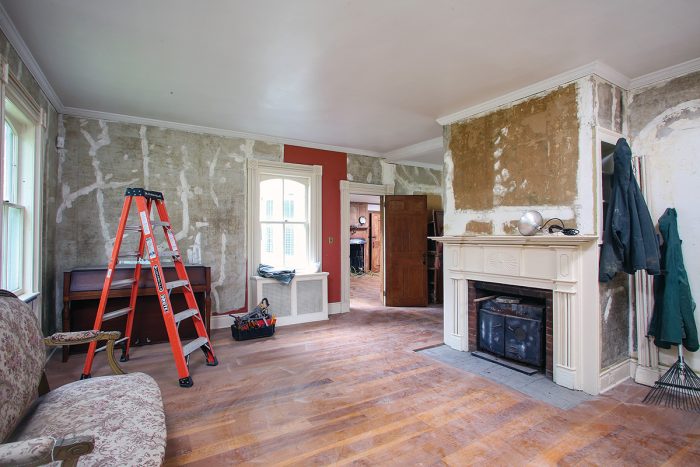
He soon learned why it was priced below expectation. Abandoned for over a decade, the house had no heat or electricity. It was inhabited by raccoons, who had discouraged would-be buyers. Then there was the mildew coating every interior surface.
The house is called Brookside for a stream flowing through the six-acre lot. The original section was the oldest structure in the village. For much of the 20th century, it had been the home of John Fitch, a renowned racecar driver and the first American to successfully compete in European races.
A founder of the racetrack at Lime Rock Park, he was a beloved local. When he died, in 2012, his sons were overwhelmed by the house’s condition and its accumulation of stuff. Therefore, Brookside stood derelict until 2021, when Carter and Rousseau took it on.
|
|
|
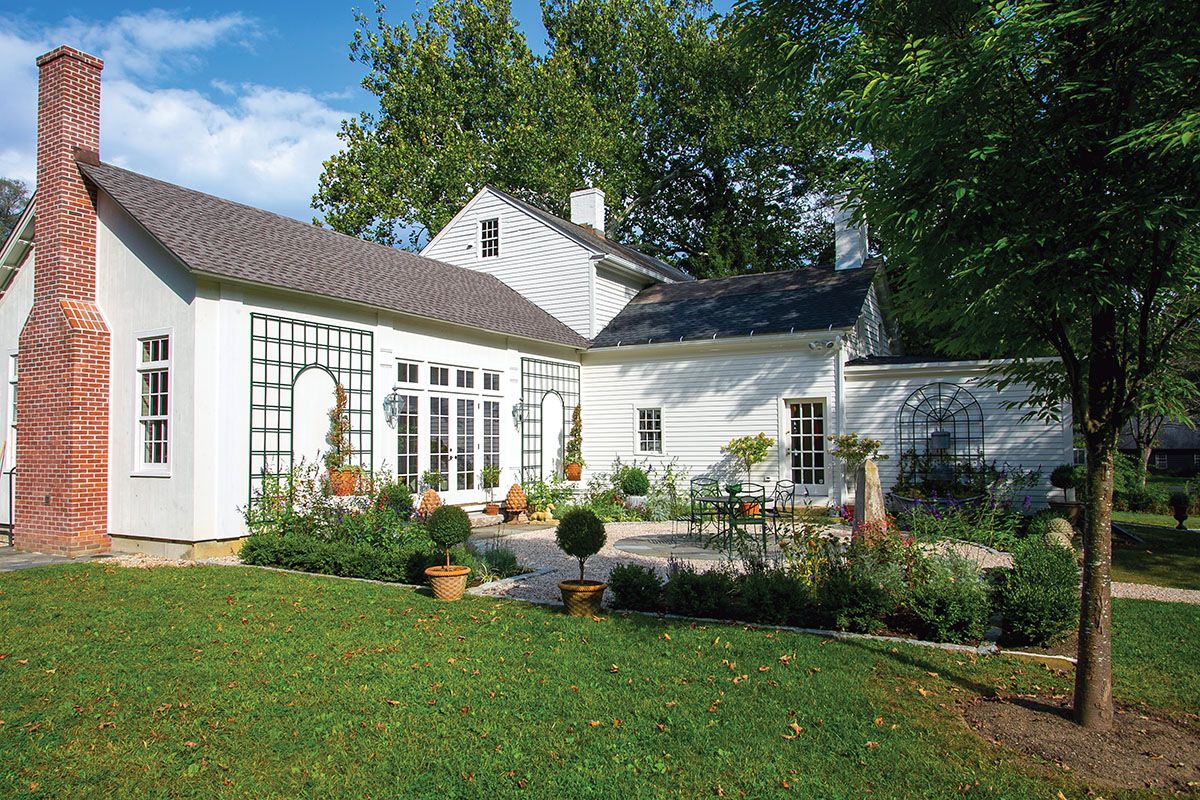
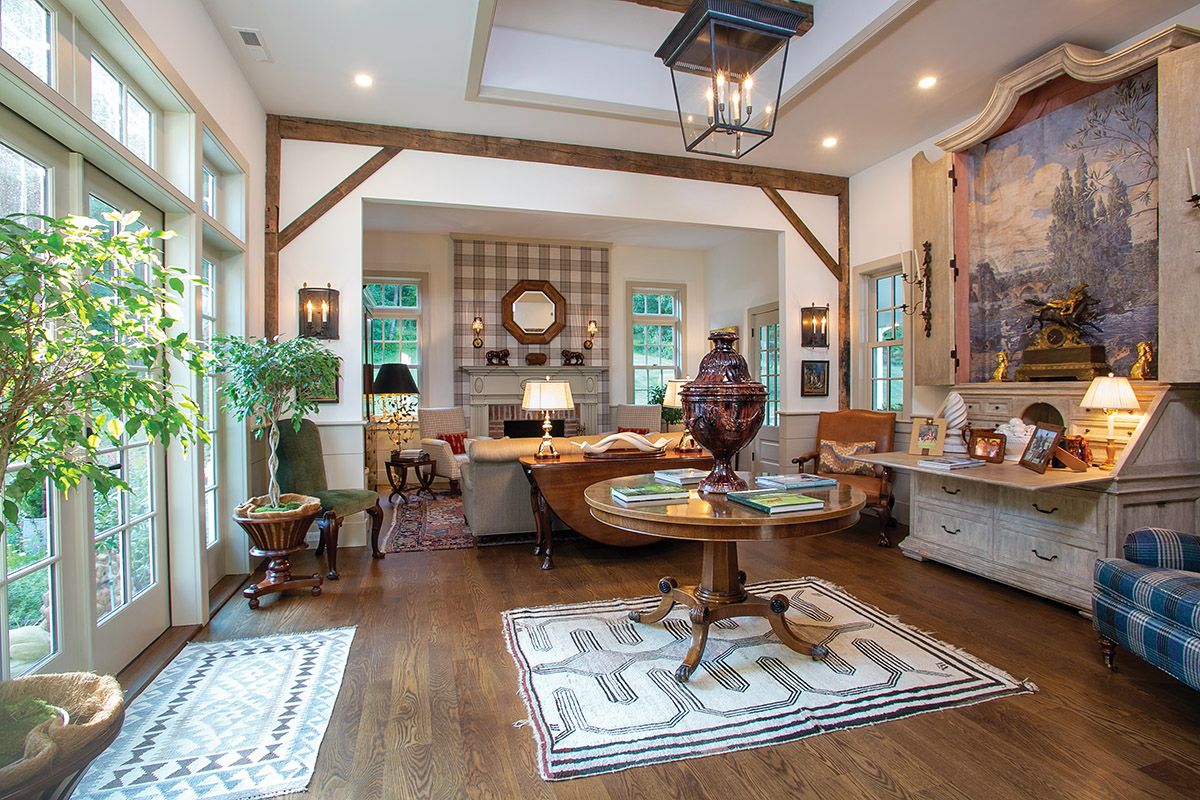
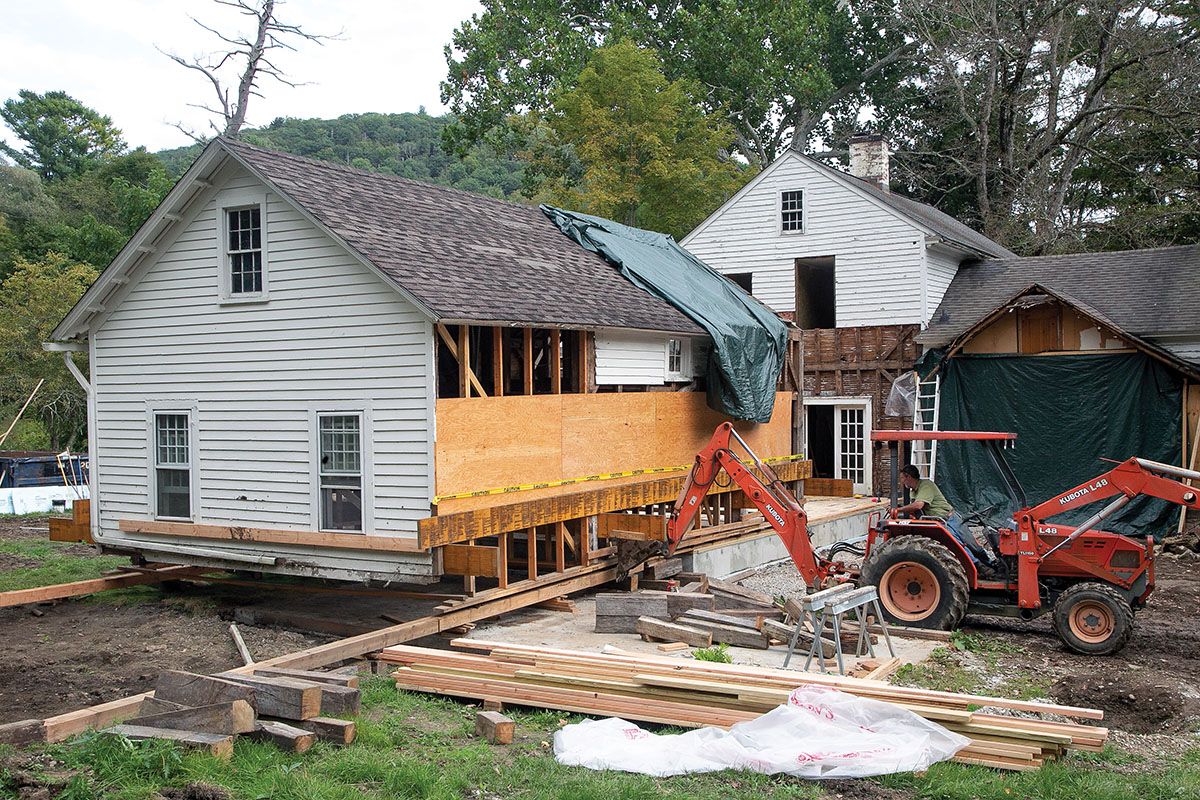
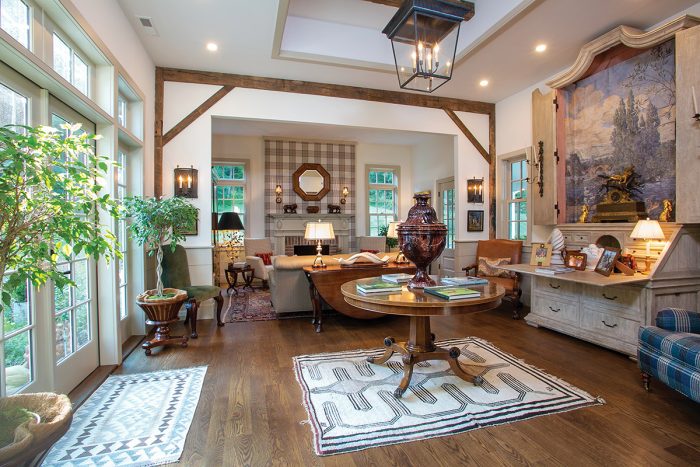
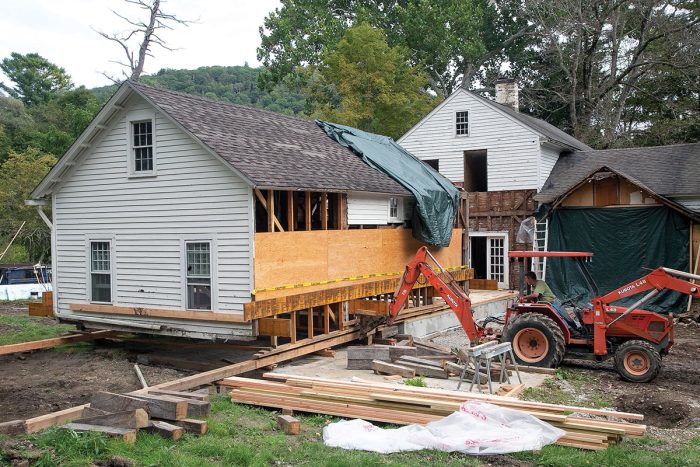
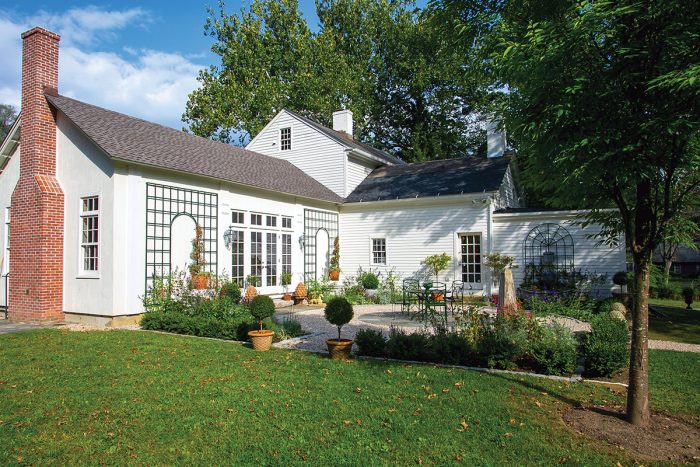
Once a Dairy BarnMichael Carter and David Rousseau loved Brookside’s original spaces, but they also wanted a spacious room with a lofty ceiling. They found it on the property: an abandoned dairy barn. They moved it to attach it to the back of the old house. “Even rooms of the Greek Revival period tend to be small, and we wanted drama and height,” Carter says. For the Great Room conversion, “We added the chimney and installed the prettiest antique mantel we could find. The antique timbers are structural but also add to the atmosphere. For added height, we built a recess into the ceiling. That allowed space to hang a large lantern, which became a dramatic centerpiece.”
|
A Greek Revival
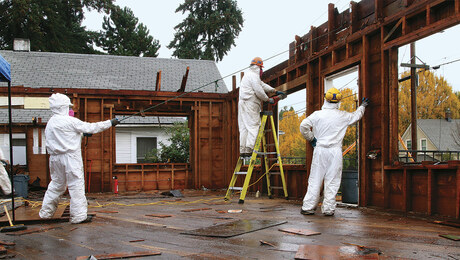
“To me, it looked like a Greek temple,” Carter says. “The setting is lovely with a brook and a hill. You can always fix crumbling walls, but you can’t create a landscape that has been loved for 200 years.” His starting project was to be removal of non-period parts of the house. His contractor, however, “insisted that I first get rid of the mildew so his workers would not be at risk.”
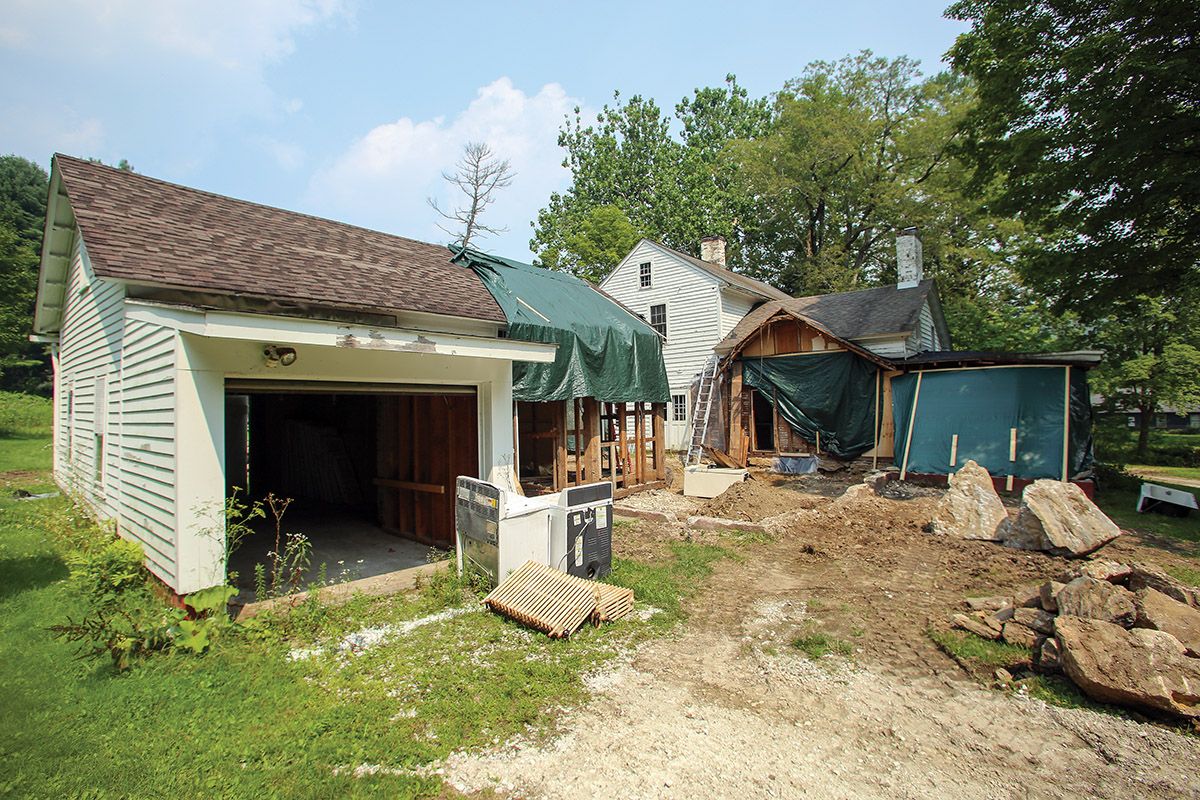
Soon the later accretions had been sliced away: These were “lots of poorly constructed porches, baths, and other rooms, boxes tacked onto little boxes,” Carter says. He re-created a one-room-deep floor plan wherein secondary wings flank the two-storey Greek Revival center.
“That let us have something we’ve always wanted: a primary bedroom on the first floor, opposite the kitchen wing,” he explains. “The primary bath is there. We kept the old kitchen in the 1767 section, on the other side of the Greek Revival central pavilion.” He believes the windows date to the 1830s addition and renovation. “The arch at the top is so pretty. We’re very glad the windows survived!”
|
|
|
Modern Living in Historic Quarters
Brookside now has a classic layout in which the central living room is flanked by the kitchen, dining room, primary bedroom suite, and a wet bar. Guest quarters are upstairs, above the living room in the Greek Revival center. To provide entertaining space (and drama), Carter and Rousseau moved what had been a dairy barn to attach it to the back of the house; that’s now the Great Room.
Before the addition of the dairy barn, the house measured 2,750 square feet; it’s now 3,400. The result, Michael Carter says, is “historic rooms along with a living space that looks historic but has the proportions we want for modern living.”
|
|
|
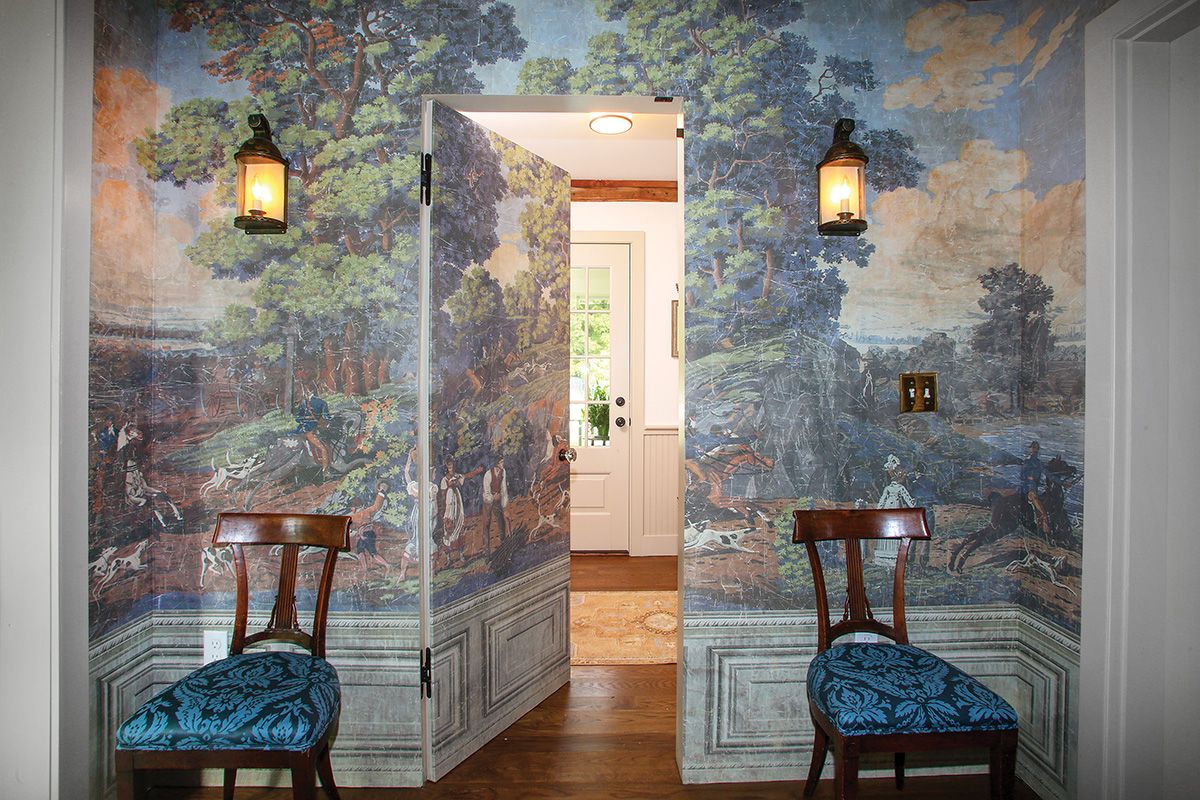
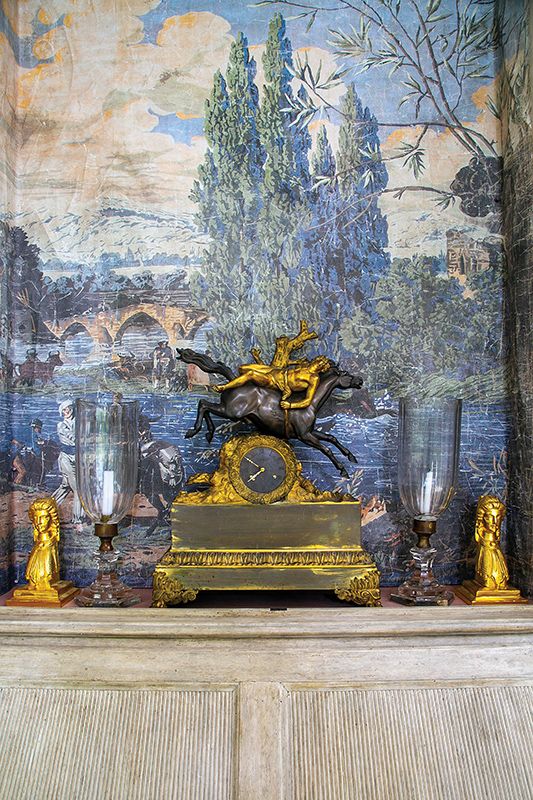
Project HighlightsLocation: Salisbury, Connecticut Designer: Michael Carter mcarterandco.com Program: Rescue a historic house built in 1767 and the 1830s, while adding a dramatic Great Room for extra space. • French Market Collection ‘Hunt Scene’ wallpaper from Twelve Chairs, shop.twelve-chairs.com Lantern from Visual Comfort, visualcomfort.com |
— Written by Regina Cole. Produced by Patricia Poore. Photographs by Randy O’Rourke.
RELATED STORIES
-
The 18th-century section (at far left) became a wing when the 1830s double-height addition and flanking wing were built.
-
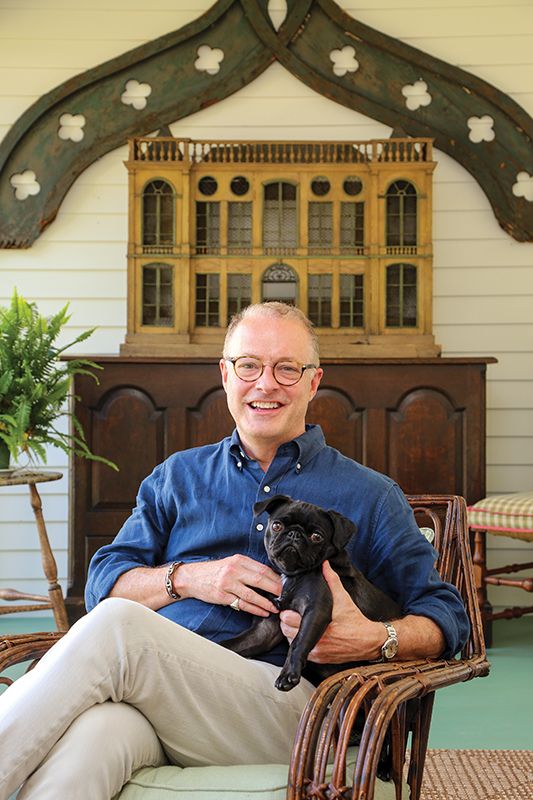
Homeowner Michael Carter relaxes on a screened porch.
-
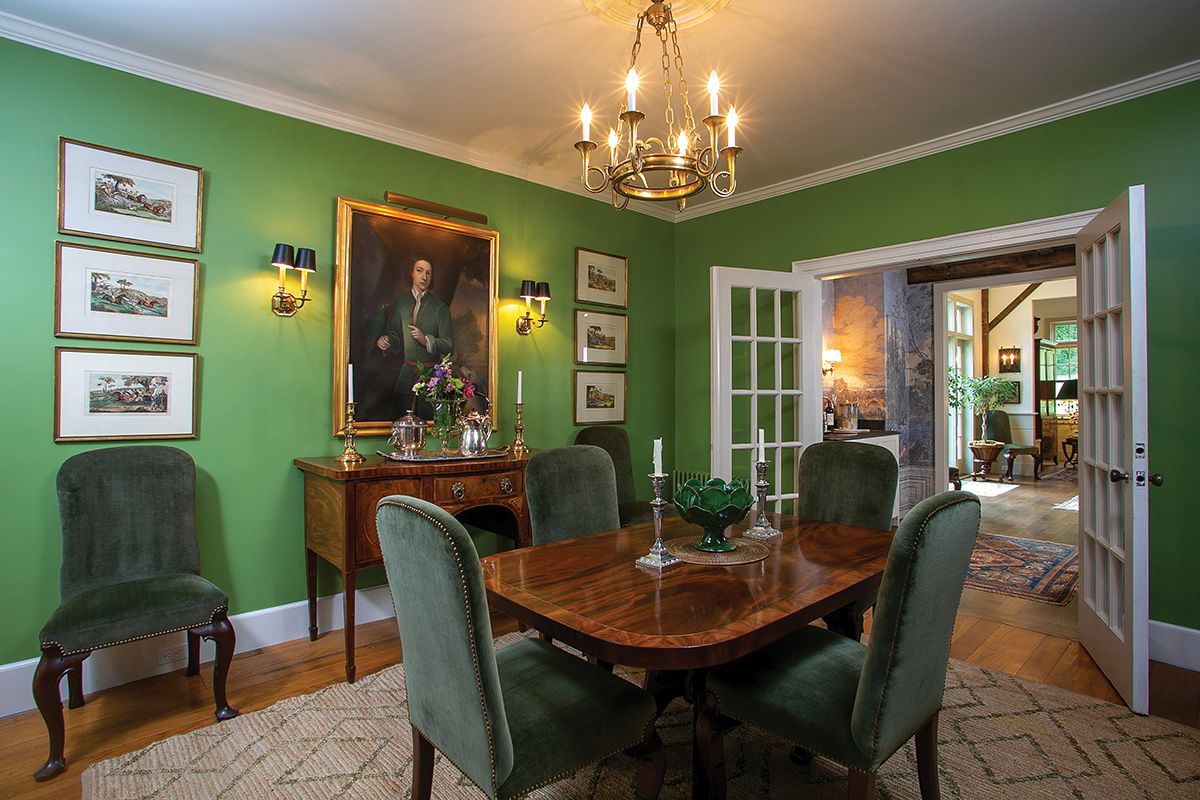
The finished dining room has intensely green walls. [Buckingham Gardens Green, Benjamin Moore] Owner Michael Carter chose the saturated color to compensate for the room’s lack of natural light.
-
The 1830 addition in Greek revival style became the essential core of the house; its 1767 section is preserved as a wing. Boxy later accretions at the rear have been removed. The small room has a cocktail wet bar.
-
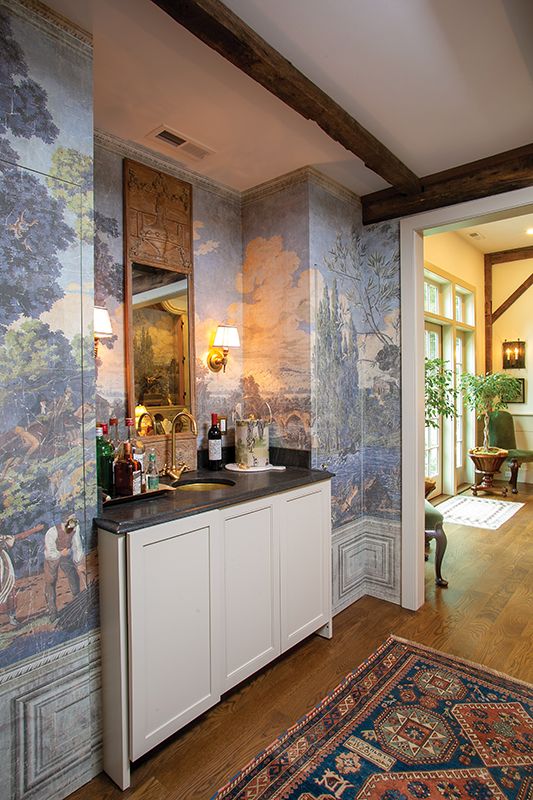
Scenic wallpaper decorates an anteroom that connects the dining room in the old house with the added Great Room.
-
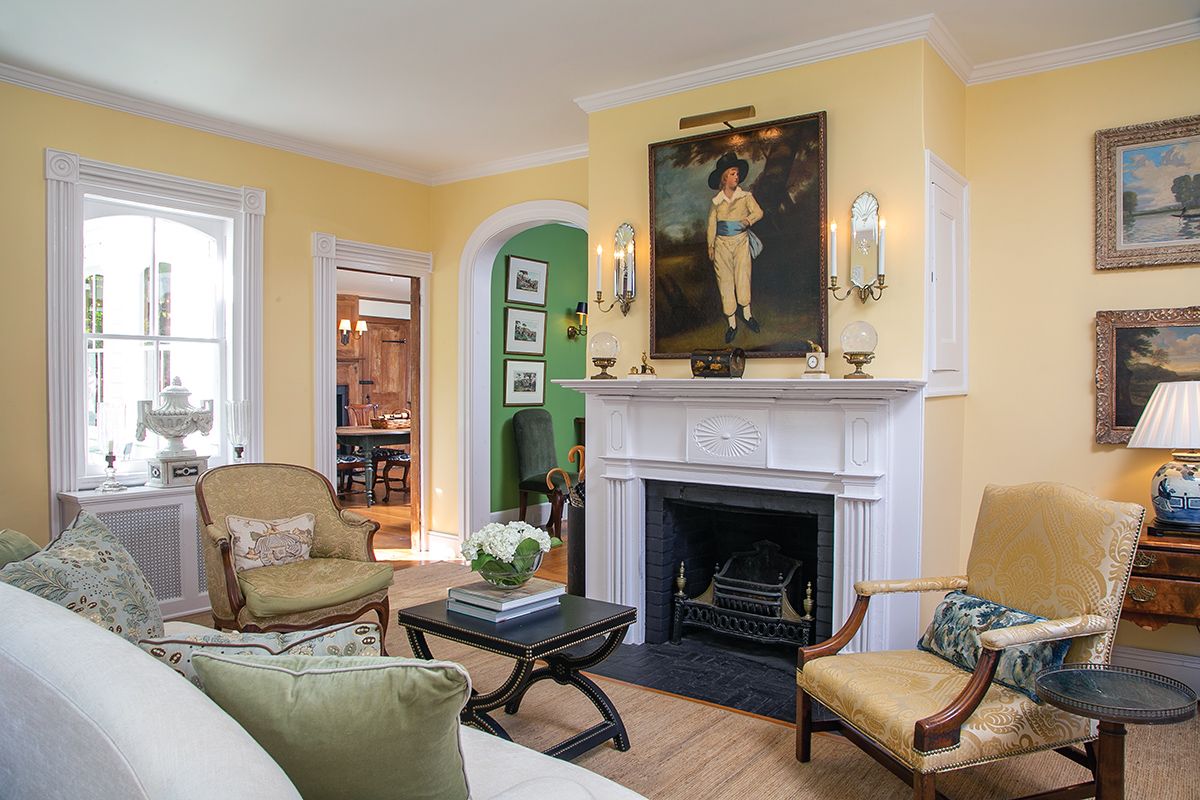
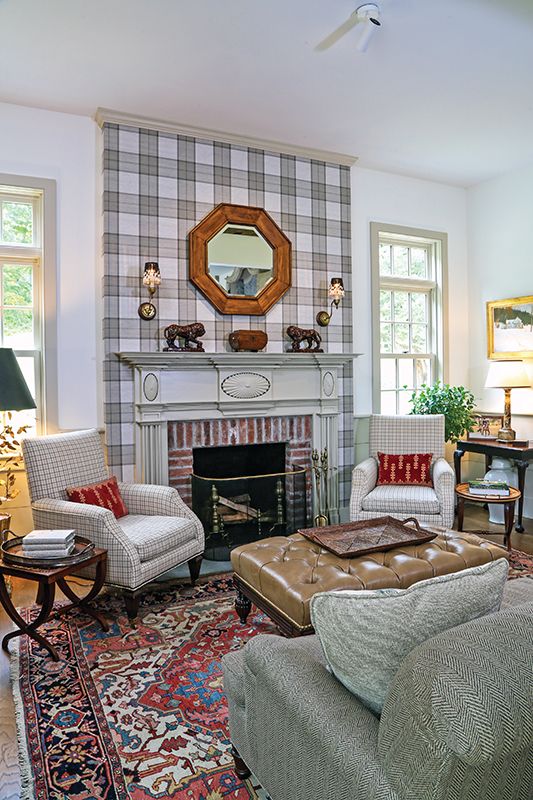
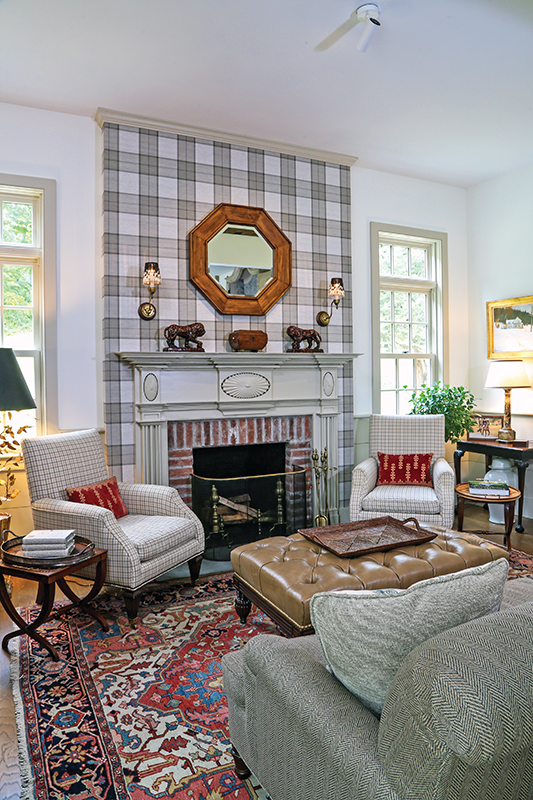
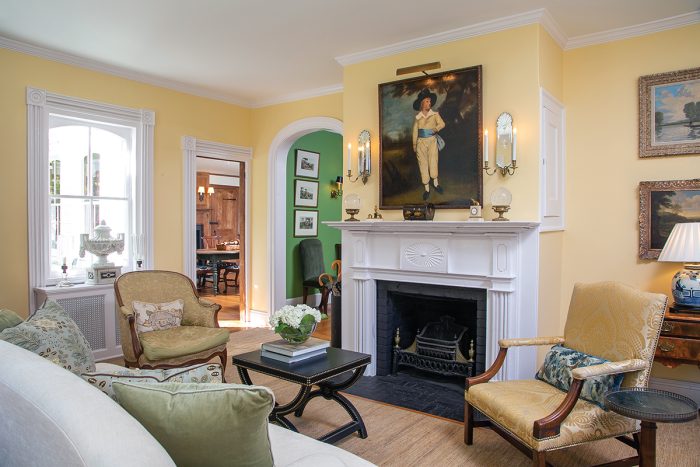
Located in the central pavilion of the house, the living room is bright with natural light pouring in from windows on three sides. Doors lead to the old kitchen and the green dining room.
-
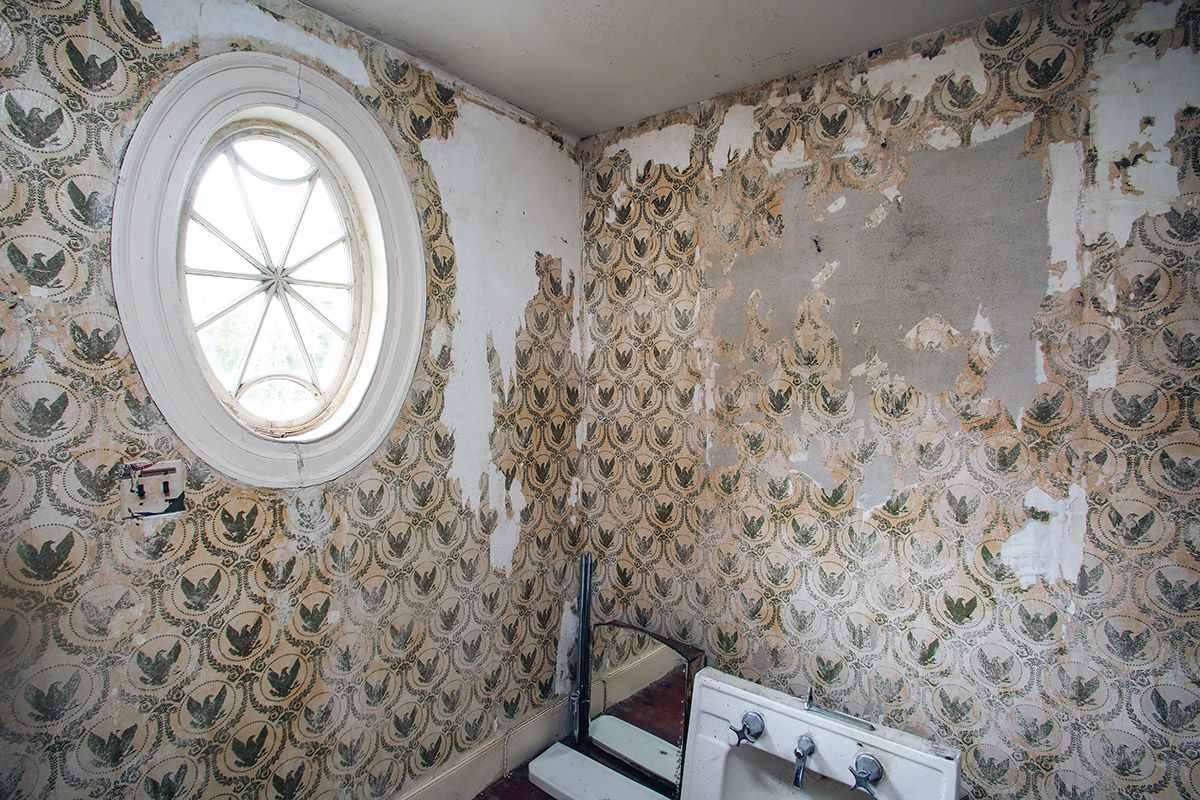
Before: Mildew covered interior walls; the house had been empty for more than a decade.
-
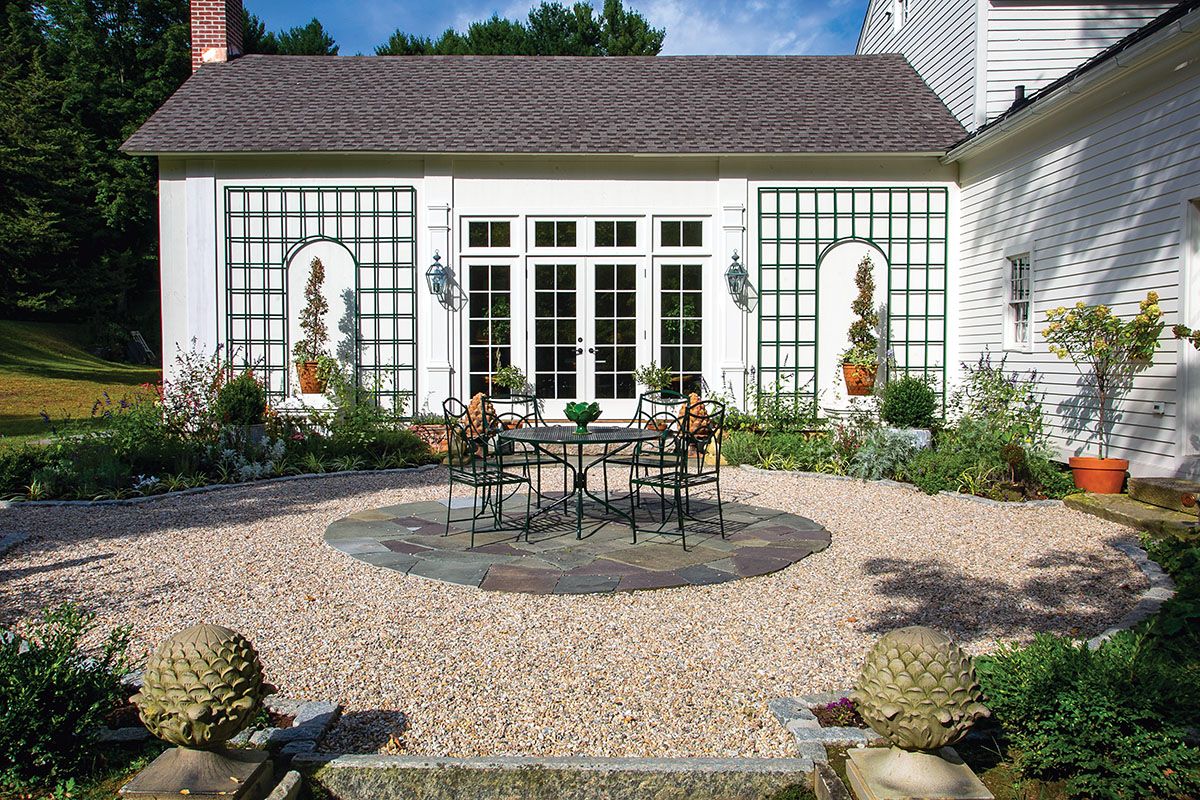
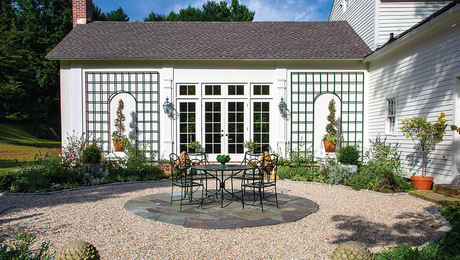
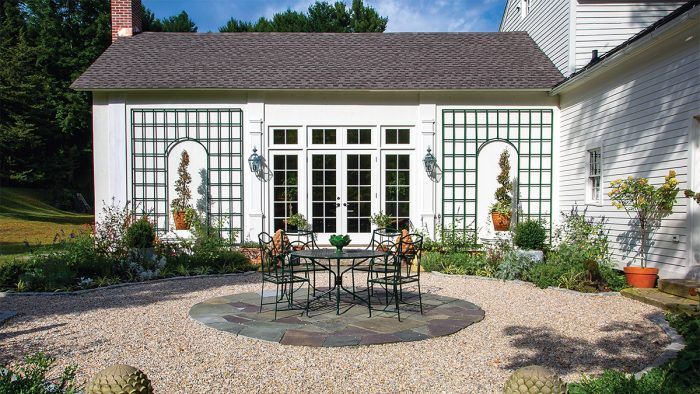
The pavilion at the back of the house is actually the old dairy barn, moved to this location and renovated to become a spacious Great Room. Glazed doors and sidelights bring the outdoors inside. A patio and gardens are tucked into the ell created by the addition.
-
In the ell, an outdoor living room on a shaded patio is convenient to the Great Room. Planted with boxwood, the classical space includes a central fountain.
-
Before: A derelict outbuilding became the addition.
-
Through an opening framed with recycled timbers, an intimate sitting room fills one end of the barn-size room.
-
In the Great Room, a reproduction 18th-century Swedish secretary with a mottled paint finish has 16th-century Italian wood-and- metal sconces on the doors.
-
In the niche, the homeowners applied leftover wallpaper depicting a hunt scene.
-
The dairy barn was jacked up, put on rollers, and moved to its new place beside the old house.
-
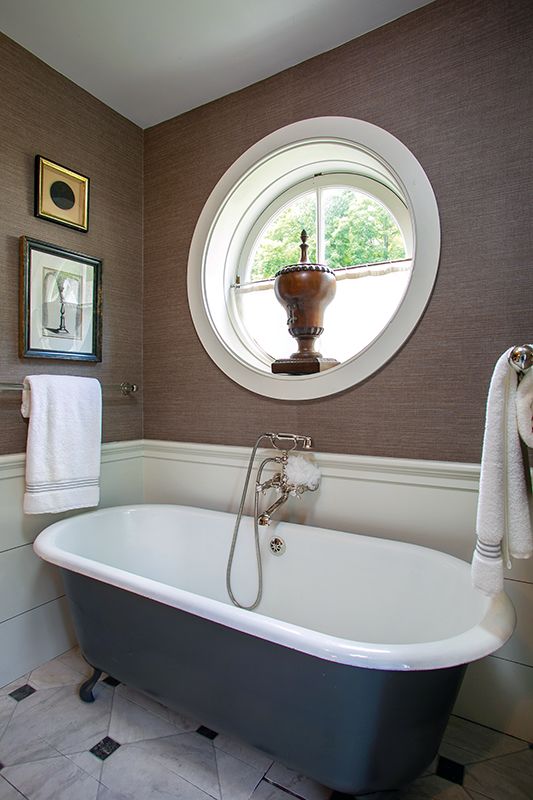
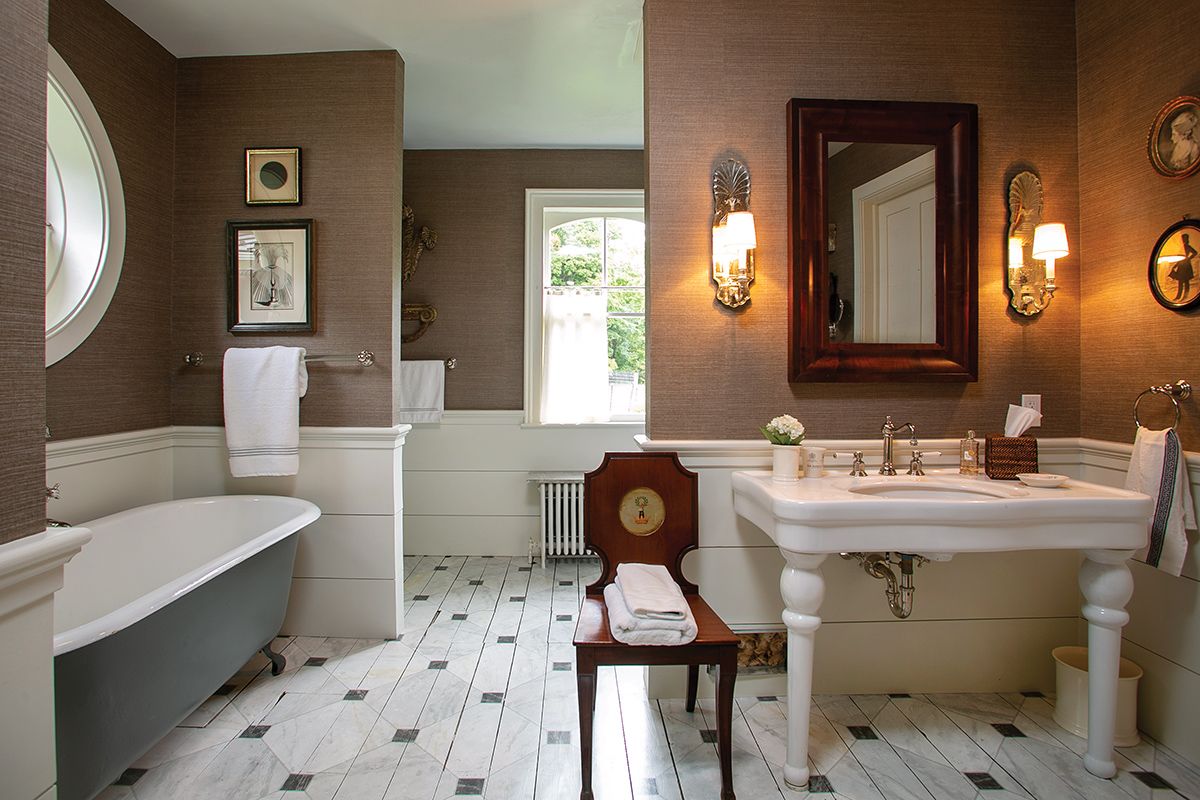
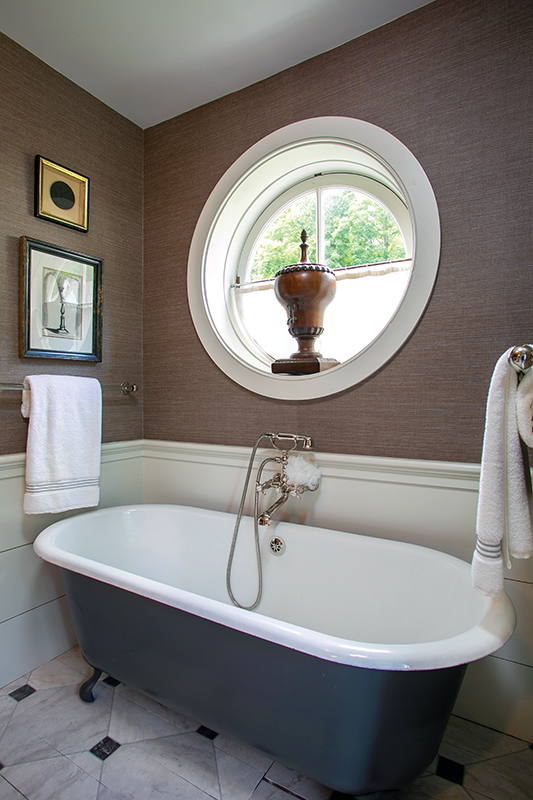
The tub sits under an oculus window in a space that became a bathroom.
-
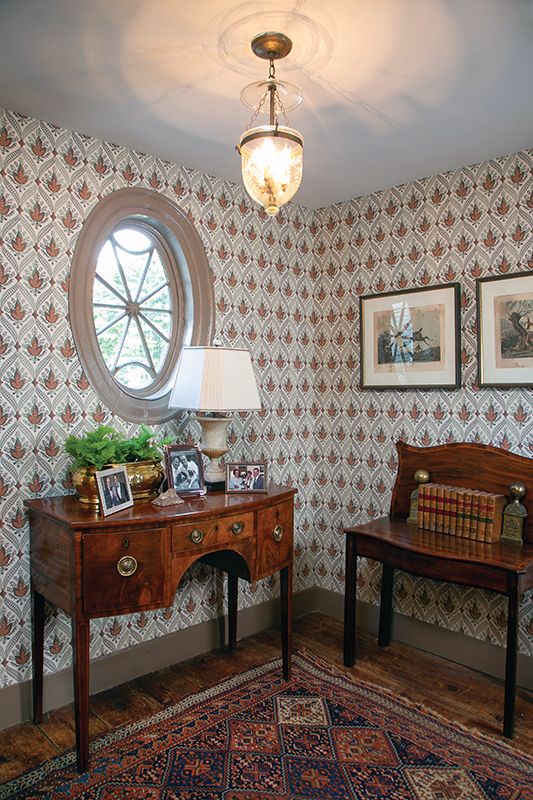
A reproduction lantern hangs in the finished stair landing, where new wallpaper echoes what had been there.
-
Before: The gracious round light or oculus window with tracery remains on the stair landing in the Greek Revival section.
-
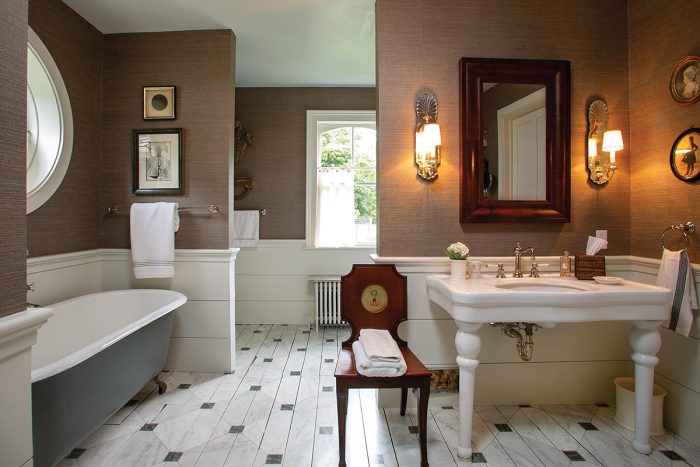
The porcelain console sink faces a fireplace mantel. The room has a simple board wainscot; painted floorboards resemble marble.
-
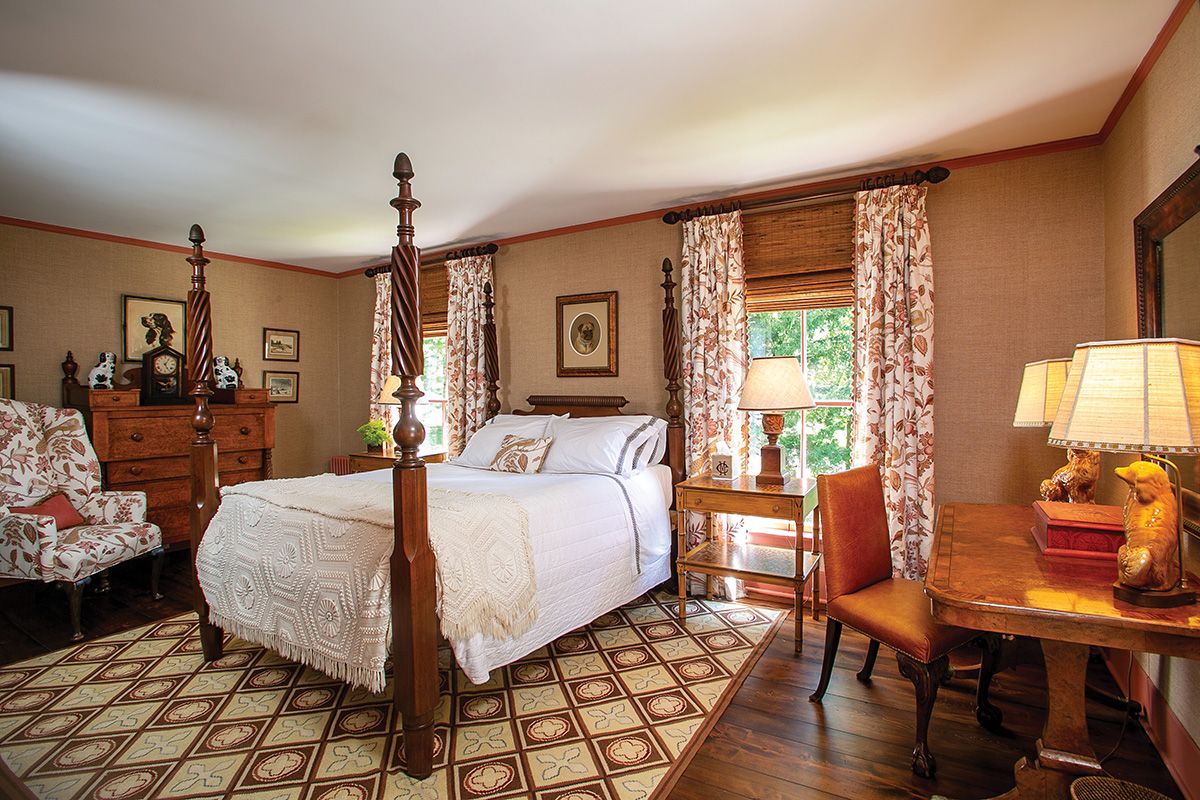
Grasscloth walls give a soft ambiance to a guest room, where the Greek Reviva–era, tall-post bed takes center stage.
-
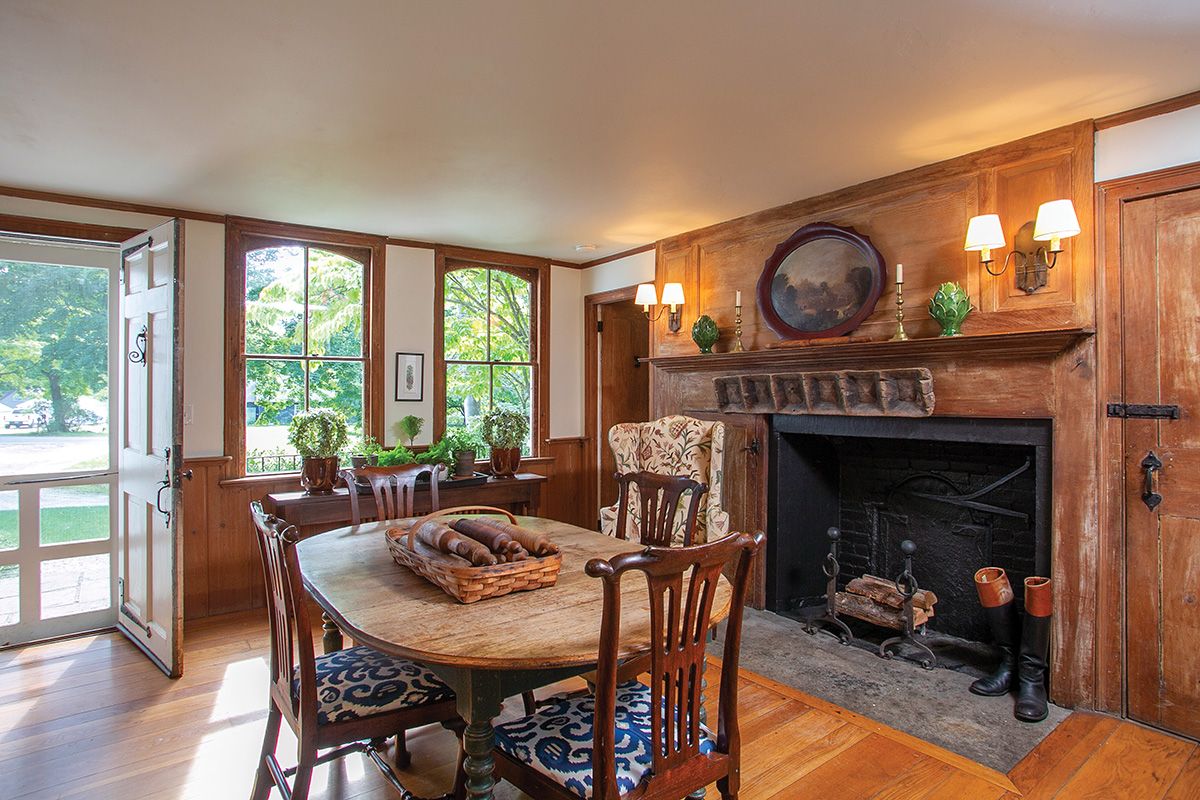
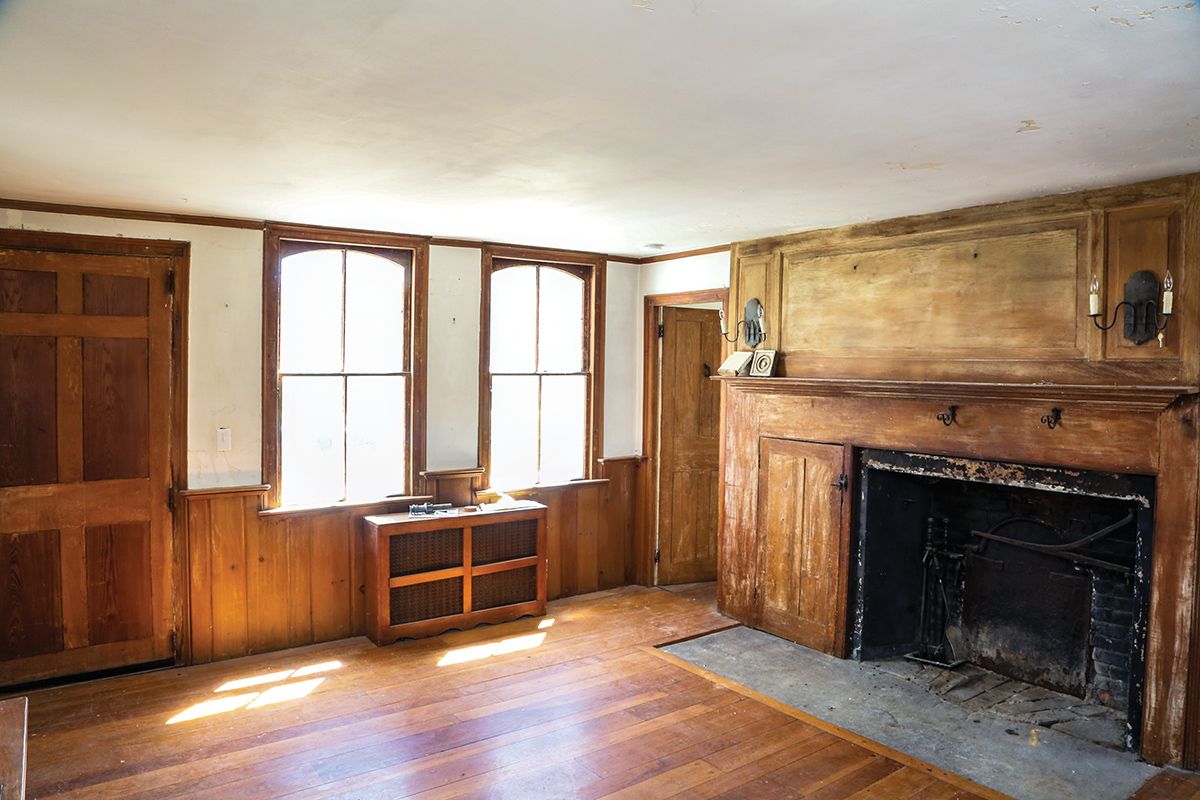
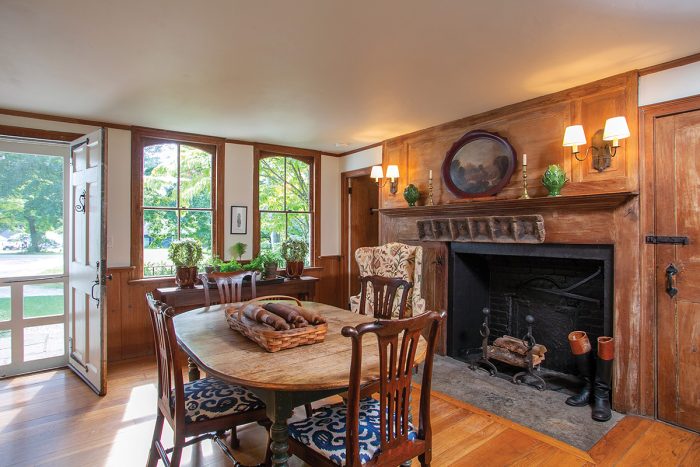
An 18th-century metal fireback, probably original to the house, has been mortared into the brick of the kitchen fireplace. The oak kitchen flooring was installed in the 1940s.
-
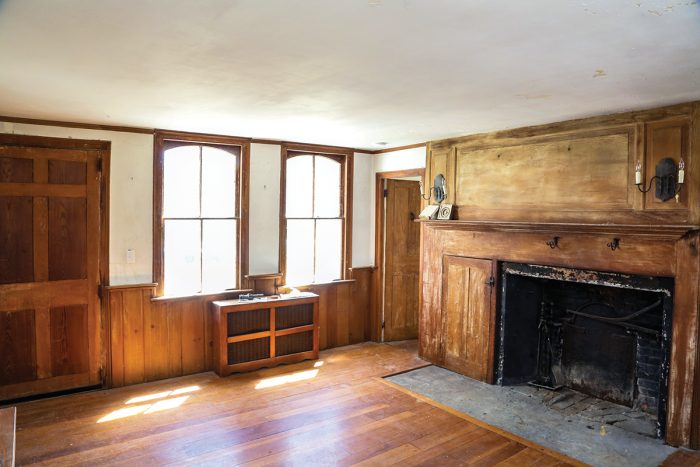
Before: The large fireplace surround in the kitchen, original to the house’s 1767 construction, had been painted. These owners scraped the paint and decided to preserve the patina.