Mastery of Restraint
A charming dwelling, one of three row houses built in 1790, is brought back to light and life.

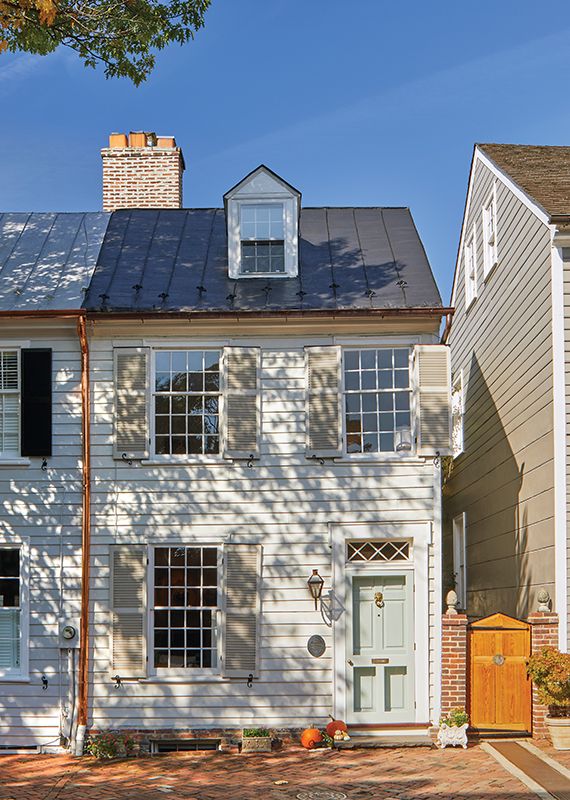
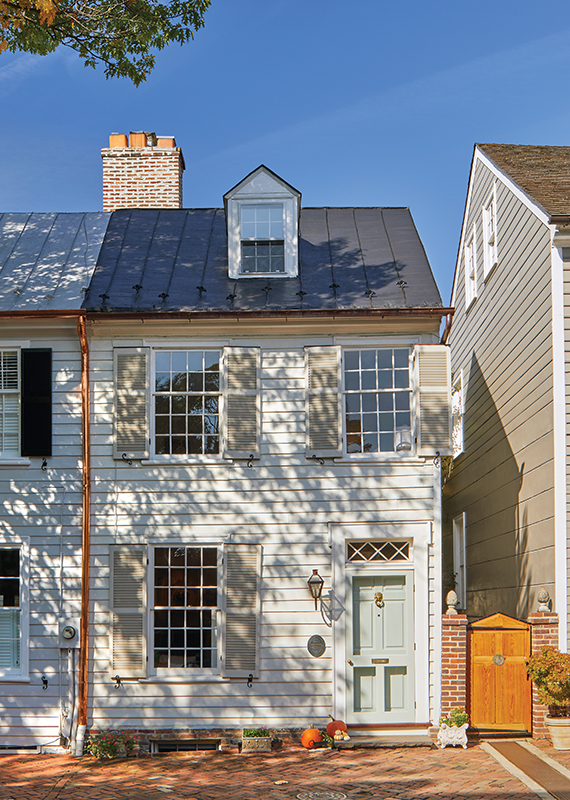
This little gem in Old Town Alexandria, Virginia, was built around 1790, as worker housing. While it had been added to (with delicacy) over the centuries, it functioned as little more than a one-bedroom apartment—that is, until BarnesVanze Architects got involved. Given that the house is merely 14 feet wide and sistered in a row of historic houses, there was little room to grow. By stealing a few feet from the back garden and making clever layout decisions, BVA was able transform this “one-bedroom” into a full-scale home ready for hosting.
|
|
|
Light Work
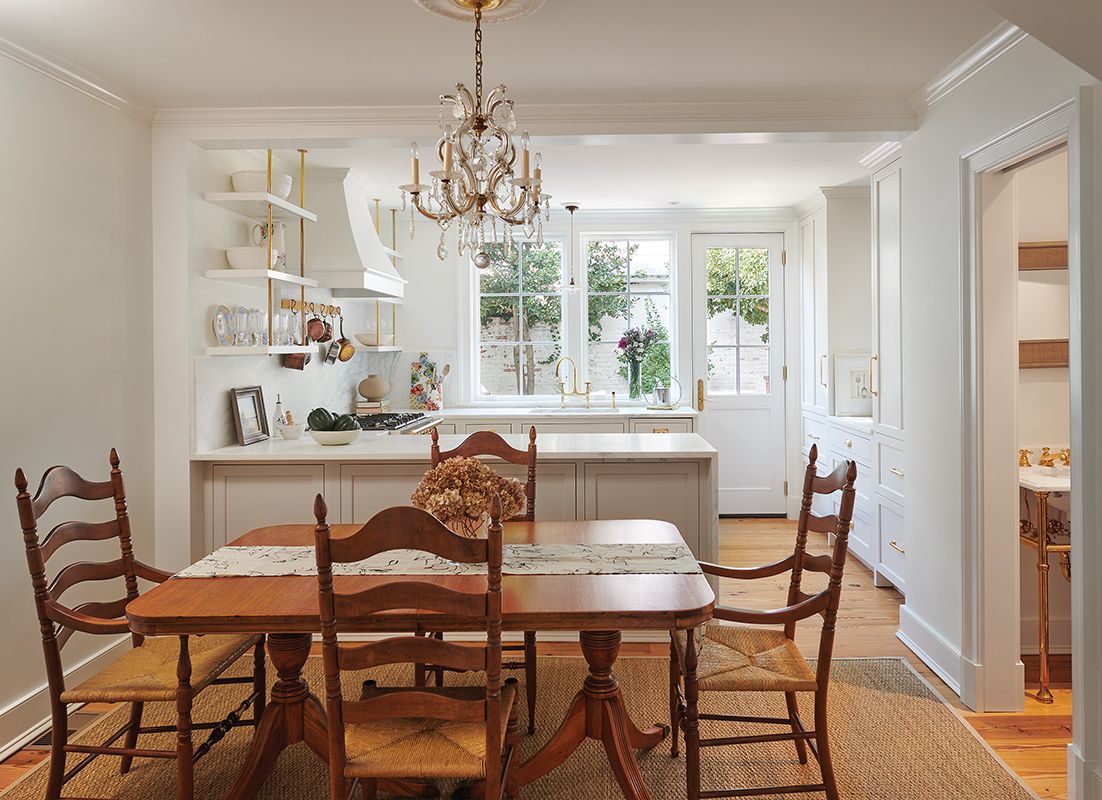
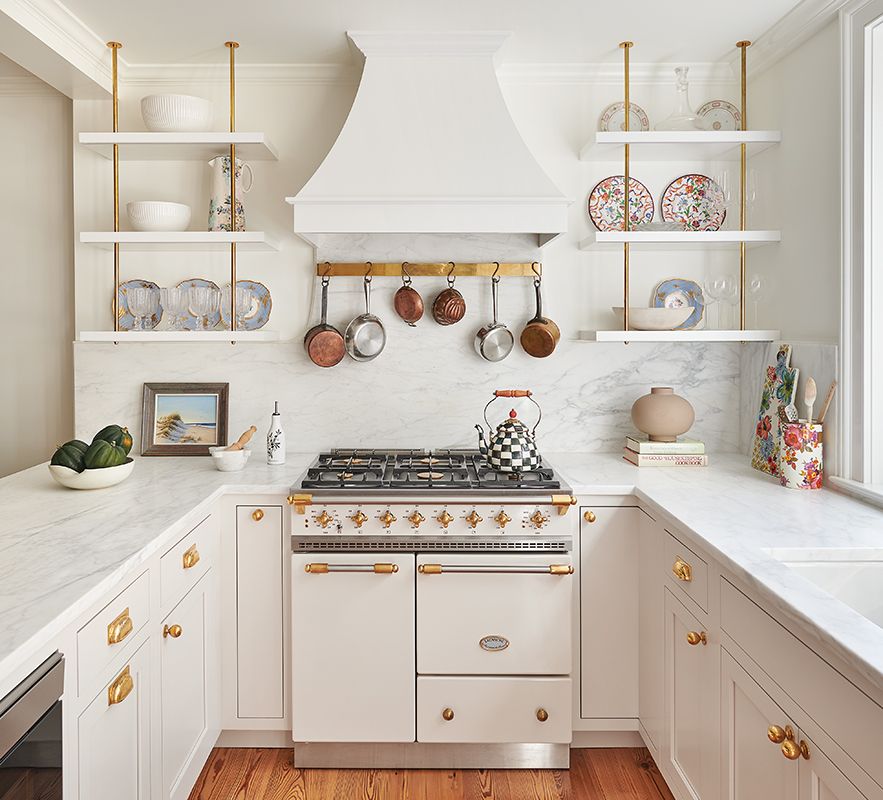
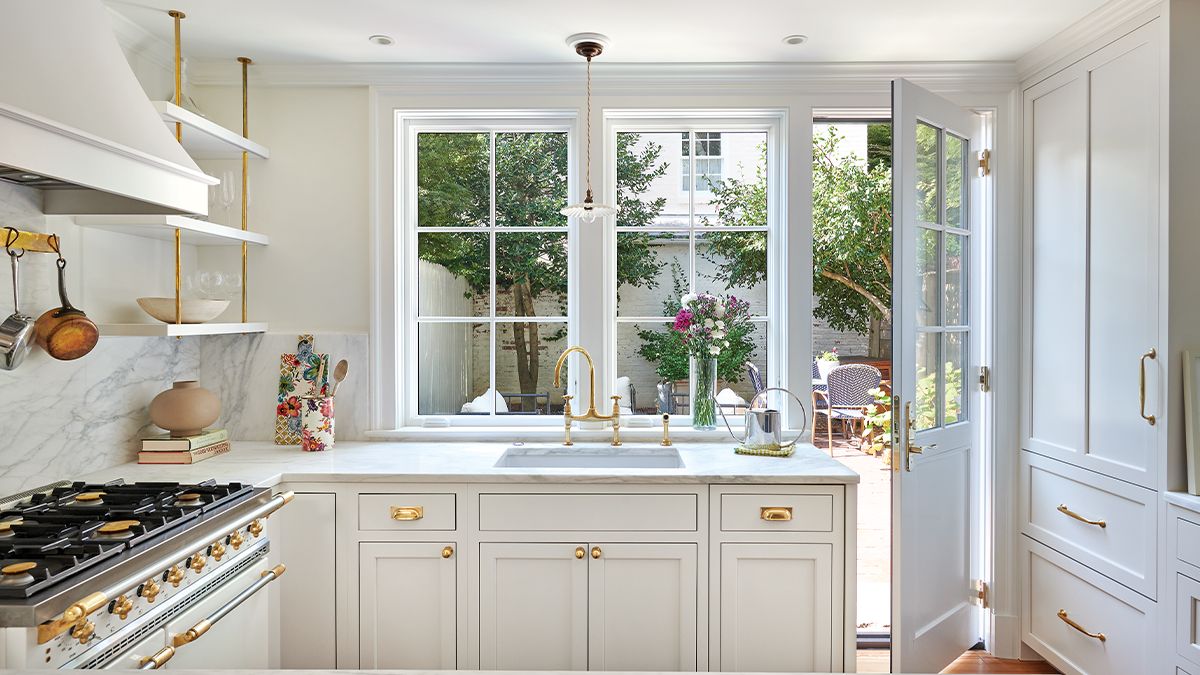
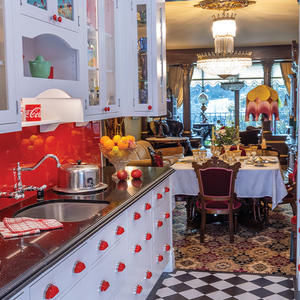
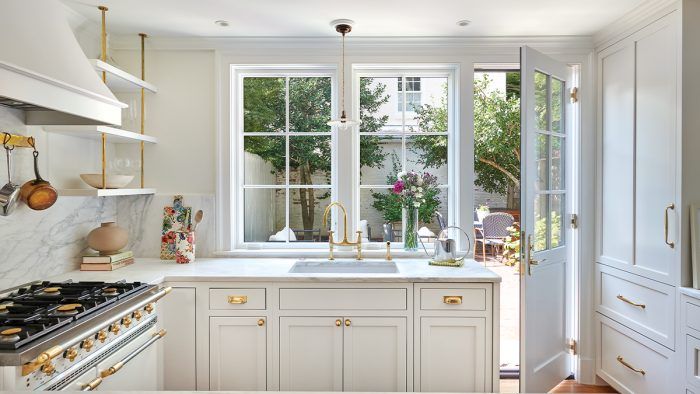
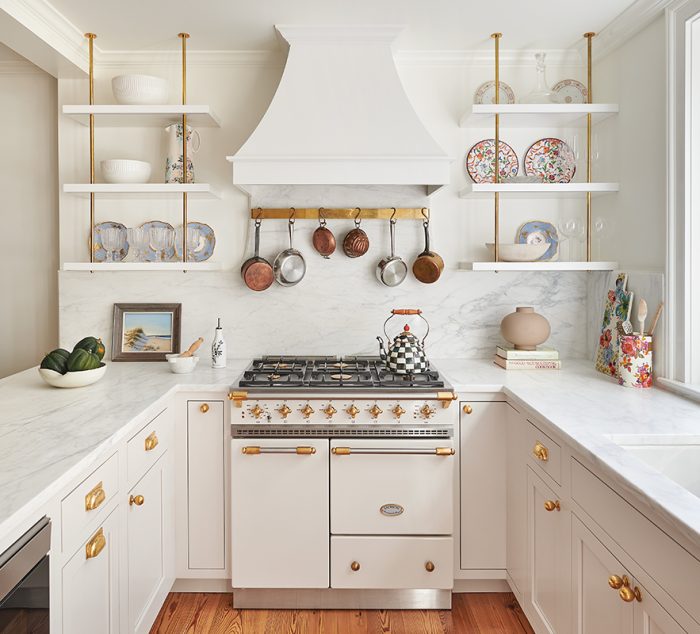
Before intervention, the first floor offered just a kitchen and a den, with a narrow connection between them. By bumping the kitchen back, BVA created a spacious dining room connected to the kitchen by a generous peninsula. A sleek set of white, Shaker-style cabinets streamlines the look, assuring that the focus is on the garden just beyond the wall of windows, beyond any potential cooking chaos.
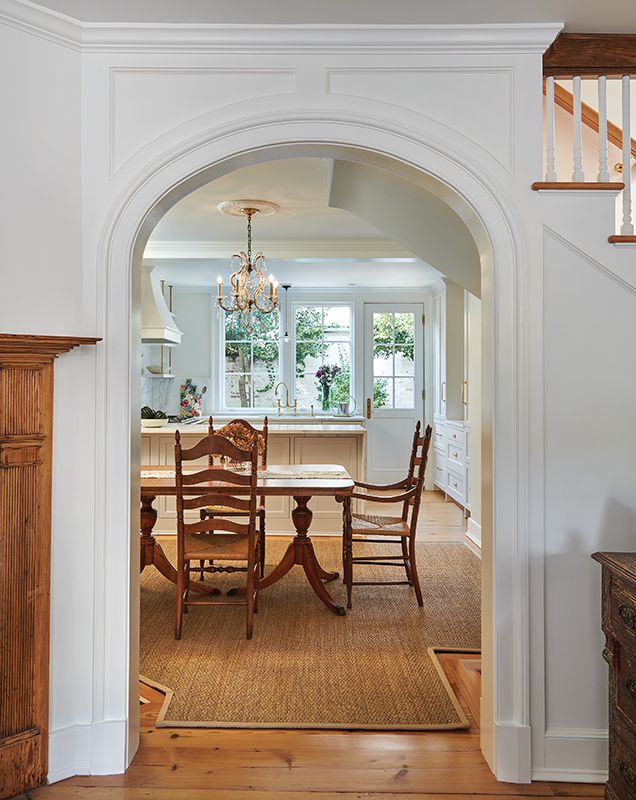
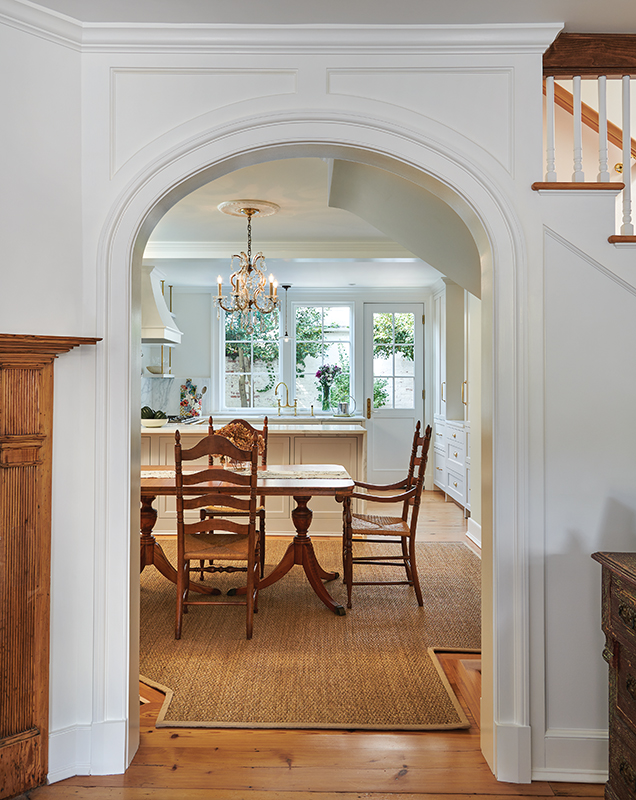
“We were trying to get as much light as possible front to back,” says Michael Patrick, an architect at BVA. Light can be in short supply in a row house, so opening the back wall for windows was key, as was widening the opening between rooms. “It was common practice in Georgian and Federal houses to separate the entry hall from back rooms with a classical arch,” Michael explains.
The living room retained original pine flooring. For continuity, contractor Universal Floors Inc. used 11-inch-wide pine planks salvaged from the attic, along with local reclaimed lumber. After painstaking refinishing, the transition is seamless.
|
|
|
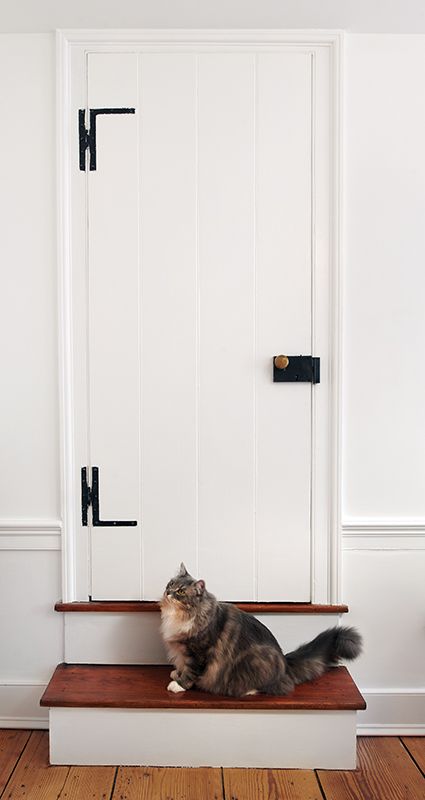
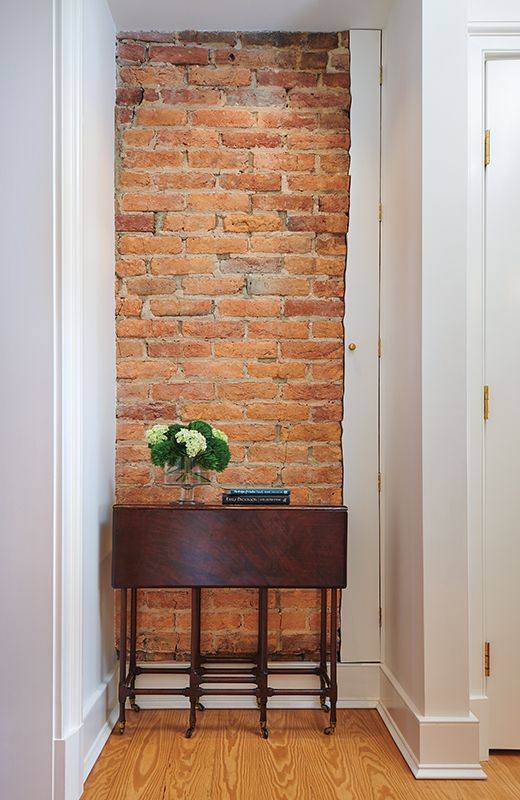
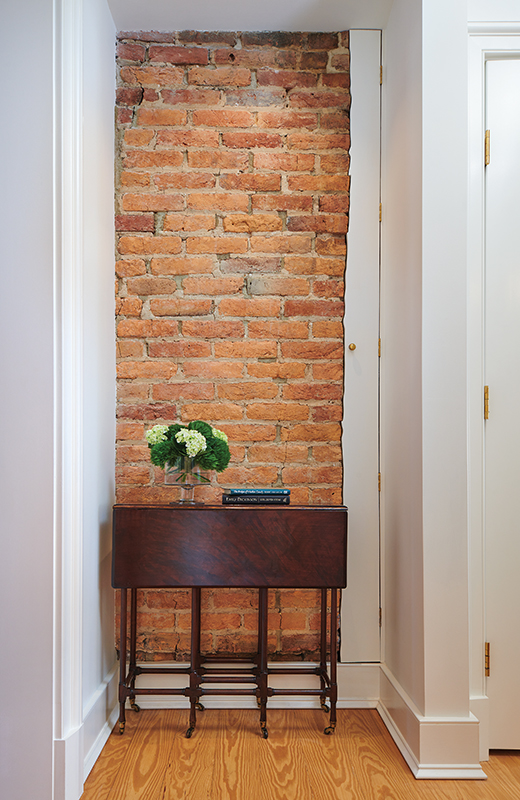 Making RoomWorking with such limited space, BarnesVanze Architects made sure to optimize every nook and cranny. A little gap between the chimney and the adjoining wall was room enough for little more than a broom (singular) closet, so that’s exactly what it became. The designer’s eye for opportunity met some careful scribe work by the carpenter, resulting in a unique moment at the second-floor landing. The quirks were not “designed away.” Instead, this project celebrates the charm inherent in imperfections that come with a building that adapted over centuries. |
Layout Transformation
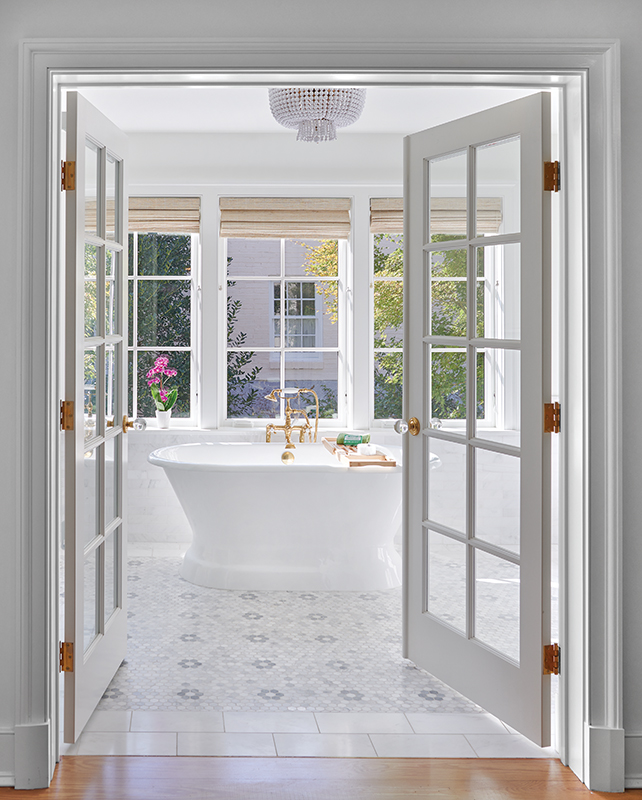
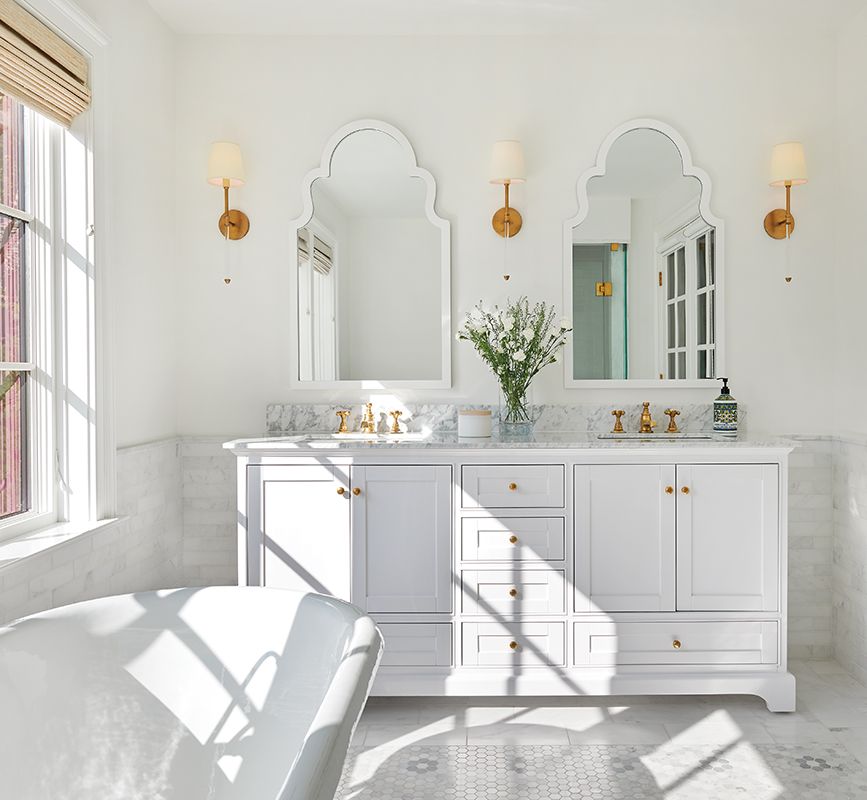
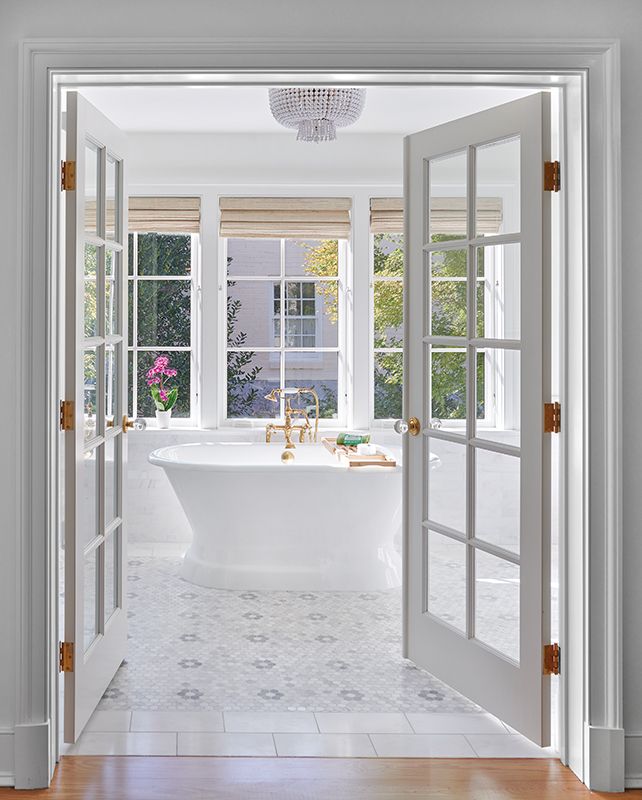
Upstairs was more a quagmire to dredge. Not only did the owner want to find room for a guest bedroom between the primary bed and bath, but she also wanted to eliminate the awkward level change between them. This meant raising the floor of the entire rear half by over six inches. “We were fighting for quarters of an inch,” says Michael. The fight was worth it: With another line of grand windows, a statement tub at center, and French doors, the primary bath is now a light well that shines through to the rest of that floor.
Pulling off a dramatic transformation in a historic neighborhood was not without its points of resistance. The project was not hemmed in legally, but BVA nevertheless consulted with neighbors and local historical commissions to ensure a positive experience for everyone “We encountered every hurdle you can imagine,” Michael says. “When neighbors aren’t used to an addition in view of their backyard, they’re going to have an opinion.”
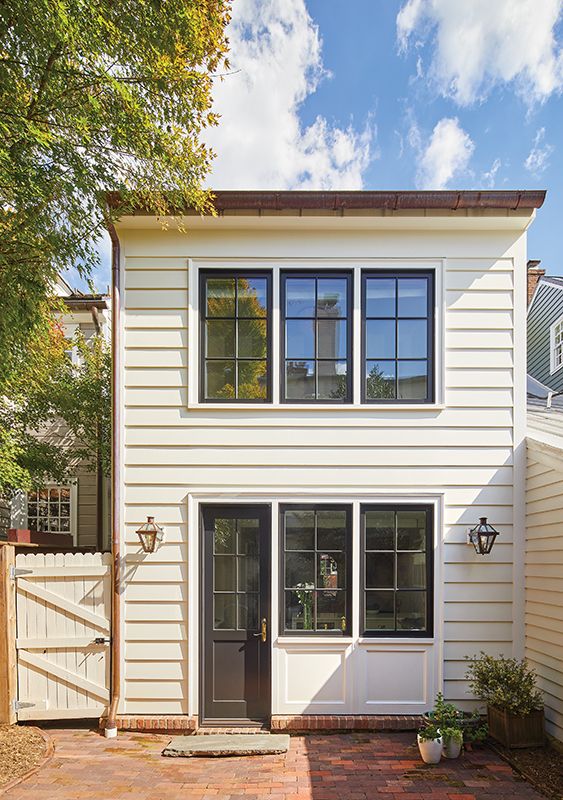
The rear façade, though brand new, looks like it has always been there, with clapboards and dark sashes. Details including copper gutters and brick footings settle the addition into its historic context. When all was said and done, everyone agreed that the facelift was a master class in restraint.
Project HighlightsLocation: Alexandria, Virginia Architect: Michael Patrick, BarnesVanze Architects • (202) 337-7255 Program: Restore the exterior and gently upgrade the interior of a historic row house just 14 feet wide, using period conventions while opening the house to light. |
— Written by Peter B. Thomsen. Photos by Anice Hoachlander.
RELATED STORIES
-
The narrow house is one of several in a row dating to 1790.
-
A wider, arched opening between front and rear rooms brings light to the interior. A modest rear addition made the kitchen functional.
-
Designed to Function: The original first-floor plan allowed for just two rooms, an awkward rear kitchen and a den. Borrowing a few feet from the backyard made the difference. The dining-room chandelier is a local antique. Chairs are family heirlooms. The powder room was added.
-
Simple and respectful, the small rear addition was designed to fit in, pleasing close-by neighbors.
-
A closed stair leads to the dormered third level, now outfitted as a study.
-
Designed by the owner, the warm-white cabinetry and polished-brass hardware match the customized Lacanche range.
-
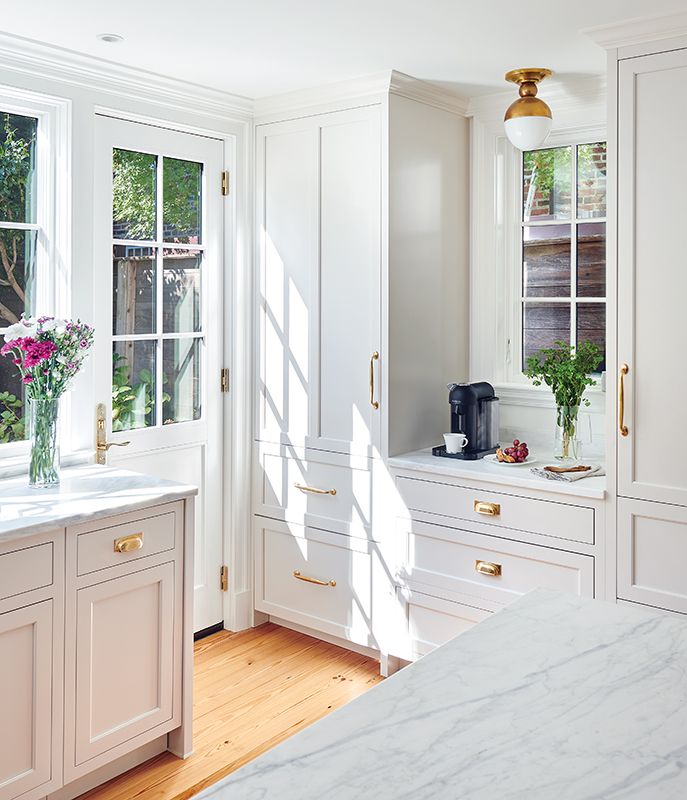
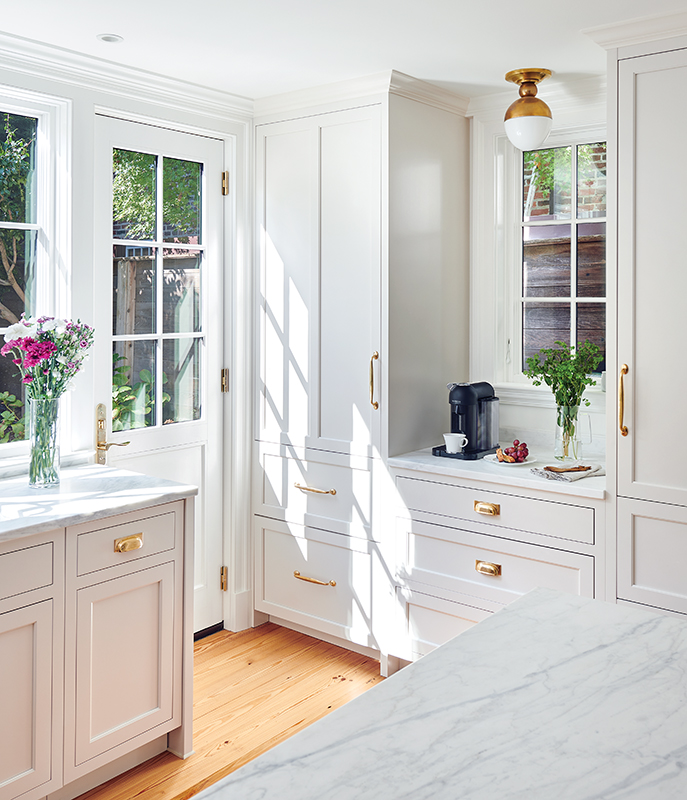
The refrigerator has been tucked away behind full-height cabinets near the garden door. Counters are marble. Fittings are unlacquered brass.
-
The rear addition transformed the functionality of the first floor, allowing for a dining room and streamlining the kitchen layout.
-
The scribed area next to the brick chimney is a closet for a broom.
-
With white-marble tile and glass doors, the primary bath became a light source for the whole second floor.
-
In the primary bath, wall tile is 2-inch x 9-inch honed marble. The floor has a border of honed marble with honed-marble hexagonal mosaic sheets; those came with black “daisies,” which were pulled and replaced with subtler grey tiles.