Cultivating Company Culture
How to build strong workplace culture through clear values, open communication, opportunities for employee growth, and inclusive leadership.

Over the course of a lifetime, the average person will spend 90,000 hours at work. It stands to reason that workplace and company culture can have a huge impact on our quality of life. Put simply, workplace culture is how we show up and interact with each other at work. Is the atmosphere serious, or is there room to joke around? Do people show up to meetings in suits or jeans? When it’s someone’s birthday, is there cake? Culture is there, whether it is implicit or intentional, neglected or strong.
At HELM Construction Solutions, business owners often tell us that they struggle with how to build a strong company culture. We know from experience that neglecting workplace culture can lead to dissatisfaction, unresolved conflict, tension, turnover, and even disrespect and retaliation. We spoke to company leaders at building and design firms who have focused on nurturing the culture at their companies, as well as organizational development experts, to learn their takeaways.
The same themes came up over and over again with regard to intentional culture-building that creates a sense of belonging on a team: Define your values and put them into practice, provide clarity and support to your team in their existing roles and for their future growth, and listen to and incorporate feedback.
Values in Action
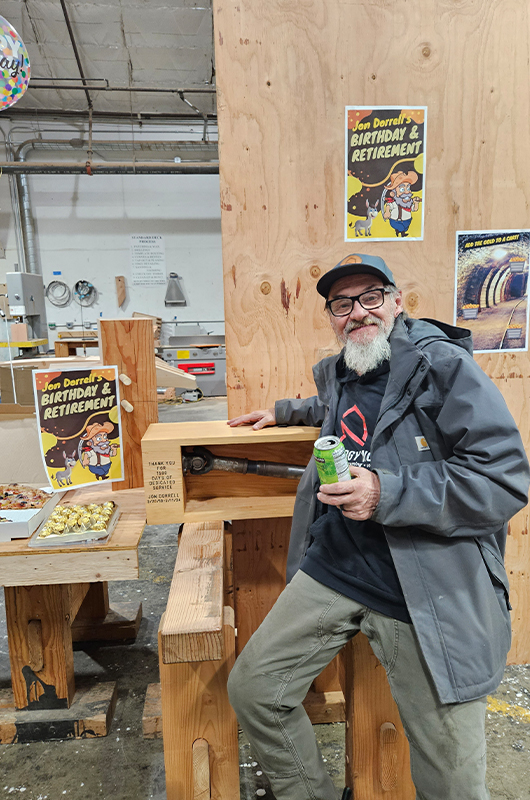
Our conversations with builders revealed a wide range of values: personal and professional growth; knowledge-sharing; respect and kindness; feminism; diversity; curiosity; fair compensation and profit-sharing; and enjoyment of the work itself and of being with coworkers. While each company’s values were unique, everyone we spoke with mentioned values.
Diana Pauro set up core values right away when she started Rebel Builders because she had previously worked at companies where the values did not align with how she wanted to work and treat her coworkers. But establishing values is only an initial step. We learned from our interviews that it is how values are put into action that truly impacts workplace culture. Spending a lot of time discussing values isn’t the most important thing—it’s moving from intentions to practice.
Pauro and her team value respect, kindness, good communication, and innovation, among other things. In practice, this means that if someone makes a mistake, it’s taken as an opportunity to teach rather than to blame. It means working with clients who treat the team appropriately, honoring what they say they will deliver, and keeping a level head when a design is difficult to implement.
Engage and Listen
Understanding what motivates people in their work can help you as a company leader engage and listen to your employees, and incorporate that feedback. “Creating a working environment where people have more involvement and more ownership of the work and the processes, allowing people to grow and be more autonomous, benefits everybody,” says Ben Hemberger, founder of Benjamin + Co., a timber framer and general contractor in southern Maine.
“The typical construction owner wears too many hats and in some ways holds on to a lot of the reins, for better or for worse. Allowing people the space to grow and have more control over the job that they do is empowering.”
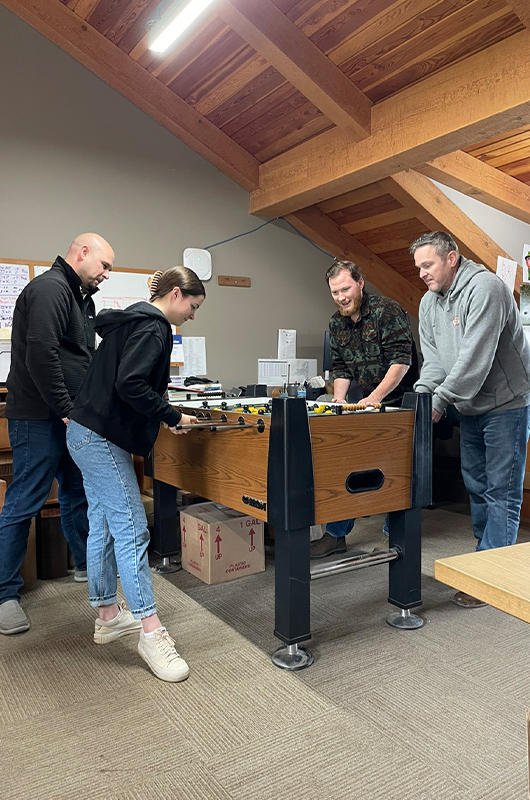
Hemberger adds that it is important for people to feel heard and that they have a say. He accomplishes this in a variety of ways: soliciting employee feedback through a third party; hosting an annual all-staff meeting where issues the team has brought to the table are addressed through policy and process improvements; and more light-hearted quarterly gatherings to socialize, connect, and stay informed about what’s happening at work.
While gathering employee feedback is important, the real value added to your company culture comes from the way you incorporate that feedback into your workplace. Making changes to patterns, structures, and systems to address feedback is a powerful way to show your employees that their voice matters. Not doing so sends the opposite message.
Listening to employees also grows your leadership bench and informs planning for the future. Hemberger realized that his company needed more leadership than what he alone could provide, and he also recognized that he wanted the company to be able to run without him in the future, so he decided to engage with his team in these ways and work with consultants to develop strong administrative and operational tools and processes.
This in turn helped to clarify the opportunities that were available for people who were interested and ready to take their job to another level, and it also led to the decision to move to a profit-sharing model where employees are more invested in business outcomes.
Clear Expectations and Opportunities for Growth
In order for your employees to be able to engage and give feedback that is effective and cohesive, it’s imperative that people know not only the expectations of their own job but also those of their team, says Miriam Aylward, a consultant at HELM. This can have an immense impact on morale. No one wants to do a bad job, but we can set people up to fail by not laying out clear roles and responsibilities.
Many small businesses struggle to provide productive feedback to employees. We’ve seen that some of the traditional ways of training in the trades have been harmful and can create a negative workplace culture. We know it is not effective to ask people to “pay their dues” by working in an environment where information is not shared freely. Nor is it effective to ridicule someone until they get a task right because we think they should already know how to do something or because we feel a sense of urgency to complete a task rather than take the time to provide guidance.
Communication and teaching are aspects of our work that we need to engage with in ways that contribute to a strong culture. One way to achieve that is to invest in and develop employees who provide clear and helpful instruction, and to intentionally pair them with those who need that mentorship. For example, perhaps a member of your team has a knack for explaining how to cut crown molding. That person might be a natural teacher.
A workplace that is conducive to learning also needs to have documentation, processes, and procedures that plan for and address conflict. Make sure it’s clear who leads departments and groups, who makes decisions, and how you make decisions when there is disagreement. Not having a plan in place lays a foundation for mistrust, resentment, and exhaustion.
Your team should also be clear about whether there are opportunities for personal and professional development and advancement within the company. Skill development and personal growth are valued at Black Mountain Architecture, where principal Jesse Schwartzberg has identified a dozen or so skills that are necessary and/or helpful in working at this architectural firm.
An employee doesn’t have to excel at every single one to be successful, but they do have to be pretty good at seven or eight. At regularly planned reviews, the firm helps employees to plan their professional development goals around their interests and strengths, as well as those skills that are opportunities for growth.
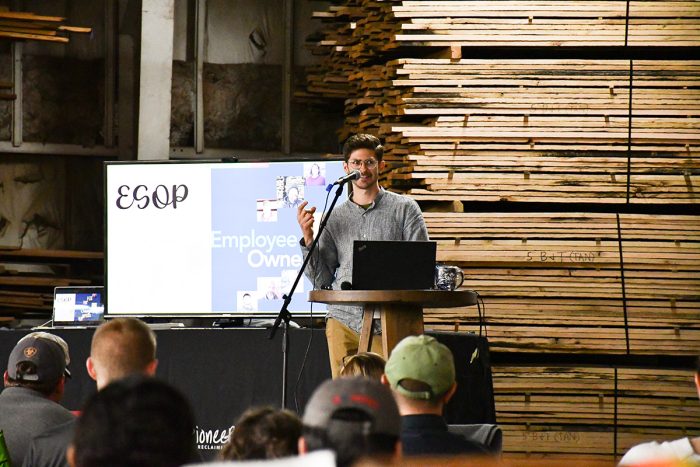
Giving employees a stake in the business is also a way to create opportunities for employee input and growth. Hemberger found that out with Benjamin + Co.’s profit-sharing model. New Frameworks, a Vermont-based construction firm, has had the same experience with its cooperative ownership model.
As cofounder and co-CEO Ace McArleton explains, “There is real power in giving people a say in their workplace, and material rewards and risks from ownership. And as a result of our cooperative structure, there is also a real need to develop leadership skills, business acumen, and facilitation skills, because everyone is a business owner alongside the regular job that they are doing.” This leads to increased opportunities for learning, growing, and belonging, all of which benefit company culture.
Inclusivity and Belonging
A strong culture—one that identifies and lives its values, listens to and incorporates feedback from everyone, and communicates expectations clearly and respectfully—is not inherently inclusive. Inclusivity is itself a value, one that means all of the former is happening across our differences, and this requires self-awareness and examination of implicit bias. Implicit bias is subtle but pervasive, and it often consists of unconscious attitudes.
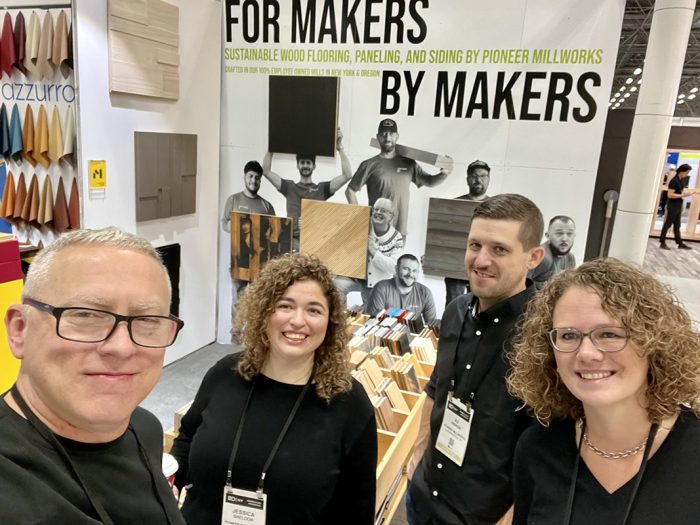
Embracing differences can build strength and resilience, and research has shown that groups with a broader mix of perspectives are typically better at problem-solving than groups that are more homogenous. This is an industry historically dominated by men, most of whom are white. We are seeing that start to change, which is great, and it requires acknowledging the implicit belief that only a particular type of person is inherently suited to the work we do.
It also means building workplaces that are safe and welcoming, where the people who are not part of the dominant identity are not subjected to discrimination, asked to do unpaid or unacknowledged emotional and administrative work, or prevented from moving up in the company.
Are You Nailing It?
Workplace culture is constantly under construction, and there is no one right way to build it. You don’t need to spend so much time on it that it overwhelms you, but neither do you want to ignore it. Culture will grow and change as your team does. As Hemberger says, “Early in the company, when we were less mature, it was unorganized, with friction in the workflow.” With attention to workplace culture, he’s proved that friction can be minimized to create a high-performing team.
— TJ Fattaruso is a project manager at HELM Construction Solutions, a firm that works with contractors and architects throughout North America to help their businesses thrive. Photos courtesy of New Energy Works.
RELATED STORIES
- Your Firm Is Not a Family
- Mel Baiser, Co-Founder of Helm Construction Solutions
- Motivating Your Team to Increase Productivity
Fine Homebuilding Recommended Products
Fine Homebuilding receives a commission for items purchased through links on this site, including Amazon Associates and other affiliate advertising programs.

Code Check 10th Edition: An Illustrated Guide to Building a Safe House

Graphic Guide to Frame Construction

All New Bathroom Ideas that Work