Choosing a Paintbrush
Tips for picking the right paintbrush based on paint type, surface, and personal comfort.
I’m overwhelmed whenever I walk into my local paint store and see an entire wall full of different types of paintbrushes in different shapes, styles, and materials. What are some good tips and guidelines for choosing the right brush for different common paint applications?
— C.P.; Chilton, Wis.
Jess Araujo, Owner of Greenhaus Painting, Replies
I’m a professional painter, but I feel that standing in the brush aisle at my local paint store can be like trying to find a needle in a haystack. To some extent, brush choices are a matter of personal preference and comfort, especially when it comes to choices like handle size and shape. However, there are some technical guidelines you need to follow when selecting a brush. Here are a few simple rules to make brush selection much easier, by process of elimination.
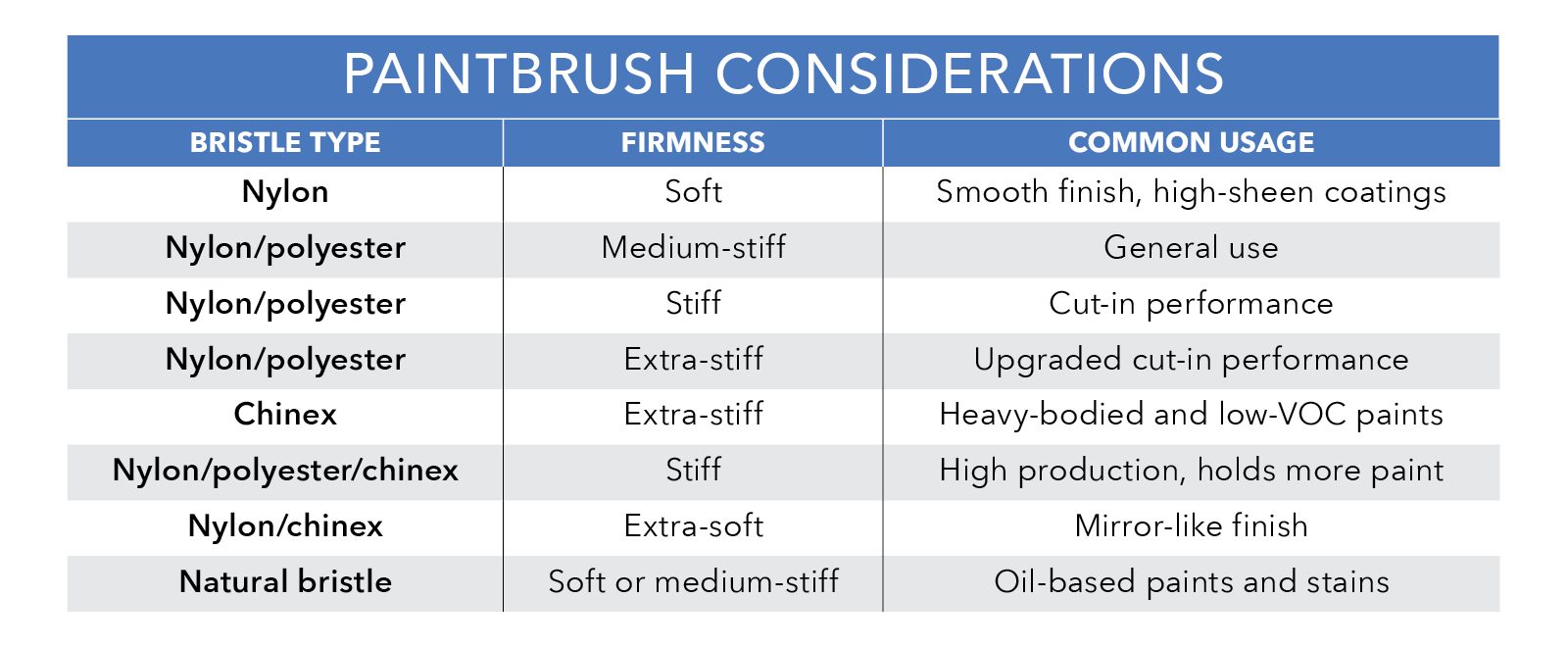
Start the selection process by thinking about what kind of paint you’re going to be using. If you’re using a water-based finish, such as a latex wall paint or urethane trim enamel, you want to use a synthetic bristle brush. The most common synthetic bristle types are nylon, polyester, and chinex—with most brushes being a blend of these filaments tailored by manufacturers to provide specific brush characteristics (more on this is a bit).
If you are using oil-based paints and stains, you want to use a natural-bristle brush. These brushes are made from animal hair and work better with oil-based products because they’re softer and don’t soak up the solvent like synthetics do.
Next, decide how smooth or firm a brush to use, which often can be determined on the basis of three factors: the surface to which you are applying the paint, the level of control needed, and the desired finished appearance of the paint. Generally, stiffer brushes are better for rough surfaces (like brick or textured drywall), while softer brushes are better for smooth surfaces (like cabinets or metal doors).
Stiffer brushes sacrifice some finish smoothness to offer extra control and precision, making them ideal for tasks like cutting in or painting sharp lines. On the other hand, soft brushes excel at minimizing brush marks and providing smooth finishes, but they are harder to use for cutting in.
More to Consider
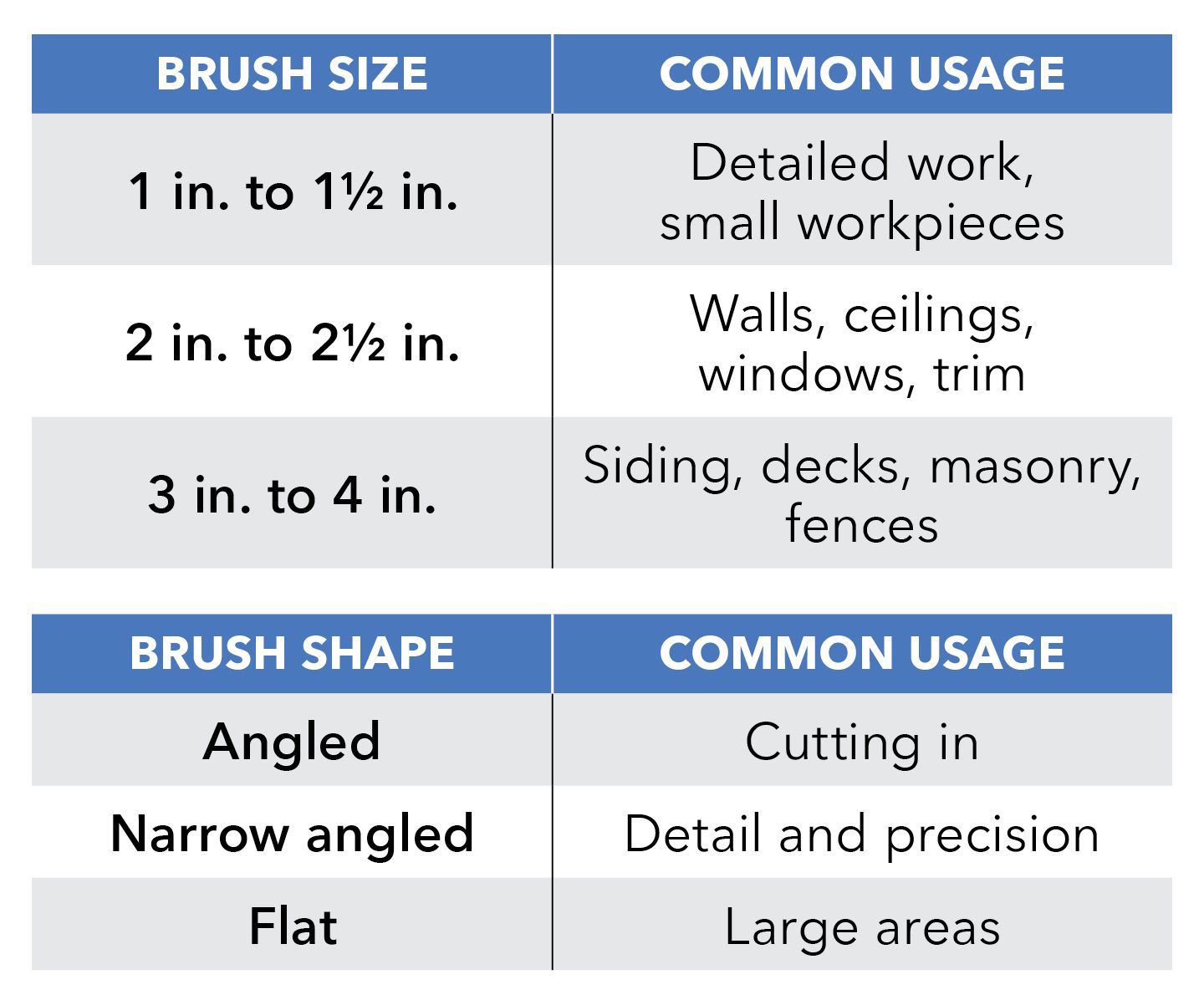
The third step in the selection process is to determine the shape and size of the brush based on the size and detail of what you are painting. Flat brushes work great for painting large surfaces like an entire wall or a fence, but you wouldn’t want to use one for fine detail work or cutting in. Conversely, thin-angled brushes are the ones to use for painting small and detailed pieces like profiled trim or cabinets, but they would be slow at painting large surfaces.
Standard angled brushes offer good all-around utility and control for general painting tasks like cutting in and basic trim work. Generally, wider brushes will suit you better for bigger surfaces, while narrower brushes will be better for smaller surfaces or detailed work. For general wall painting, a 21/2-in. or 3-in. angled brush is a good starting point, while a 11/2-in. to 2-in. thin angle brush is a good first tool for trim.
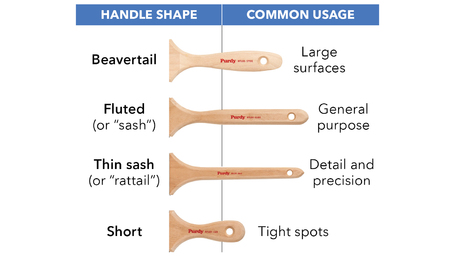
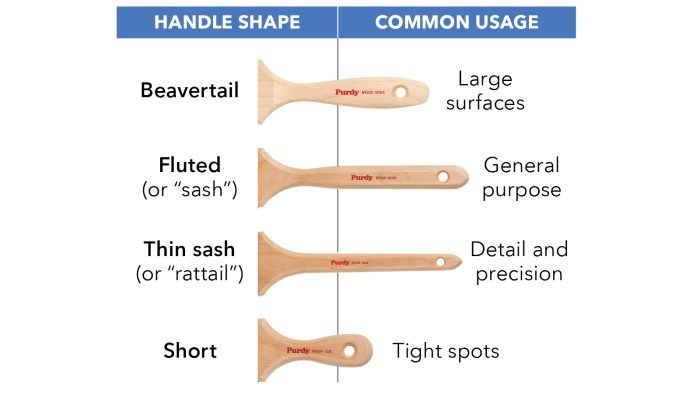
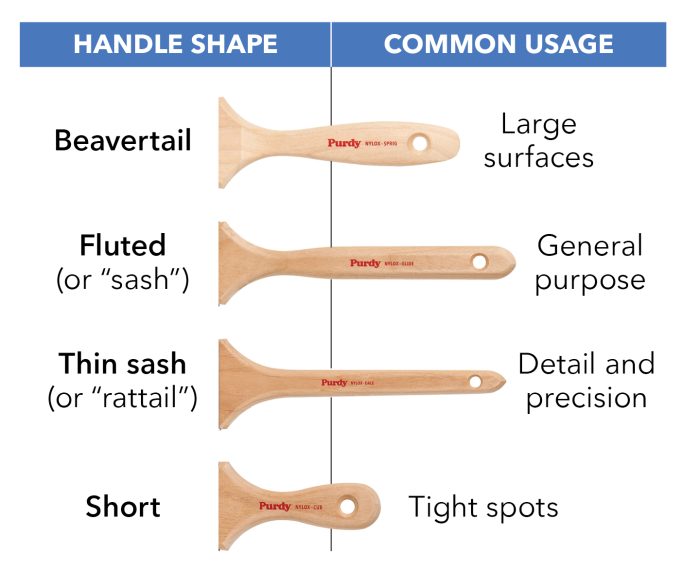
The final step of the brush selection process is where a lot of personal preference comes into play, especially regarding handle shape. The four major handle shapes are beavertail, fluted (also known as sash), thin sash (also known as rattail), and short.
If you’re looking specifically at Purdy brushes, it might save you some head scratching to know that company’s unique names for these shapes: Sprig, Glide, Dale, and Cub, respectively. As you paint more, you will find what types of handles are most comfortable for you and which you prefer for different types of work.
My Last Bit of Painter Wisdom
A good brush isn’t cheap, but it’s worth it. Wash it well, store it properly, and it will last you for many jobs. I have brushes in my kit older than some of my crew members!
RELATED STORIES