Drafting the 2027 IRC
Key proposals for the next edition of the International Residential Code tackle room sizes, stair specs, emergency egress, and deck guards, among other requirements.
The codes that govern how we build houses and buildings are established through state and local rules, but municipal and state governments don’t make up the rules entirely. They start with “model codes,” which for residential work nearly always means the International Residential Code (IRC), developed by the International Code Council (ICC). Before 1994 when the ICC was formed, there were several model codes, but now the IRC is pretty much the only game in town, except for the few municipalities that use older model codes.
The IRC is updated every three years. I just returned from the first round of hearings in Orlando that will determine changes and additions to the current 2024 IRC, which would take effect with the 2027 edition. At a second round of hearings scheduled for October in Cleveland, participants can raise objections to committee decisions and suggest proposal modifications.
Anyone can comment or request further debate on amendments and changes at the second hearing. Next year at the final hearings in Nashville, proposals again will be up for killing or modifying. The final vote on what becomes code is made by government-employed building and public-safety officials.
In addition to what’s described below, the 304 floated proposals cover topics such as three- and four-plexes, salvaged lumber, occupiable roofs, deck bracing, wildfire protection, fiber-cement materials, and laterally unsupported headers.
For a description of how codes are developed, see “Changes to the Building Codes” (FHB #285). Since I wrote that column, the ICC has added a committee hearing to create more opportunities for proposal collaboration and modification. Learn more about getting involved at cdpaccess.com.
Minimum Room Sizes
Currently the IRC requires that houses have at least one room with a 70-sq.-ft. minimum habitable area and a minimum 7-ft. dimension “in any direction.” This could be taken to mean no space can have a wall less than 7 ft., even areas outside of the minimum 70-sq.-ft. living space. A few proposed amendments clarify that the 7-ft. dimension applies to the habitable area. One proposal would require that 49 sq. ft. of the habitable space measure at least 7 ft. by 7 ft., while allowing the remaining 21 sq. ft. to fall outside that area, without a minimum dimension.
Stairways
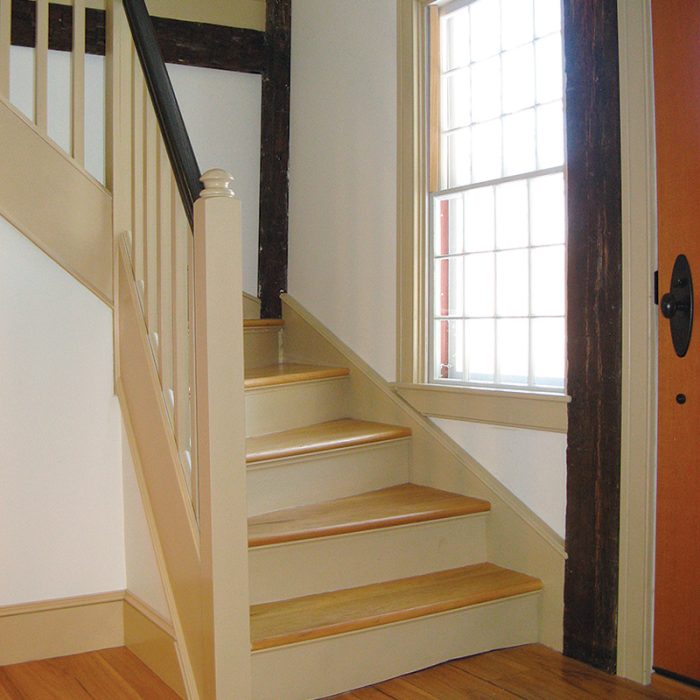
A proposal to change the maximum riser height from 73/4 in. to 81/4 in. and the minimum tread depth from 10 in. to 9 in. was also debated. These narrower tread and taller riser dimensions were common in model codes before the first (2000) edition of the IRC. It’s estimated that half of jurisdictions amend the current code to match the historical tread and riser dimensions.
Other stairway proposals suggest reducing the required 6-ft. 8-in. headroom at stairways down to 6 ft. 6 in., which is the current standard for spiral stairs. Another headroom proposal would allow 6 ft. of headroom at one side of the stairs, provided it slopes up to 6 ft. 8 in. high on the other side of the stairs—reaching that height at least 12 in. away from the adjacent wall or balustrade.
Decks and Guards
Allowable guardrail (“guard” in the IRC) deflection has been a big part of deck code discussions in recent code cycles. Notably, one proposal excludes guards and handrails from any direct deflection requirements, because there isn’t agreement on an acceptable way to measure the amount of deflection.
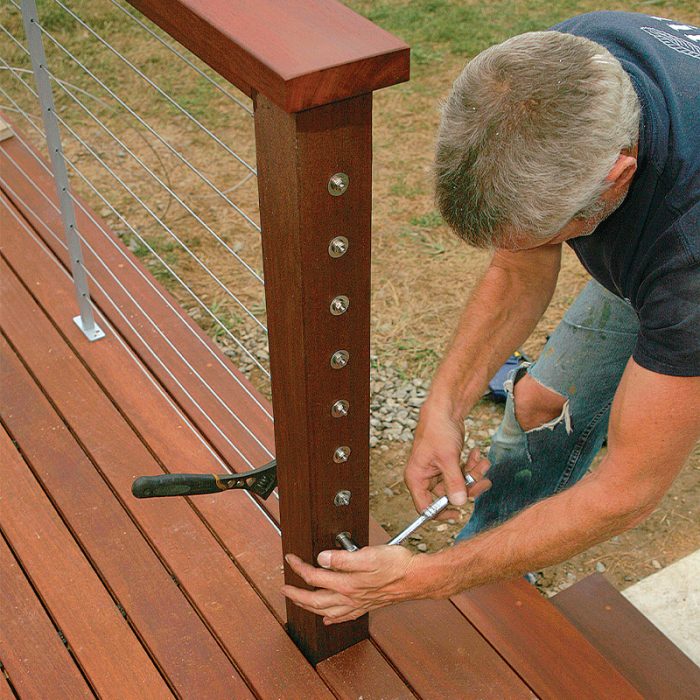
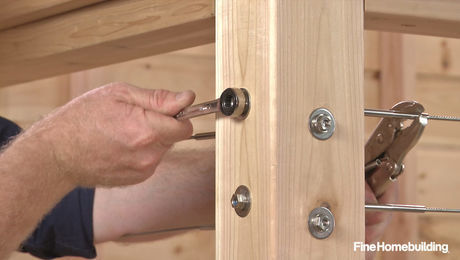
Two other proposals try to address the deflection/spreading of cable guard rails, another recurring topic of code discussion. One suggests using a 12-lb. force applied to a 4-in.-dia. sphere while trying to pass it through an infill opening greater than 11/4 in. This proposal isn’t specific to cable guards, but another offers a very detailed prescriptive method for cable guards.
Although not limited to decks, other proposals address corrosion and decay. One requires better corrosion resistance of fasteners and hardware in saltwater environments. Another is a major change to the “Use Category System,” proposed by the American Wood Council (AWC).
It suggests revisions that provide greater specifics related to chemical-treatment retention levels based on where the treated lumber would be used. The current terms “ground contact” and “above-ground contact” are no longer used and are replaced with six different use categories.
Emergency Escape and Rescue Openings
The section for emergency escape and rescue openings (EEROs, or “egress windows”) has been significantly revised over the last few code cycles, but the egress window industry was hardly involved in the conversation. This year leaders from several companies that make egress windows and egress wells presented three proposals.
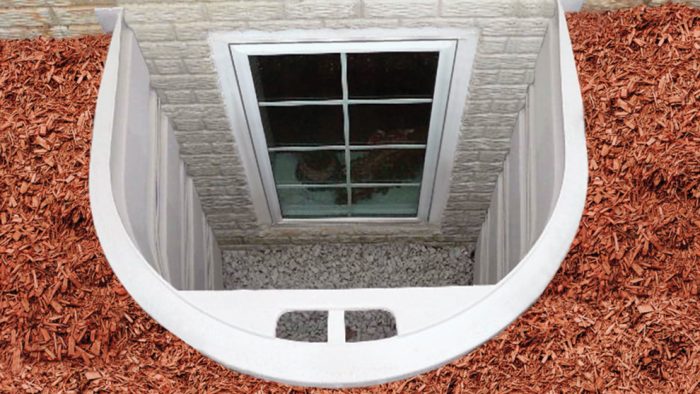
The first addresses the amount of space required inside the window well. Currently the IRC requires a 3-ft. by 3-ft. area outside the window, but few manufactured window wells provide a 3-ft. by 3-ft. area, as steel and plastic wells are typically curved to better resist soil pressure.
The proposal suggests changing the way the space is measured. Wells would have to be a minimum of 3 ft. wide and 3 ft. deep measured perpendicular from the window center to the center of the well. Though ladders are commonly used for climbing out of window wells to the grade above, steps are also permitted. In the 2021 IRC, the minimum horizontal tread depth for these steps increased from 3 in. to 5 in. A proposal aims to return it to 3 in.
Covers over EERO wells can’t take more force to remove than the force required to open the EERO window or door. For heavy covers, like those built into decks, there’s a proposal to allow lift-assist devices. Another proposal aims to clarify that window stops, night latches, and similar devices are not permitted on EERO windows. Only opening-control devices for child fall protection that comply with ASTM F2090 are allowed.
Life Safety Alarms

This year’s hearing included discussion on the need for alarms that can detect natural gas and propane and how they would be regulated if they were required. Fuel-gas alarms are required in recreational vehicles, and requiring them in houses has been proposed before.
Additional requirements were proposed for life-safety alarms for houses with floor levels exceeding 1000 sq. ft. These requirements are already in the NFPA 72 alarm code referenced in the IRC. Proponents say reprinting the rules in the IRC would make them more accessible to builders and building officials.
Carbon monoxide alarms are currently required inside bedrooms only when they contain fuel-gas appliances. A proposal aims to expand that to other rooms with said appliances that are only accessed through the bedroom, such as a den.
Vapor Management
Proposals for vapor control in floor, wall, and ceiling assemblies were aimed primarily at clarifying and correcting previous code work. One proposal addresses dehumidification of crawlspaces, specifically whether foundation insulation is required in a dehumidified crawlspace and, if so, how much.
Other vapor-management proposals address permeability of vapor retarders in above-grade and foundation walls and the thickness of subslab vapor retarders. In 2021 the IRC increased the thickness of vapor retarders under concrete slabs from a minimum of 6 mils to a minimum of 10 mils.
In the 2024 edition, it went back to 6 mils, but a 2027 proposal is again arguing for 10 mils minimum. Another important proposal aims to correct a calculation error for unvented attics with vapor-diffusion ports. Vapor-diffusion ports help control moisture accumulation in unvented roofs in climate zones 1–3. The current ratio of vapor-diffusion port to ceiling area of 1:600 enacted with the 2018 IRC would be changed to the originally intended 1:150.
— Glenn Mathewson; consultant and educator with BuildingCodeCollege.com.
RELATED STORIES