Do This, Not That: Regarding Porch Details
With the many water-resistant materials available today, some of the basic “best practice” construction details are ignored.

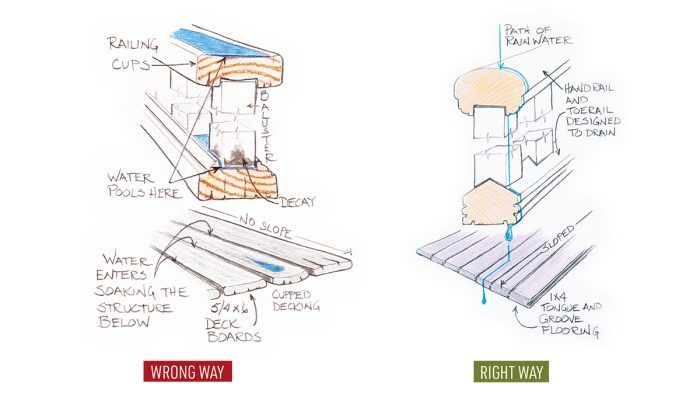
Given a reliance on chemically treated lumber, synthetics, and composite materials, some of the basic “best-practice” construction details are ignored. These are the tried-and-true details that shed water, mediate humidity and weathering, and generally lend longevity.
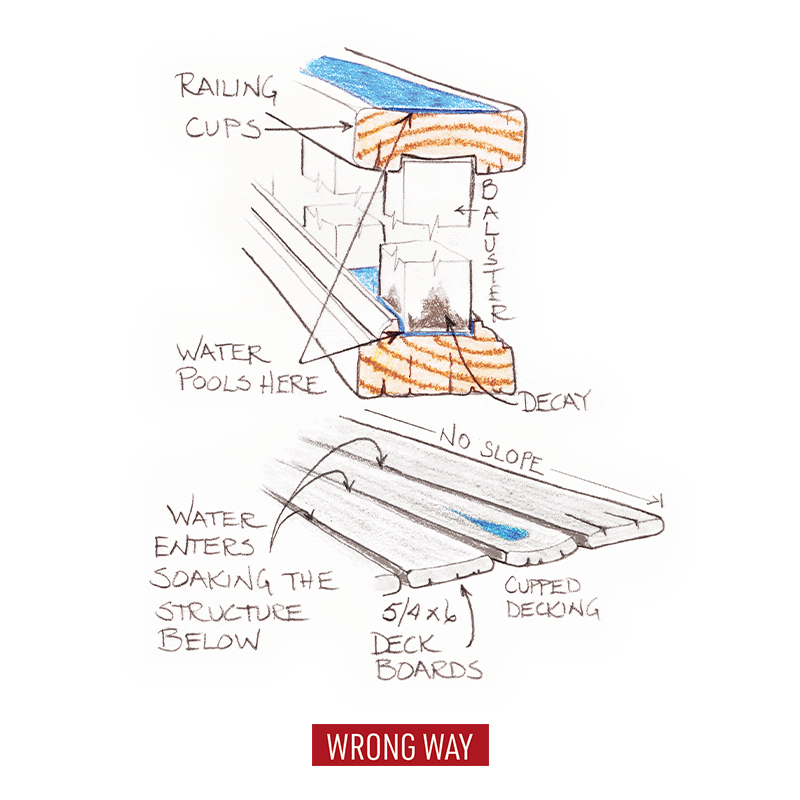
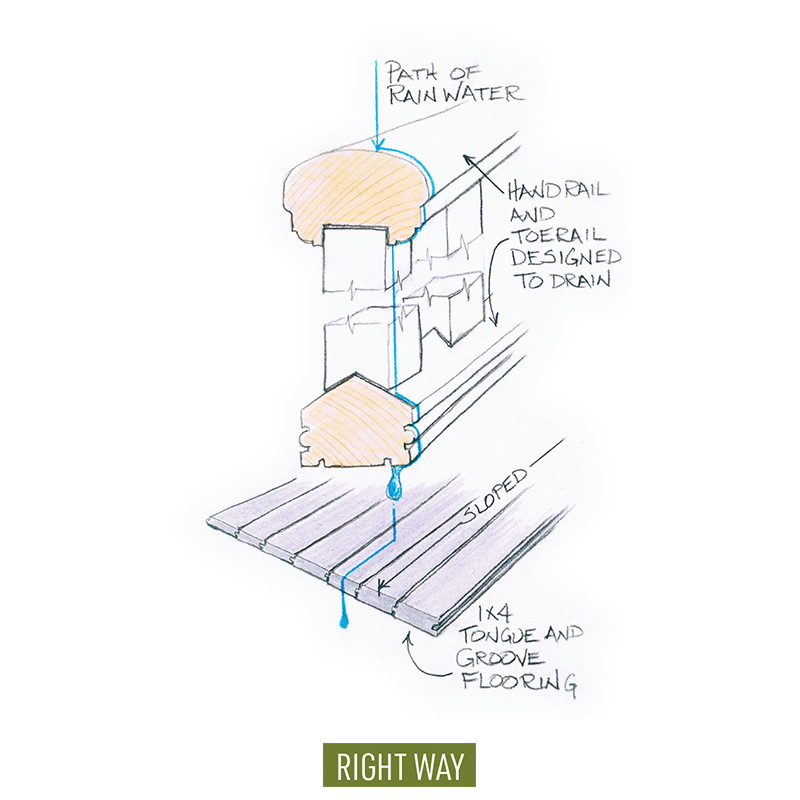
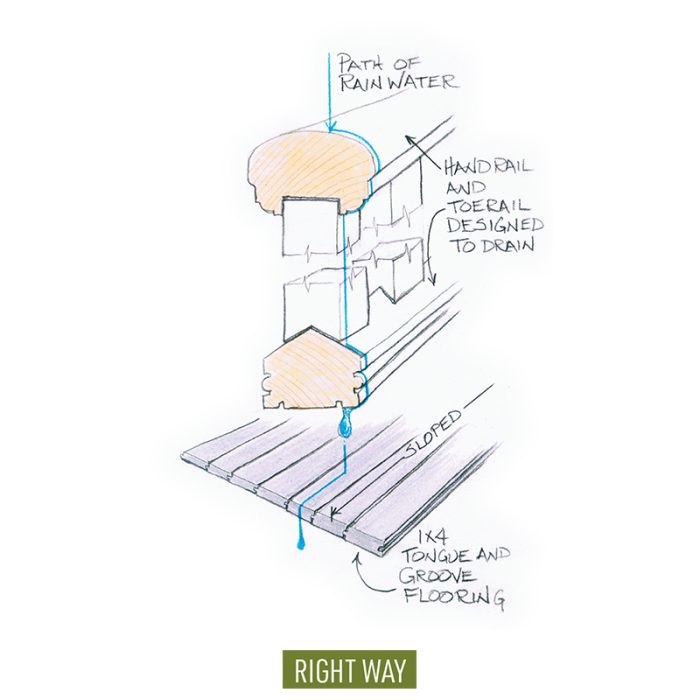
To determine the assembly of individual elements, imagine a drop of water falling from its highest point to the ground. On its way, it should not encounter any flat, level surface. Nor should it find up-facing joints (flooring excepted).
Examples
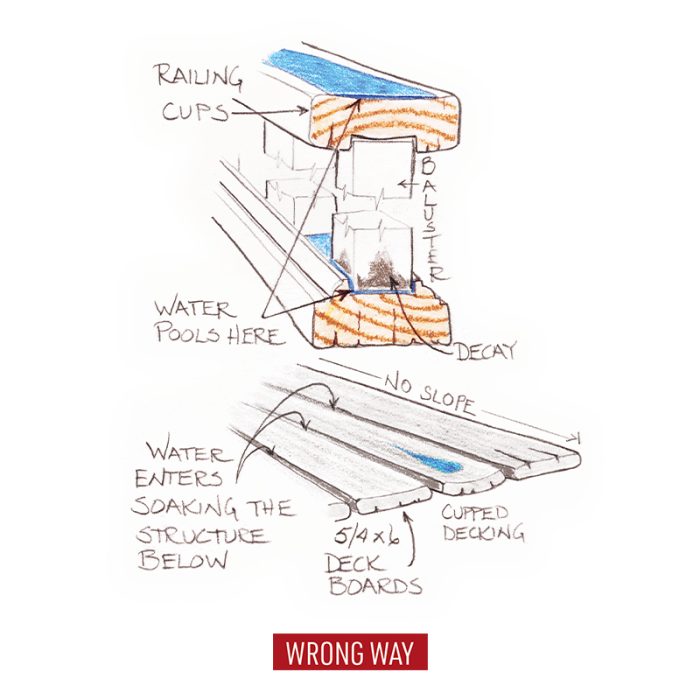
Make sure handrail, balusters, and toe rail are sloped or chamfered to shed water. Be sure the deck is pitched (about ¼ inch per foot), again to shed rainwater. Such considerations eliminate many issues that plague porches and lead to rot.
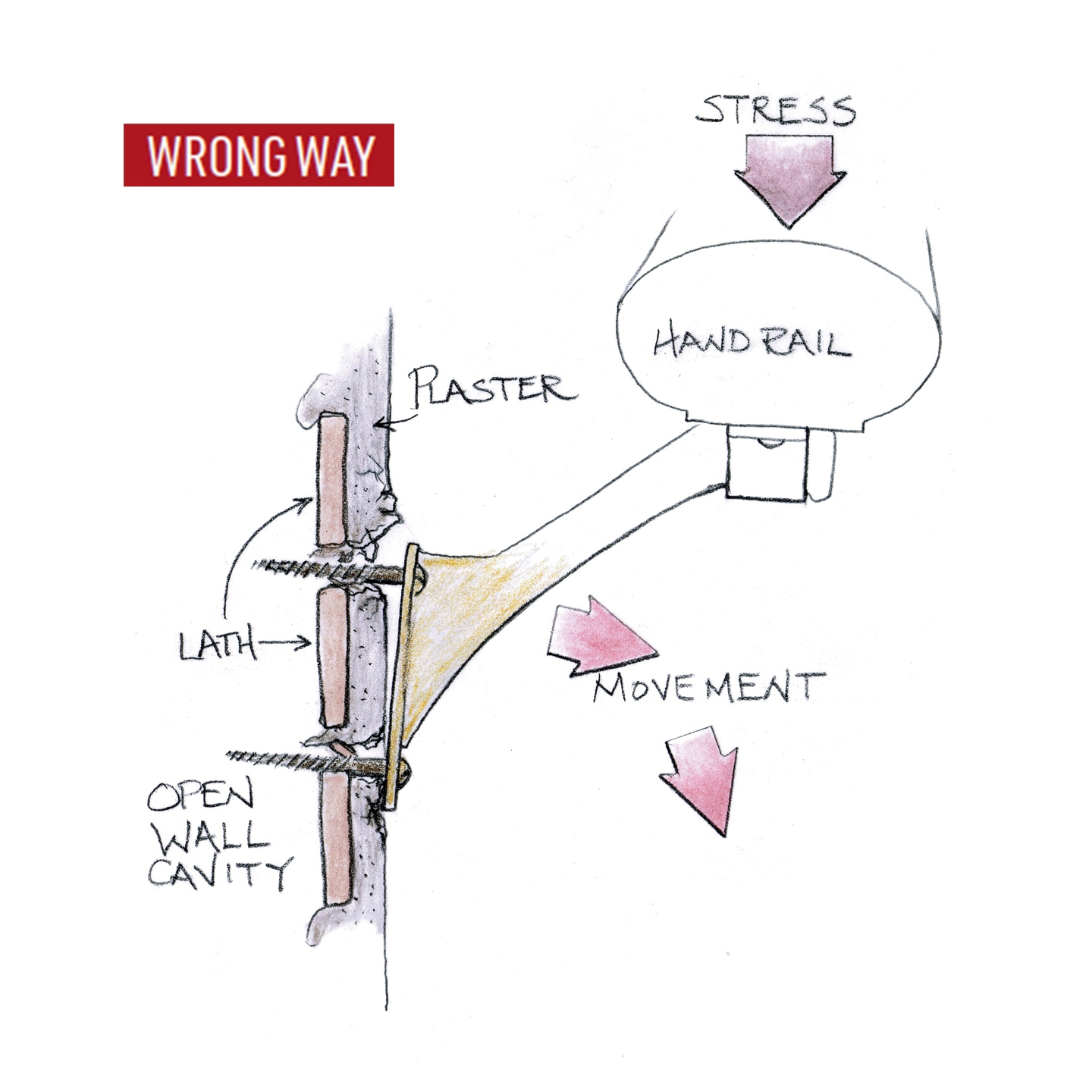
Wrong Way: Jumping at SubstitutesHome-improvement stores are filled with materials that promise “no maintenance.” Be judicious in using them because you may find that components do not match the original design—and many components or systems are designed for quick assembly rather than longevity. Every material has a lifespan. As for modern materials that can be milled to match original wood elements, be aware that these new materials may react to temperature, moisture, UV light, and other factors in a different way from vintage lumber. |
Right Way: Use Traditional MethodsExamine the existing components of your porch or a similar one. Study the details of good old railings, posts, columns, and flooring. Round, bevel, or slope elements to shed water. Caulk and paint are effective and necessary barriers to water, particularly in tiny spaces that may trap water. Even the best materials and design will fail without careful assembly using appropriate, rust-resistant fasteners. |
— Written and illustrated by Ray Tschoepe.
RELATED STORIES