Air-Seal Holes, Gaps, and Cracks Like a Pro
Improve a home's air quality, energy efficiency, and fire safety with a quality spray foam.
Sponsored by Loctite®
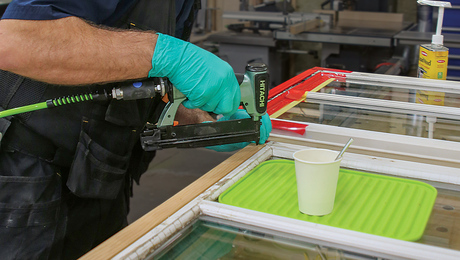
Tyler Grace of TRG Home Concepts is back at another Loctite® 2nd Chance House with a team from Habitat for Humanity working to breathe new life into a run-down Cleveland home. To start, Tyler uses a range of Loctite® TITE FOAM products to seal common problem areas like mechanical penetrations, plumbing pathways, and more. Dive into this hands-on walkthrough to discover best practices for sealing gaps or cracks to ensure a home’s long-term efficiency and safety.
Here’s the Transcript
Welcome back to another Loctite® 2nd Chance House. Today I’ll be assisting the Habitat team to locate and seal any existing gaps and cracks that we might find. I’ll be using the full suite of Loctite® TITE FOAM products, including Loctite® Fireblock Foam where code requires it.
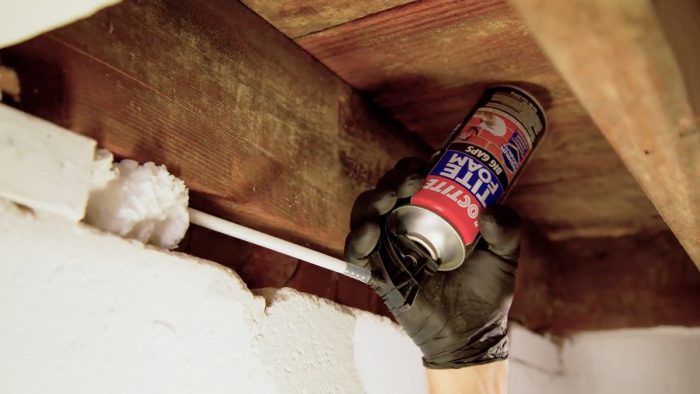
Basements are notoriously leaky, especially in an older home where mechanicals or plumbing have been removed or replaced. Here, I’ll be using the Loctite® TITE FOAM Big Gaps, which is suitable for larger holes. Underneath the stairs there’s a large gap between the floor joist and the foundation wall that needs to get filled with the Big Gaps foam.
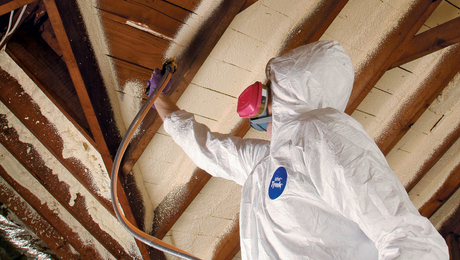
I’m going to start at one side, moving the straw up and down, and work my way all the way to the other side to make sure that there’s no voids in that application. This is going to isolate the interior of the home from the exterior of the home, ensuring efficiency, promoting comfort, and preventing rot. Once it’s cured, we can then go back to cut it flush and paint it.
A Versatile Spray Foam
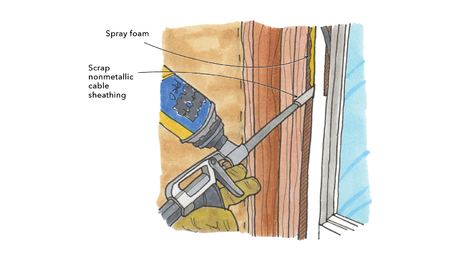
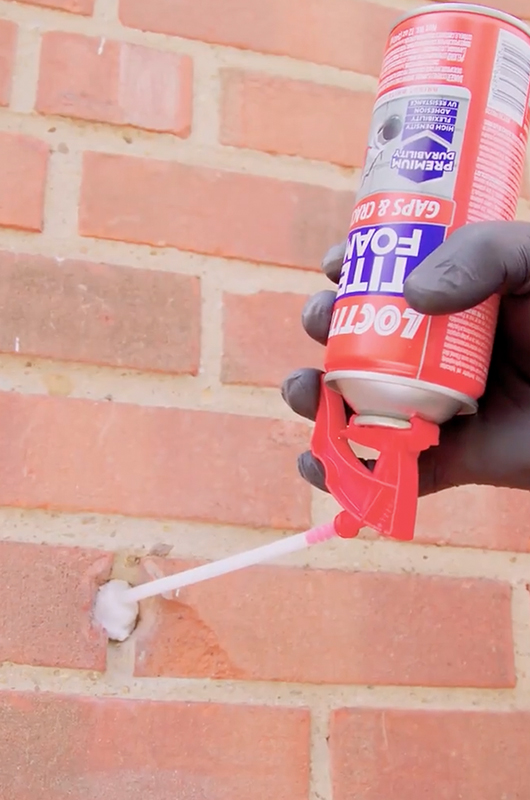
The TITE FOAMs are rated for both interior and exterior use, so I’m here on the outside of this home where I’ll be addressing any additional penetrations that we might find. All of these holes are less than 1 inch, so we’re going to be able to use the Loctite® TITE FOAM Gaps & Cracks to seal them up. As with all their foam products, you’re going to want to give them a good shake prior to use to ensure maximum yield and consistent flow.
Lastly, we are going to address some areas where code requires a fireblock — specifically this bottom plate area where the plumbing pipes penetrate up from the basement. This is not only going to improve the air quality of the home, separating the basement from the living space, it’s also a safety improvement. In the event of a fire, there’s not a path for flames to spread.
The Loctite® Fireblock Foam product is specifically formulated for this application, including the bright orange color. So when an inspector comes and walks this space during a frame inspection, they can ensure that the right product was used.
RELATED STORIES