Podcast Episode 693: Old-House Hazards, Building Larsen Trusses, AI in Construction
The crew talks about work start times, fire-resistant construction, fixer-uppers, building Larsen trusses, and AI for construction.

Welcome to the Fine Homebuilding podcast, our weekly discussion of building, remodeling, and design topics aimed at anybody who cares deeply about the craft and science of working on houses. This is senior editor Patrick McCombe. I’m joined by Fine Homebuilding contributing editor and production manager for TDS Custom Construction Ian Schwandt, Green Building Advisor editor Randy Williams, and producer Cari Delahanty. Please email your questions to [email protected].
You can find previous podcasts and check out the show notes at finehomebuilding.com/podcast
Check In:
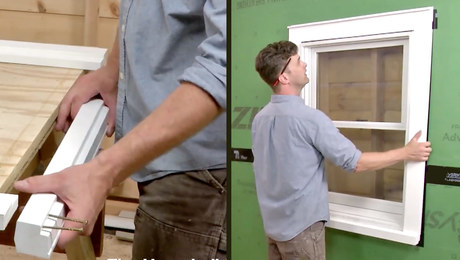
Ian: Assembling casing in the shop. Check out Get Tight Miter Joints.
 |
 |
Randy: New job at GBA
Patrick: Carol’s office AC. Check out Small High-Efficiency Heat Pumps on GBA.
 |
 |
Listener Feedback 1: Chris wrote in answering my question, “How early is too early?”
Chris from Chicago writes:
Greeting Patrick and crew!
This subject is an important one for me as I have always been self-aware about noise or about what I am doing and questioning if it will bother others. When I was rehabbing, I would start at 7 a.m. but not do anything that made noise—compressors, saws, etc.—until 9 a.m. There was always stuff to do that didn’t make noise, like painting, drywall finishing, cleaning and organizing the work area, or the ever-present need to get materials and parts.
Admittedly you will probably never please everyone, but I like to think give it my best.
Cheers Chaps.
Chris
Listener Feedback 2:
Bill from Virginia writes:
I’m a longtime listener and All Access member. I wanted to give a shout-out to Grant for his knowledge base regarding fire protection and commercial construction. Having associated FHB with light-frame wood construction, it was refreshing to hear mention of commercial staples like Xypex, Chicago bar ceilings, and liquid-applied membrane roofing.
What’s next—conversations about blind-side waterproofing, IRMA roofs, SMACNA flashings?
Keep up the good work.
Bill
RELATED STORIES
Listener Feedback 3:
Jerry writes:
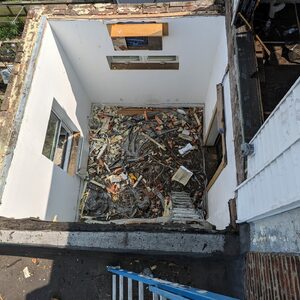
I was listening to a recent episode when a listener wrote in about moving to Pittsburgh to work on a fixer-upper. My advice is to look out for hazardous material. Most professional remodelers have ripped into something they shouldn’t have at a point in their career when they didn’t know better—many still don’t know better.
If you get an inspection before buying a house, ask about hazardous materials. Ceiling tiles, floor tiles, plaster, siding, roofing, vermiculite, and duct wrap can all contain asbestos of various types, not to mention lead paint. Work safe and plan ahead!
Love the pod, thanks for everything you all do!
Jerry
RELATED STORIES
- VIDEO: What to Look for When Buying an Old House
- Podcast Short:What to Look for When Buying an Old House
- Restoration Mistakes and Wins
Question 1: A plan for building Larsen Trusses
Ryan from New Hampshire writes:
I could use some feedback on my current renovation-and-resiliency plan specific to the Larsen trusses.
The house is a 3-bedroom, 1-bath 1950s Ranch with a garage (once separate but attached to the house shortly after construction). Another bedroom was added behind the garage in the ‘80s. It has 2×4 walls with fiberglass batts and sheathing made from 1x boards.
Exterior cladding is cedar shakes with some 1/4-in. fibrous material under the siding. I haven’t tested it yet, but I’m going under the assumption it contains asbestos. The roof has 2×6 rafters and 2×6 ceiling joists. Roof sheathing is also 1x boards.
One significant plus with the house is the large 30-in. overhangs on the front and back, which has protected the cladding and overall structure from weather impact and rot.
My goals are to add resiliency against storms and to reduce oil bills by adding exterior insulation and insulation in the ceiling while being cost efficient and maintaining livability during the process. I’ll contract out for the roof but will be doing the siding and windows/doors myself.
I landed on the Larsen-truss method for exterior insulation primarily because it avoids the challenge of driving long hardware through many inches of foam insulation plus sheathing. Most of the information came from your Feb/March 2024 article “Understanding Larsen Trusses.” I also like the idea that it reduces the potential for condensation by having a more vapor-permeable insulation. I don’t know if I would screw that up by using Zip on the exterior. I’m leaning towards TimberHP batts over blown-in insulation. I’ve never tried to DIY blown-in insulation, and I’ll have to work in stages around the house, so batts seem to be better to do as I go. And I can completely cover the existing cladding and not worry about asbestos remediation.
I am planning on a mid-wall position for the windows based on a BS* & Beer podcast that shared the thermal benefits, and I am still reviewing the various details of the install, sealing, and finishing trim.
I need feedback regarding the construction of the truss. The labor to build the truss is a significant obstacle, but I should be able to get most of them created in a long weekend. Here’s my plan:
- 7 1/4-in. truss with 2×8 insulation batts (approximately R-30 plus whatever the existing wall would be rated)
- 2×6 ripped in half (2×3) truss flanges (I’m thinking the wider flange would offer more flexibility to drive a 4-in. screw and hit the house framing. I’m not sure the TimberHP batts compress enough without compromising performance.)
- ½-in. x ¾-in. dado down the center of flange
- ½-in. x 6-.in. plywood gussets spaced 16 in. vertically, glued and nailed in the dado
- Plywood/Zip bucks around new casement windows and entry door
- Zip sheathing for the integrated air barrier (with taped seams)
- Cladding will be LP SmartSide horizontal clapboards on most of the house, with a change in color or design in the covered porch area
- The bottom of the truss wall: I’m thinking PT plywood to protect from bugs, critters, and moisture. The snow pack in winter can be 20 in. to 30 in.
- Cleat/ledger installed on the back and sides of the house for an inner truss
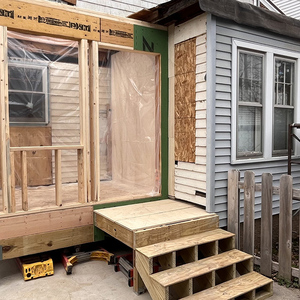
- In the front entry, a new covered porch is being added. The trusses will bear on the porch framing and add structural support to the entry door. The roofline would need to be extended on the tree-side gable end and where the front bedroom bumps out but would currently cover the new walls
Another question: Since the wall system will bear on the porch framing, should I mount the new entry door (36×80 with two 12-in. sidelights) inboard, mid wall, or aligned with exterior sheathing?
Thanks for any feedback. What I really need is a local building consultant.
Ryan
 |
RELATED STORIES
- Podcast Short: Larsen-Truss Retrofit
- GBA: The Benefit of Larsen Trusses
- Retrofitting One Wall at a Time
Question 2: Thoughts on AI in construction?
Daniel writes:
Hi all, how’s it going?
I’ve been thinking about AI lately, as many of us have. Something in a recent podcast episode made me wonder… Are any of you using AI for design, engineering, or project management?
It came to my mind again because of a great article I read today. The article provided a list of AI platforms and apps. The apps are mainly for structural engineers, but one of them caught my eye. It produces structural plans and calculations for low-rise timber-framed structures. In fact, Simpson Strong-Tie is one of its industry partners. It really seems like the industry is entering a phase in which contractors, designers, and DIYers can have access to faster, more affordable, and maybe better structural engineering.
What do you think? Is this tool empowering, or is it shifting responsibility in a bad way?
I love the show and am so happy that you haven’t been replaced by chatbots.
Thanks for all you do!
Dan
RELATED STORIES
Sign up for an All Access Membership
Thanks to Ian, Randy, and Cari for joining me and thanks to all of you for listening. Remember to send us your questions and suggestions to [email protected] and please like, comment, or review us no matter how you’re listening–it helps other folks find our podcast.
Happy Building!
Fine Homebuilding Recommended Products
Fine Homebuilding receives a commission for items purchased through links on this site, including Amazon Associates and other affiliate advertising programs.
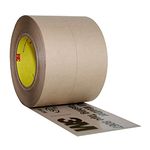
8067 All-Weather Flashing Tape

Affordable IR Camera
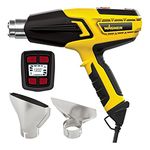
Handy Heat Gun