Podcast Episode 697: Sound Control, Insulating Shed Roofs, and Low-Yield Wells
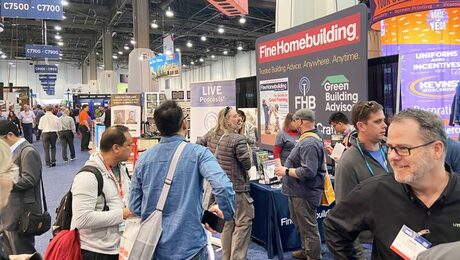
The crew talks about the 2025 FHB Summit and answers questions about sound control, insulating low-slope roofs, and getting more water from a well.
Welcome to the Fine Homebuilding podcast, our weekly discussion of building, remodeling, and design topics aimed at anybody who cares deeply about the craft and science of working on houses. This is senior editor Patrick McCombe. I’m joined by Green Building Advisor editor Randy Williams, Fine Homebuilding contributing editor and production manager for TDS Custom Construction Ian Schwandt, and producer Cari Delahanty. Please email us your questions to [email protected].
You can find previous podcasts and check out the show notes at finehomebuilding.com/podcast
Check In:
Patrick:
- TradesUp Popup Plumbing Basics with Drake Decker, owner Marbledale Plumbing & Heating in New Milford
- Cabinet doors: Tim Snyder’s loose tenon feature
The crew discusses the 2025 FHB Summit
Listener Feedback 1:
Mason Lord of Hudson Valley Preservation writes:
Regarding the Larsen Truss discussion in Episode 693, why didn’t the AI algorithm suggest exterior insulation for Ryan?
RELATED STORIES
Question 1: What’s the best way to retrofit for sound dampening?
Gretta from Minneapolis writes:
Hello FHB pod,
Thanks for reading my last email on Podcast Episode 645. I re-listen to the part where you said I get to be in the hall of fame every time I need a house pick-me-up:)
I wanted to ask your opinions about retrofitting fire and acoustic separation between levels. I have a ballon-framed three-story house with a third-floor studio that’s still open to the framing above and below. I have 2×8 floor joists sistered up to the original 2x6s. I was considering gypcrete over the third-floor subfloor for leveling and fire/sound isolation, but reviews seem mixed about the longevity of this product. I want everything I install to last 100 years. What are your thoughts about gypcrete? What are some of your favorite products that could be installed under finish flooring or on/in the ceiling below to provide some fire and acoustic isolation?
(I am using resilient channel in the ceilings throughout, but that combined with batt insulation in the joist cavities did not seem to do much for sound transmission between the first and second levels.)
Thanks!!!
Gretta
RELATED STORIES
Question 2: Can I insulate a shed roof without spray foam?
Tom writes:
Hello Fine Homebuilding Podcast Team,
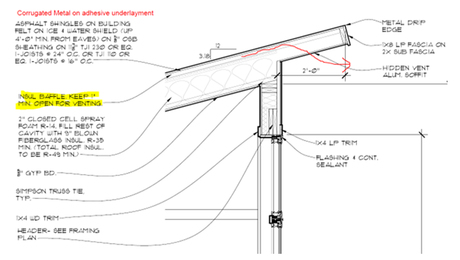
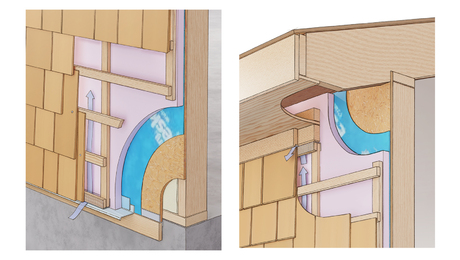
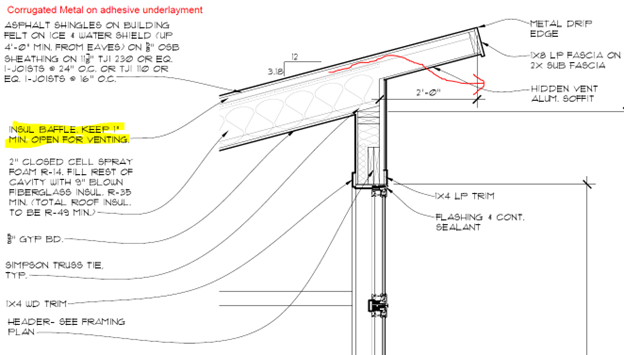
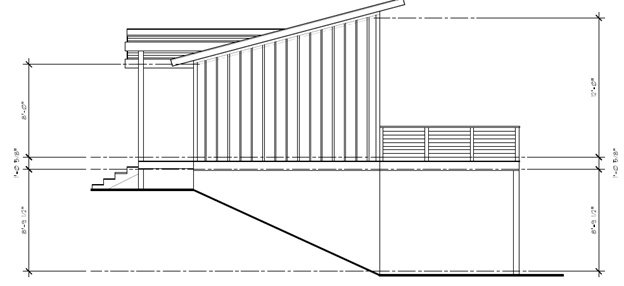
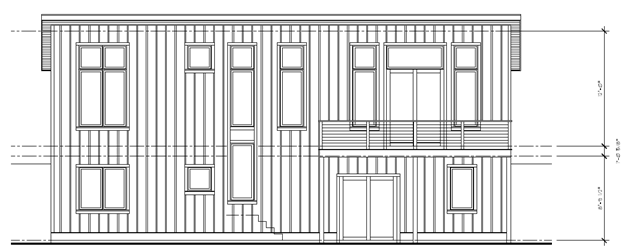
Could you share your opinions on an affordable way to ventilate this roof structure on my simple cabin build in northern Michigan (drawing below)?
We are in USDA Zone 6a/6b because we’re surrounded by large bodies of water here in Leelanau County. The house will be well air-sealed and have good-quality casement windows.
I’d like to avoid using spray foam in the roof, but I’m getting a lot of resistance from insulation contractors. One prominent insulator states he doesn’t believe this 3.18/12 low-slope “shed” roof can be ventilated properly. The airflow path may have trouble exiting the structure (as seen in the image below). Because of this, he recommends a non-vented roof and applying 7 in. of spray foam to the underside to provide the vapor and moisture barrier.
However, I think if the roof is properly vented, then we don’t need spray foam and I can use materials such as cellulose, Spider insulation, or Rockwool.
Can I get your thoughts on this?
Tom M
RELATED STORIES
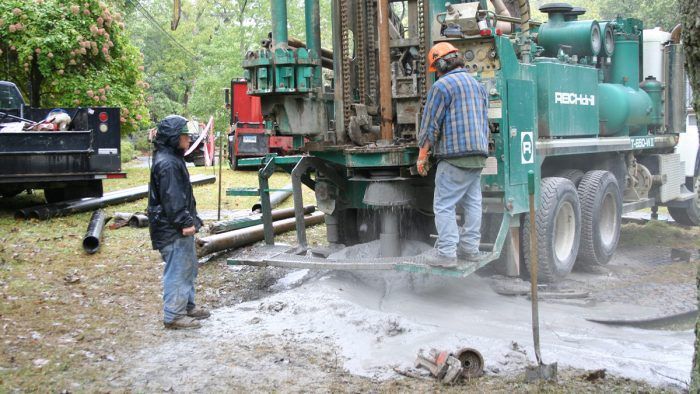
Question 3: What’s the best fix for a low-yield well?
James writes:
Hi Podcast Team
A few weeks ago, my wife came to my shop and said that the toilet was not filling. I went to the basement and checked on our well tank and saw that it was not building pressure, so I shut off the pump and let it sit hoping it would recover. We had recently done multiple loads of laundry and run the dishwasher, so I hoped we had simply run the well dry and it would recover overnight.
The next morning the tank slowly built pressure, but it seemed to slow down a lot as it reached the 60-psi cut-out pressure on the switch. I called a local plumber who diagnosed the problem as a low-yield well. They measured the water level and recovery rate. The plumber estimated we were getting a 1/10th gal. per minute.
He said they would ordinarily recommend a holding tank to for low-yield wells, but ours was so low the best option was to frack the well. The process is expensive and can sometimes “collapse a well,” so I’m hesitant. What are your recommendations for water wells that don’t produce enough water? I appreciate any insights.
RELATED STORIES
Sign up for the online course about kitchen design.
Thanks to Randy, Ian, and Cari for joining me and thanks to all of you for listening. Remember to send us your questions and suggestions to [email protected] and please like, comment, or review us no matter how you’re listening–it helps other folks find our podcast.
Happy Building!
Fine Homebuilding Recommended Products
Fine Homebuilding receives a commission for items purchased through links on this site, including Amazon Associates and other affiliate advertising programs.
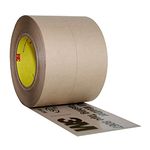
8067 All-Weather Flashing Tape
Handy Heat Gun

Reliable Crimp Connectors