Tiled with Personality
Handmade architectural tile has unmistakable characteristics that can't be captured by manufactured tile.

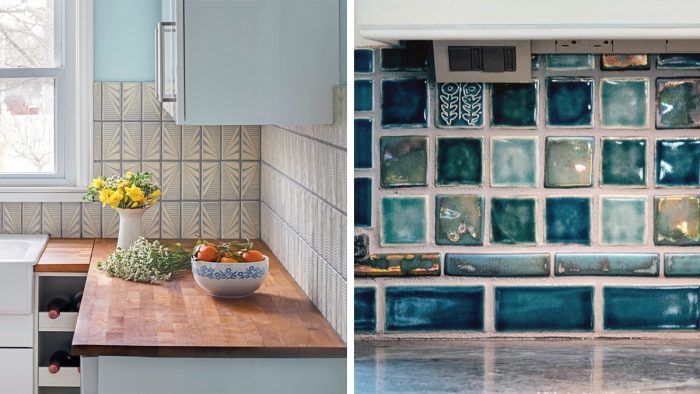
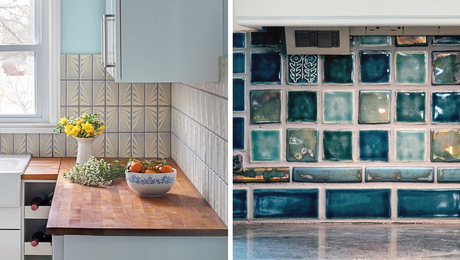
Handmade architectural tile has unmistakable characteristics that can’t be captured by manufactured tile. From stunning proprietary glazes to historically inspired techniques, it is the work of human hands that guide the making of such beauty, every step of the way. You won’t find a mesh backing, of course, and the differences don’t stop there. Art tile is generally thicker than production tile (at up to one-half inch or more); standard sizes like 4×4 are “nominal,” meaning slight size variations will allow the tiles to create their own rhythm once they’re part of a backsplash or fireplace surround. Quality handmade tile almost always shows the artistic signature of its maker.
Bring on the Show
|
Today’s art-tile makers draw inspiration from the long history of ceramics, producing tiles that recall influences as diverse as the colorful and intricate geometric patterns and arabesques of the Hispano–Moresque tradition; tin-glazed, blue-and-white Delft tiles; and the hand-sculpted, pictorial qualities of early Arts & Crafts Movement tiles. Just as the makers of historical clay roof tiles often left “signatures” in the form of fingerprints, the work of the best makers of handmade tile are easily recognized by certain characteristics.
That’s quite true of Motawi Tileworks, where all designs originate (or are refined by) founder and owner Nawal Motawi. Each decorative tile is a miniature work of art; you can buy one individually to frame and hang. Or you can use multiples for an architectural installation.
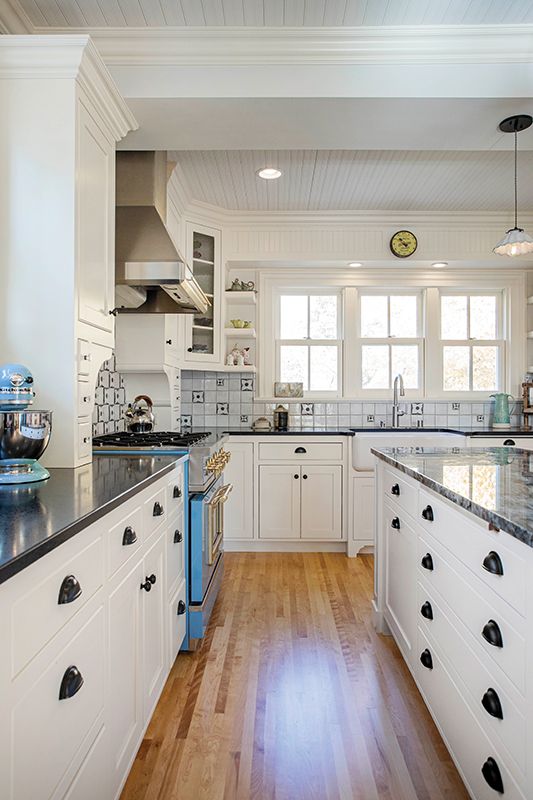
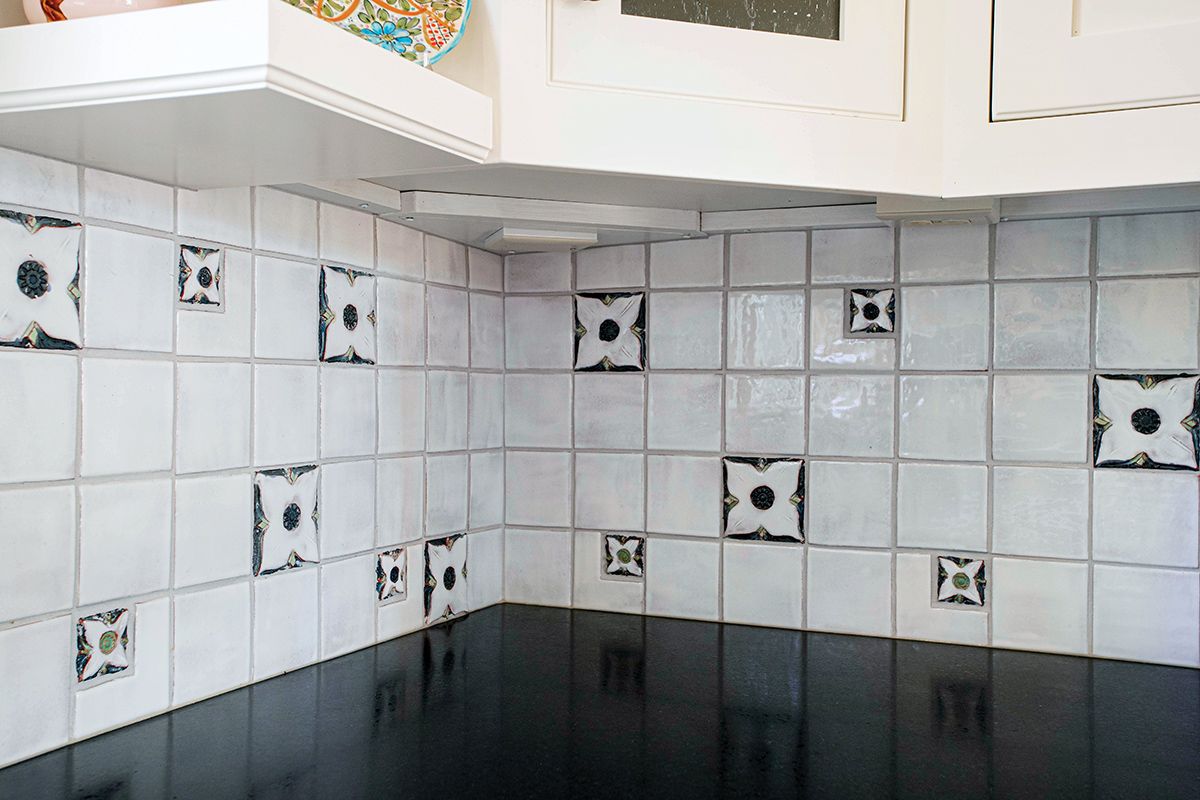
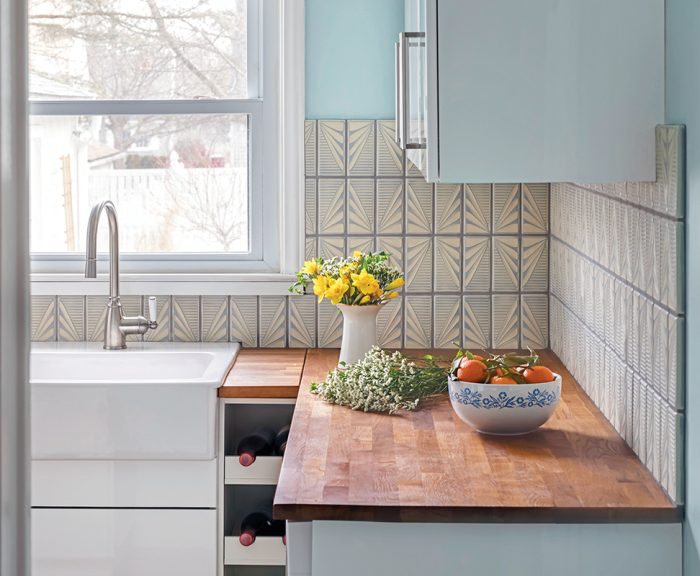
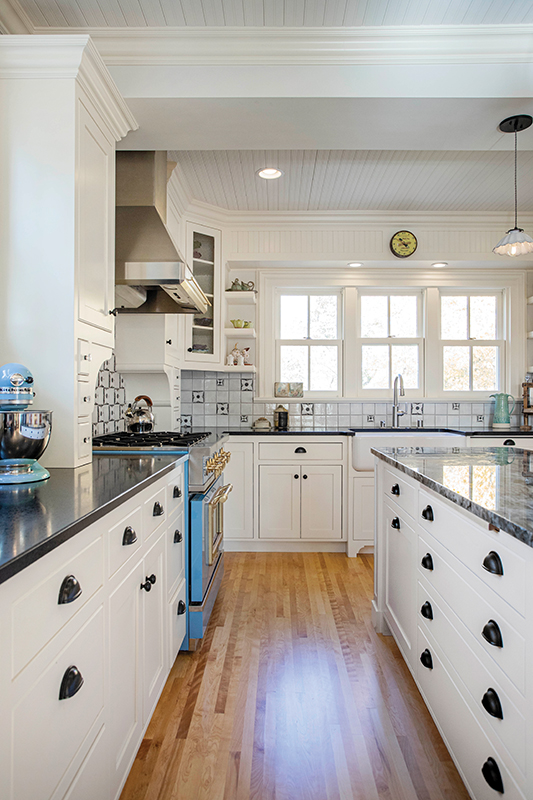
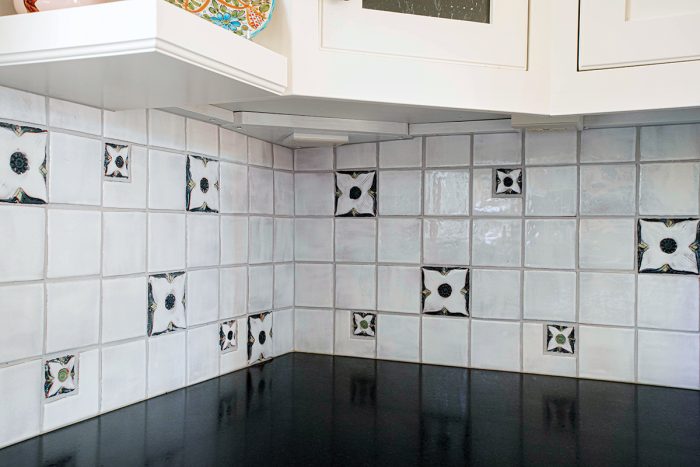
Adding Lift to a White KitchenAll-white kitchens can be boring and cold, but not here. Sprinkled across an undulating and often broken backsplash, ‘Medieval Floral’ accent tiles from Clay Squared to Infinity bring a sense of playfulness to monochrome white. The tile combines two of owner Josh Blanc’s favorite tile-making techniques: hand carving and impressing clay with stamps. Individually, the hand-carved tiles resemble dogwood blossoms, but they create an unexpected rhythm across the backsplash. The robin’s egg–blue range is an intentional color accent; the owners were going for a tapestry effect in what they envisioned as a French Provincial kitchen with Arts & Crafts touches.
|
Beyond the palette of rich, earthy colors, Motawi tile sets itself apart by its shape, thickness, and glaze characteristics. “If you look at our field tile, it’s a little pillowy on the surface,” says Motawi. The tile is concave on top and sculpted down toward the edges, giving each one “soft shoulders.” The effect is subtly three-dimensional with a hint of trompe l’oeil: Somehow, the hard, durable surfacing material becomes visually soft and tactile.
For Cha-Rie Tang and Mei-Ling Hubbard of Pasadena Craftsman Tile, telltale signatures include their custom hand carvings and color-drenched glaze blends that combine tiles in up to six distinct glazes. The hand-carving expertise evolved from Cha-Rie’s early work reproducing relief tiles from antiques made by Arts & Crafts master potter Ernest Batchelder. That led to carving her own slip-cast designs, most of them specifically made for installations including kitchen backsplashes and outdoor fountains.
A Splash of ColorArt tile can be expensive, as decorative tiles (called decos) are often sold per piece at prices that would buy an entire square foot of marble tile at a builder’s supply store. If budget is a concern, think small: Even a three-tile mural might make a big impression behind a range or the sink, as can short runs for a backsplash.
|
The most complex are tile murals covering the entire surface of a three-dimensional installation. The design is sketched, and then redrawn to scale and impressed into the clay. Carving follows, then firing and glazing. Even though each partner in this mother–daughter team works individually, they use the same techniques, glazes, and firing protocols, creating consistency.
Other makers have their own signatures. Playful qualities are inherent in the tiles made by Clay Squared to Infinity. That’s because owner Josh Blanc has never relinquished his love for finding and pressing items like wood-block stamps from Indonesia into clay . . . or using a carved rolling pin to create a pattern. You’d never guess that his first decorative tile design, the hand-carved ‘Medieval Floral’, is impressed with a vintage button.
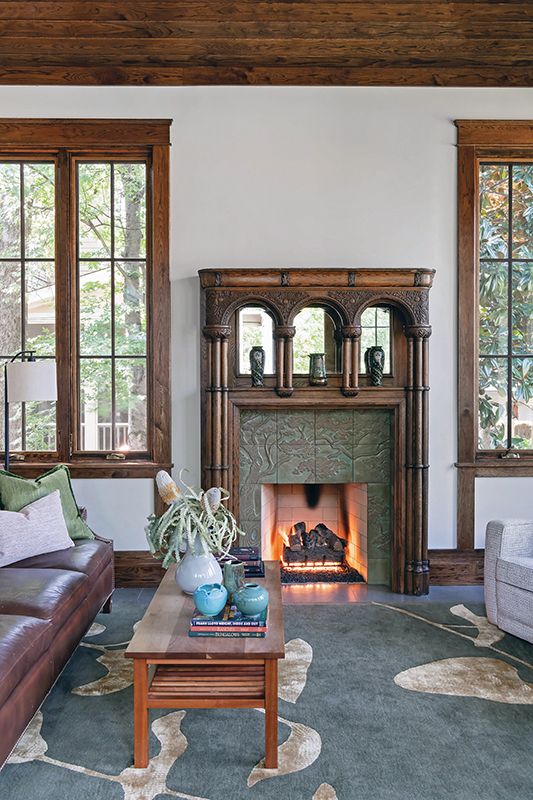
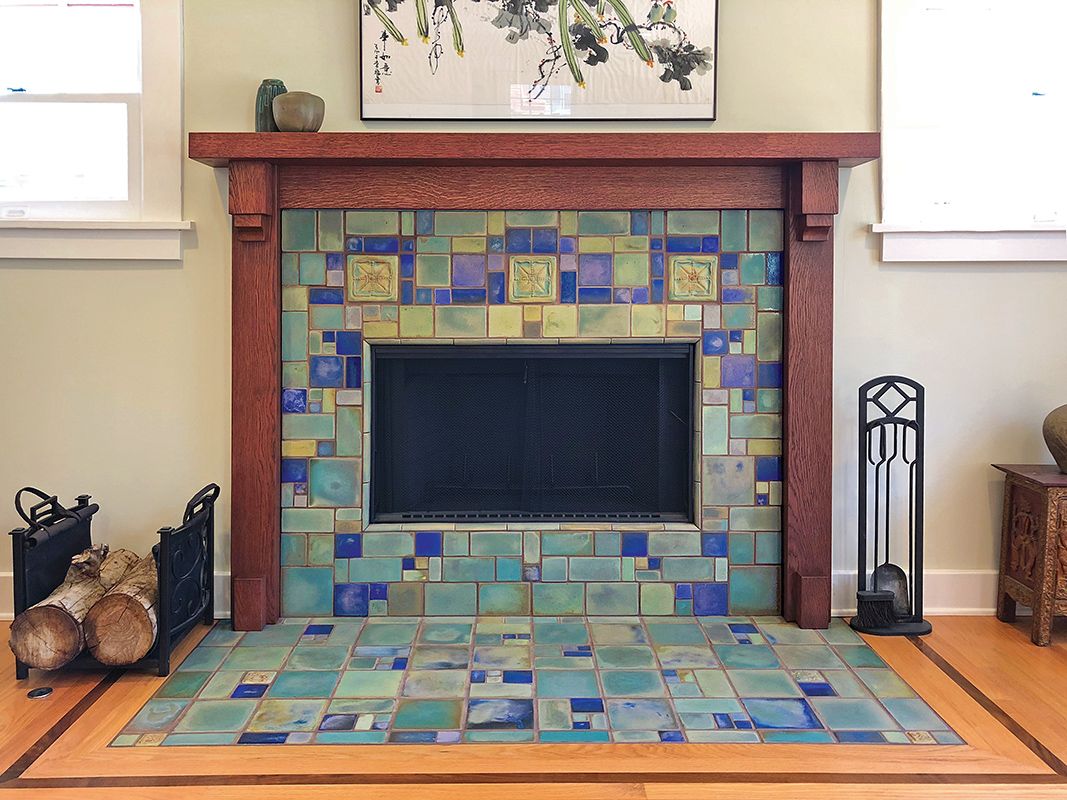
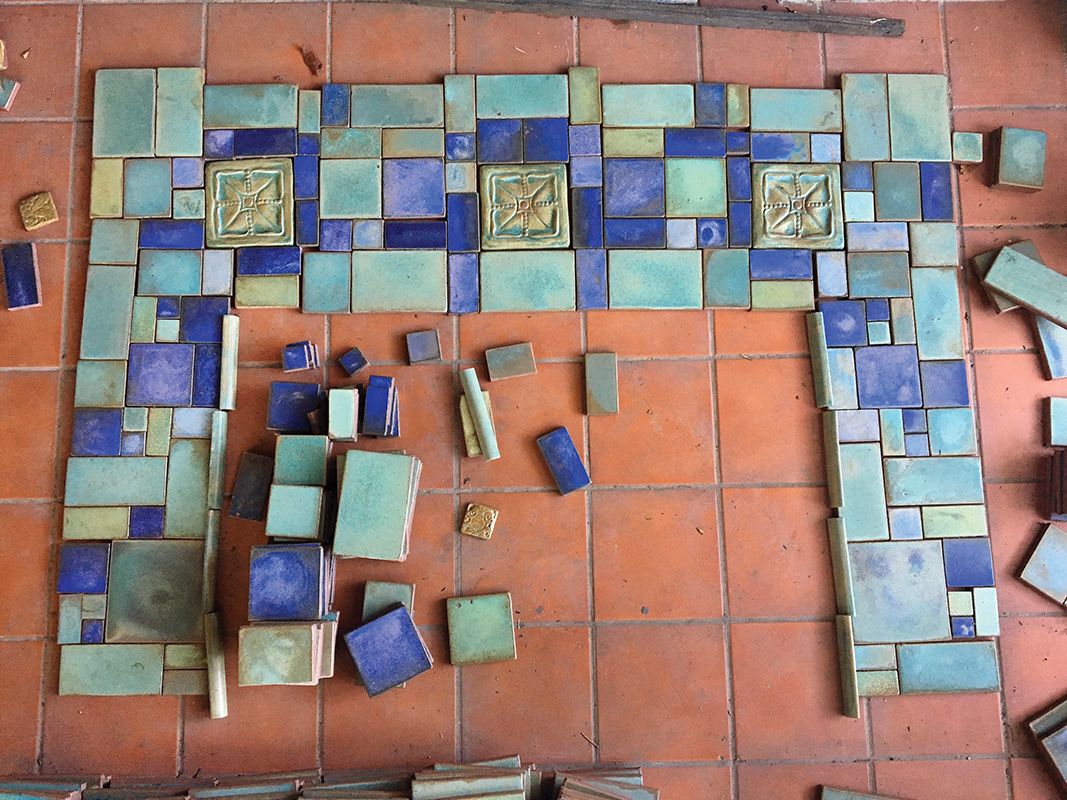
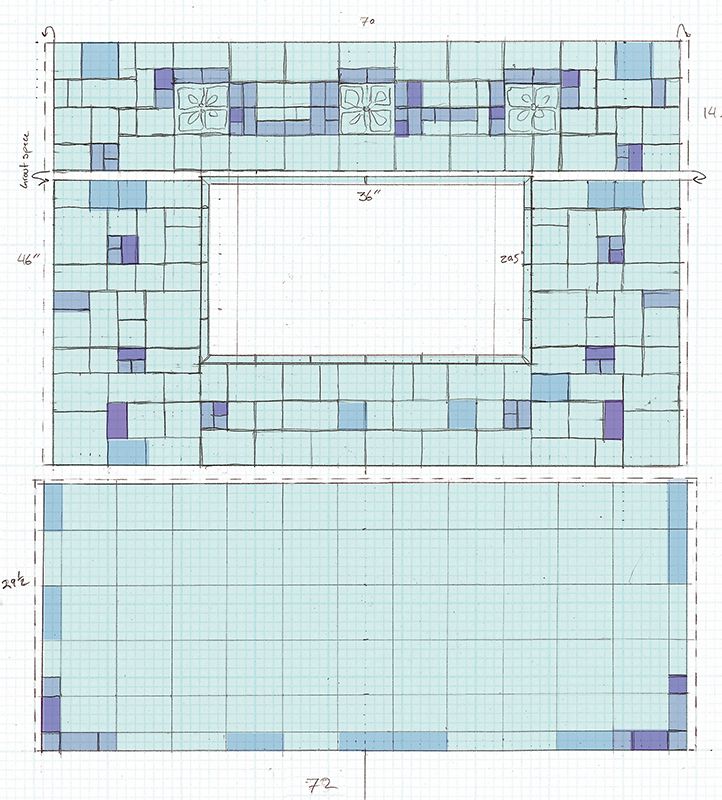
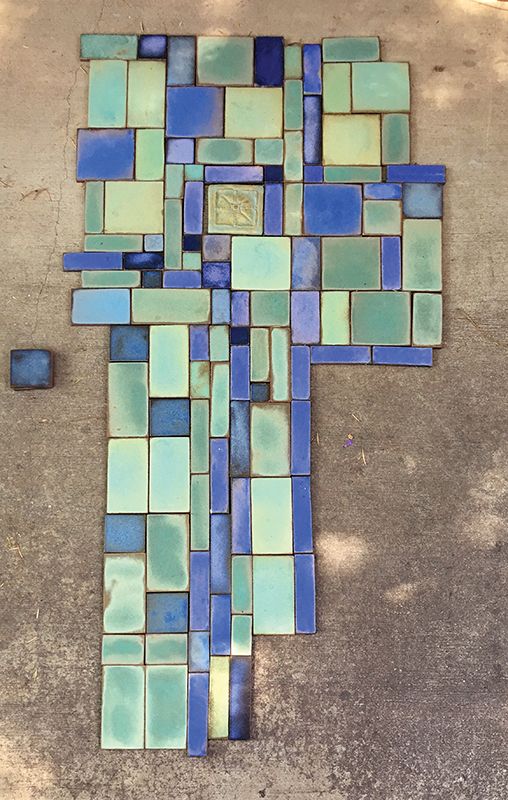
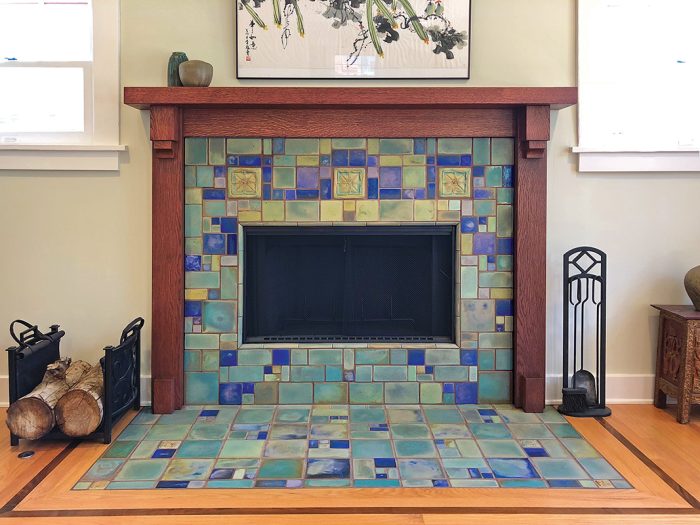
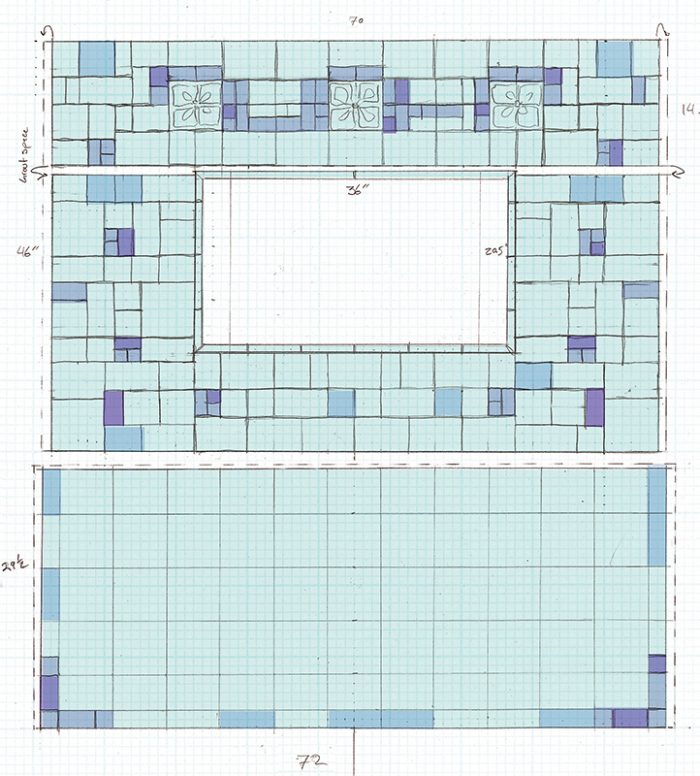
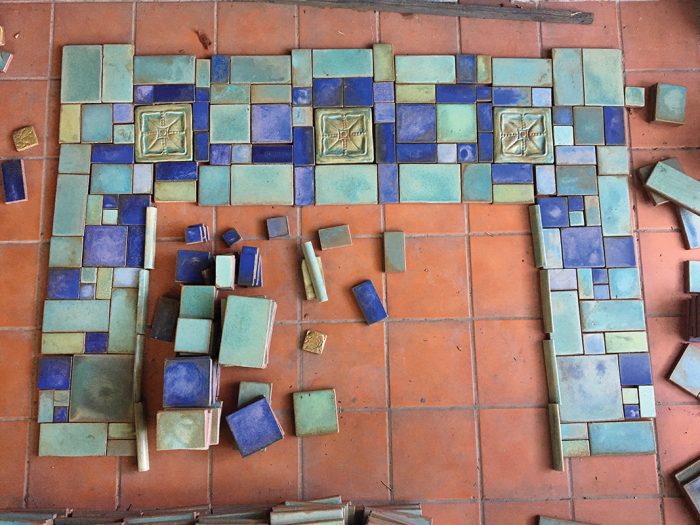
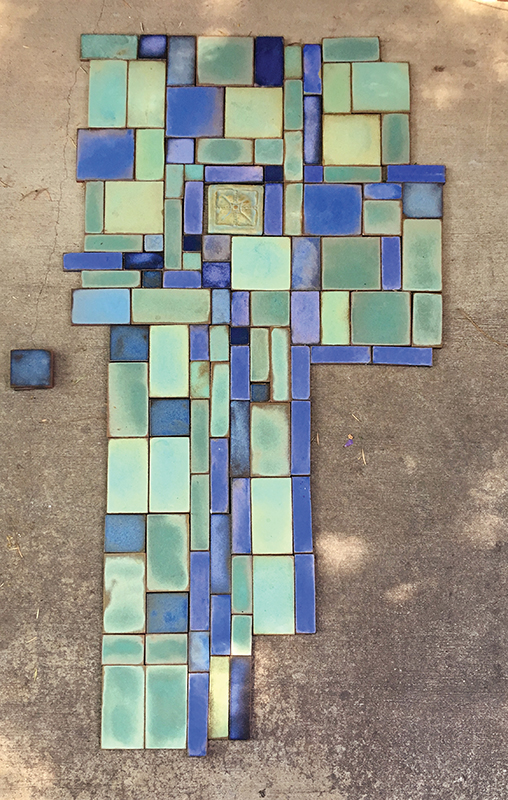
Make a PlanCha-Rie Tang and her daughter, Mei-Ling Hubbard, worked collaboratively on a fireplace surround in a custom blend of blue and green tiles for a beloved client’s Craftsman Bungalow. Mei-Ling designed the tile plan, while Cha-Rie did the dry lay and moved things around as she saw fit. “I often treat my tile plans as my road map,” Mei-Ling says. “Cha-Rie likes to just start putting tiles together in ways that feel right.” The 6×6 deco tiles are reproductions of a Batchelder design called ‘Leaf Rosette’. While Batchelder low-fired his tiles, leaving them prone to chipping and wear, both women prefer to high-fire theirs to 2100 degrees F. for greater durability. Says Cha-Rie: “Customers want the nostalgia but not the problems.”
|
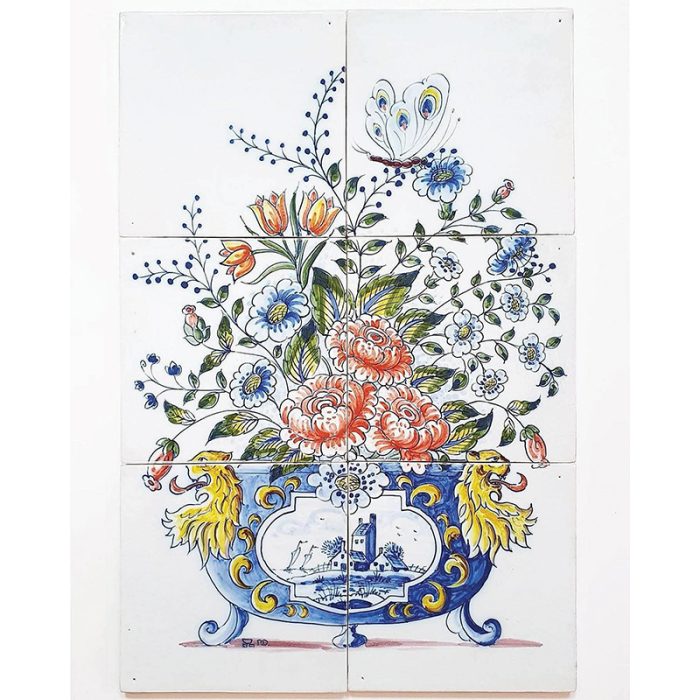
The historic Pewabic Pottery is known for the stunning, iridescent glazes developed by founder Mary Chase Perry Stratton more than a century ago. Diana Mausser of Native Tile interprets the Hispano–Moresque art tile of 1920s California, adding her own design inspirations and refinements. The makers at Dutch Tile still hand-ink and -paint every vignette on tiles that look as though they were made in the 16th century.
Handmade tiles can transform a plain room into a vibrant living space with a nod to history. A white backsplash in an all-white kitchen is stark when the tile is uniform but not so when art tile comes into play. A fireplace surround in even a single, dark color is warm and inviting when the surface has some irregularity or texture that gives it movement. Subtle changes in the apparent color occur with every shift in sunlight or lamplight.
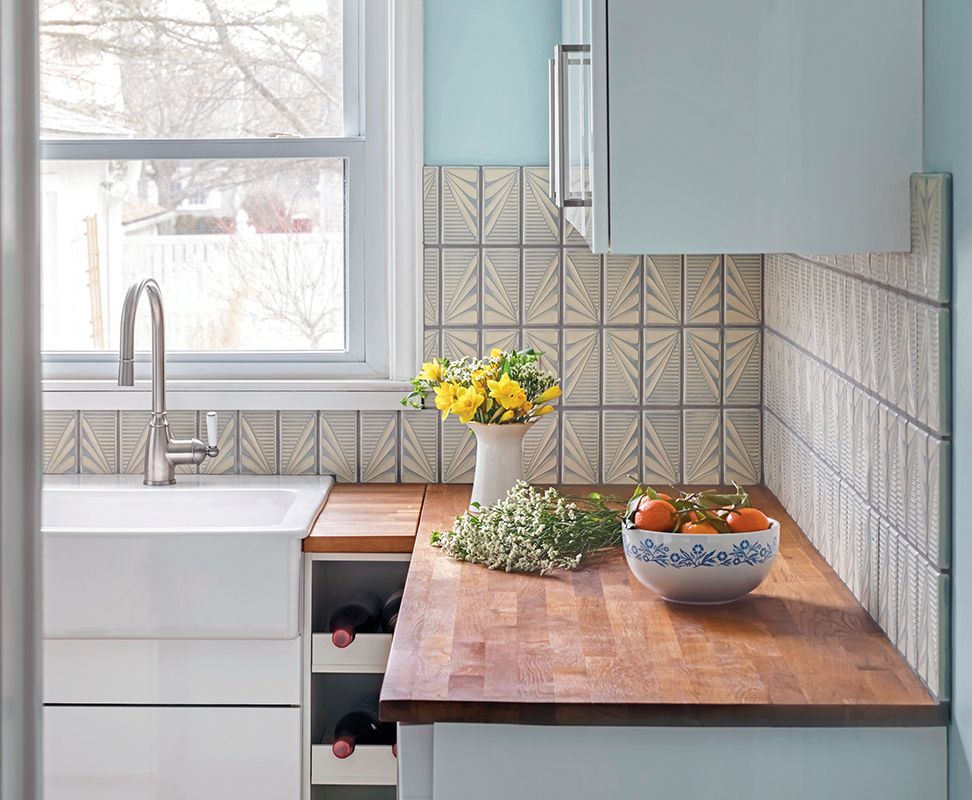
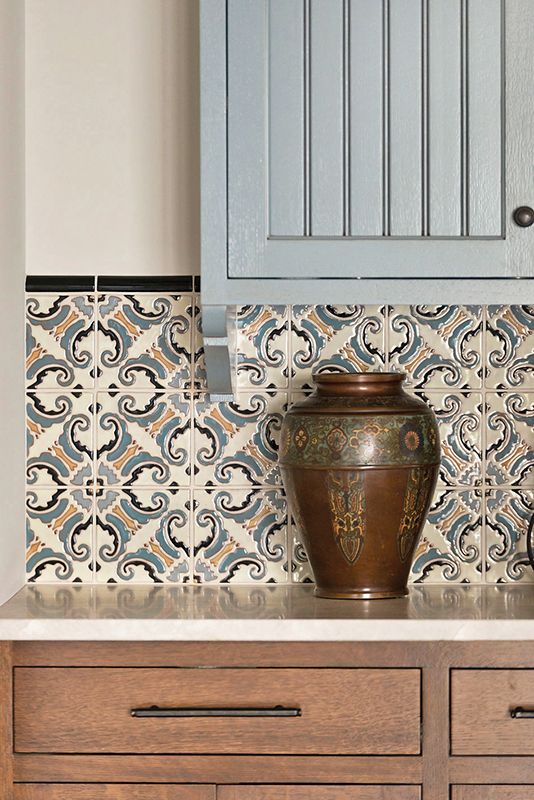
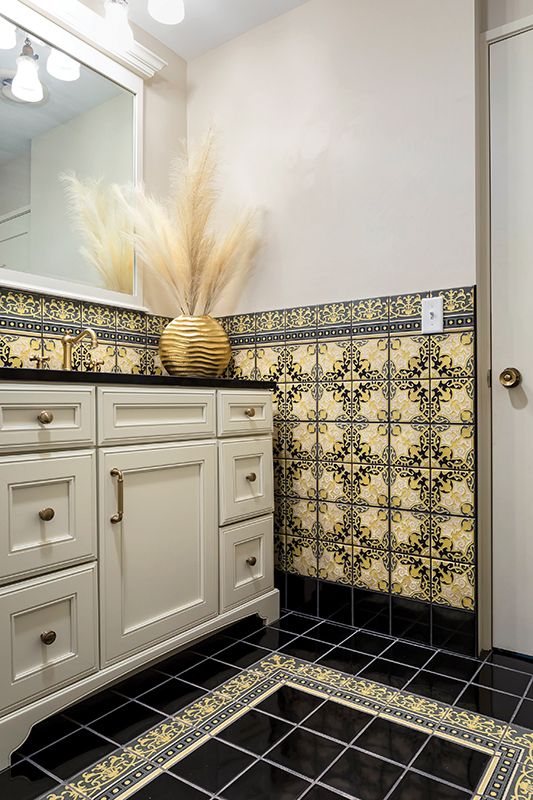
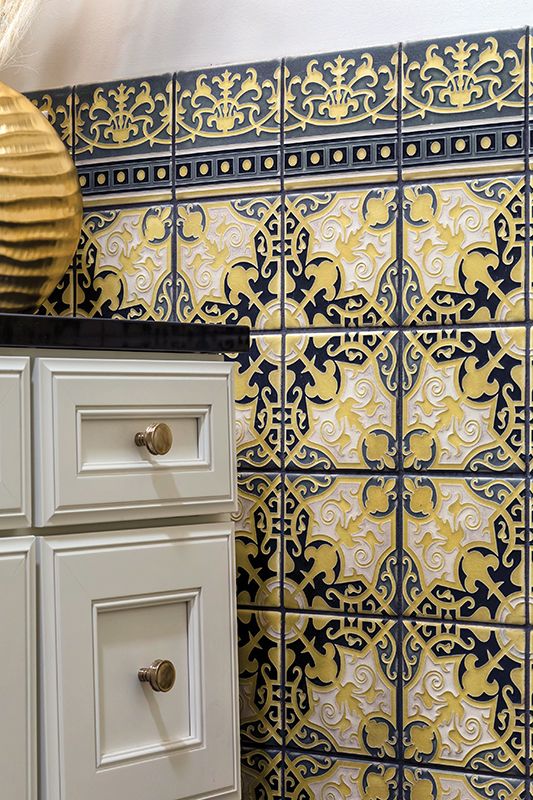
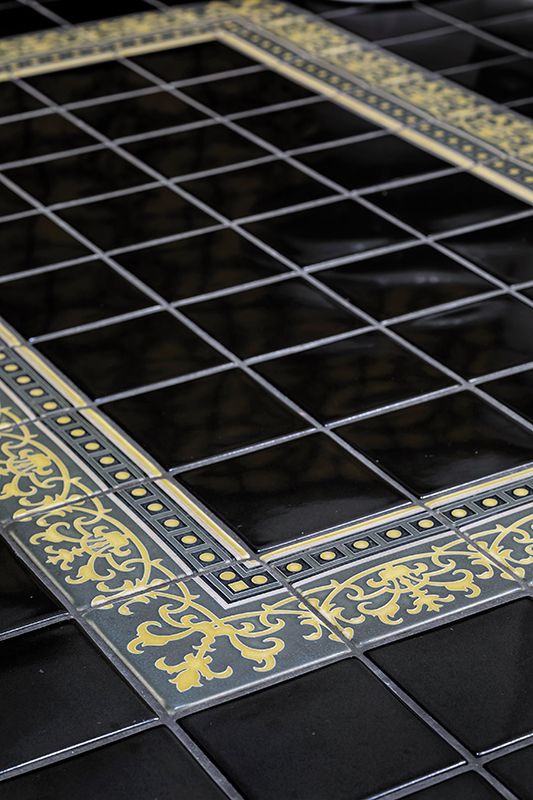
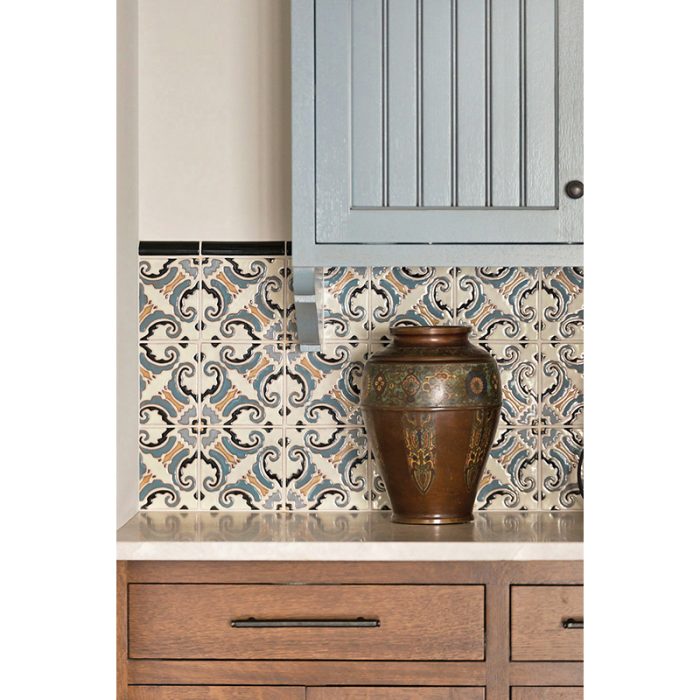
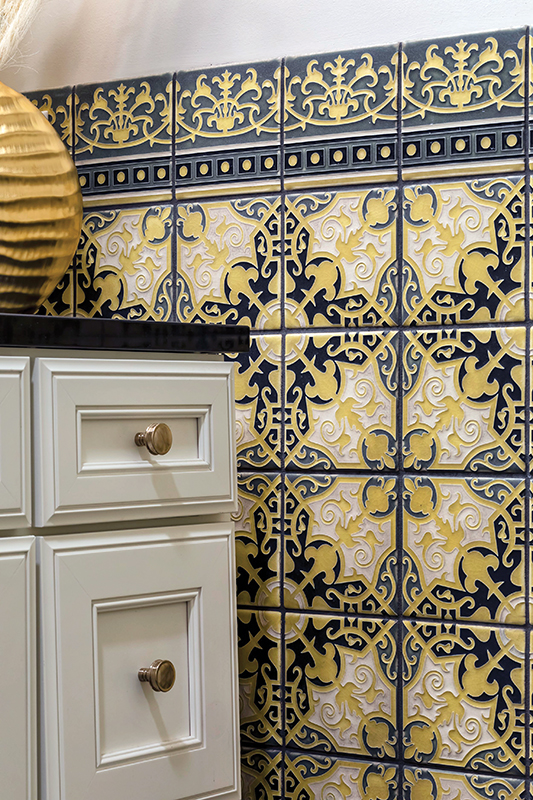
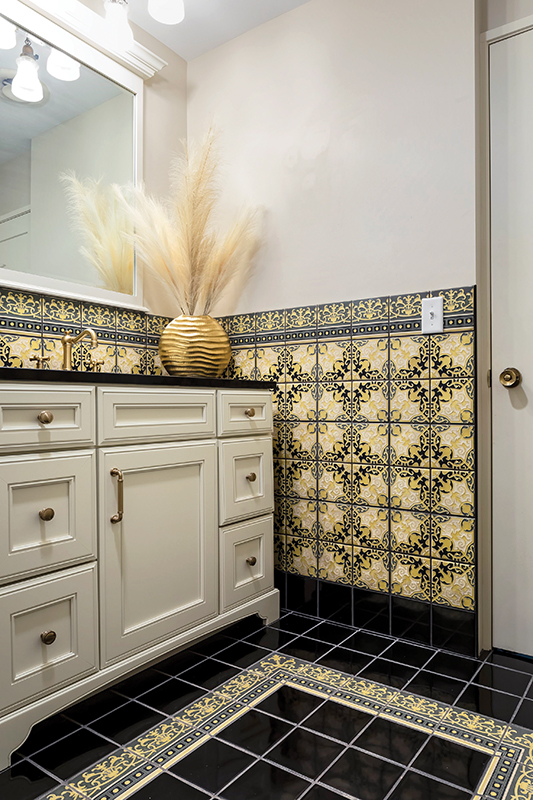
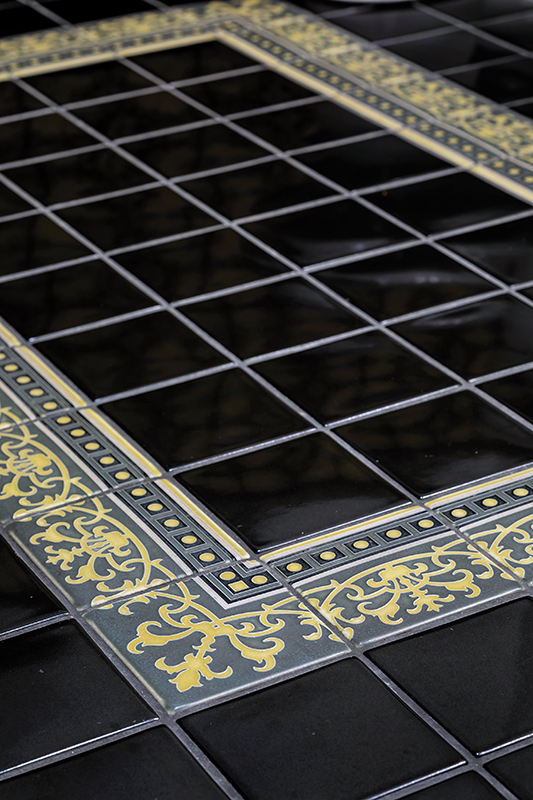
New InspirationsKnown for its Arts & Crafts designs and earthy colors, Motawi Tileworks is branching out into new, historically inspired styles. There’s a soon-to-be-released line of Victorian-inspired tiles named ‘Brownstone’ and, shown here, the ‘Havana’ line. A collection made with the raised-line cuenca technique, ‘Havana’ is inspired by Cuban colonial tiles. Like their antecedents, these tiles create interlocking, kaleidoscopic patterns, juxtaposing complementary colors. Because they lay out nicely in grids of four, the tiles lend themselves to backsplashes and wainscots; a run of ‘Havana’ border tiles creates the appearance of finished edging at the top. They’re great on floors, too: The raised lines create traction on a bathroom floor; also, tiles can be laid to create an elaborate or simple rug-like pattern.
|
— Written by Mary Ellen Polson.
RELATED STORIES
-
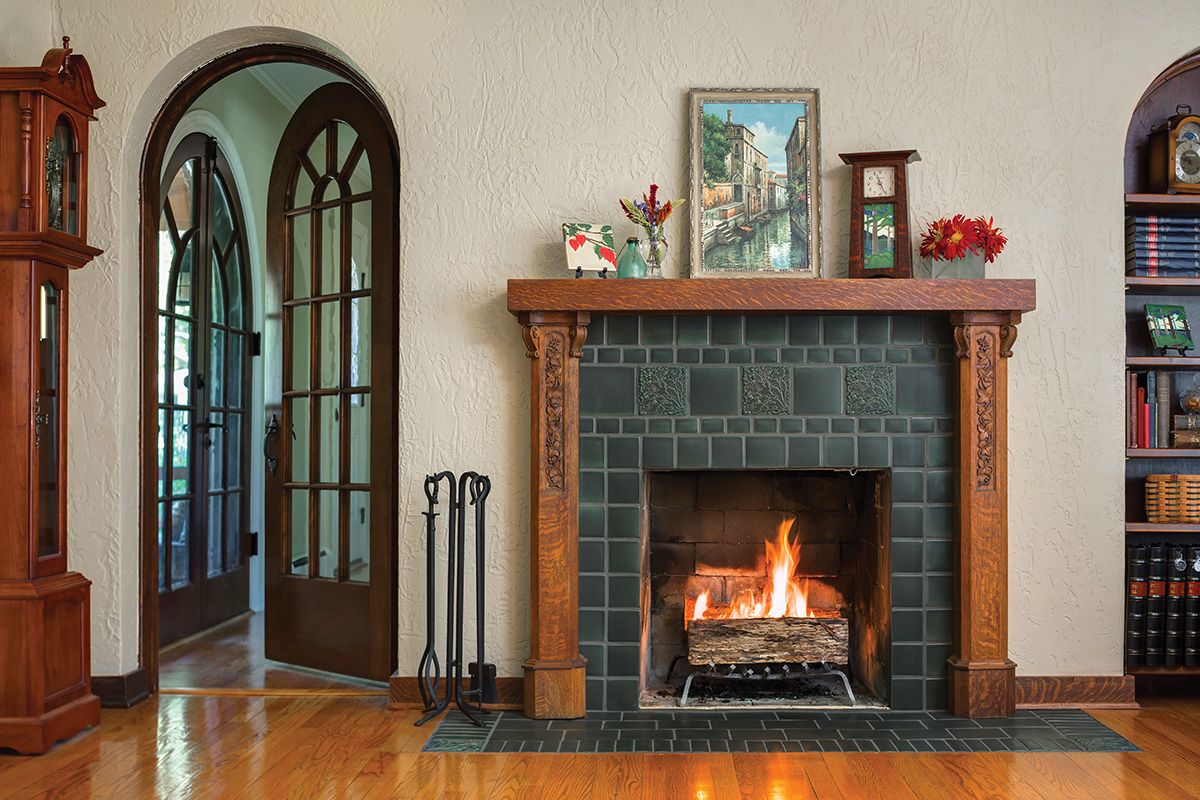
At the Hearth: Using artisan-made tile in fireplace surrounds is a popular motif of the Arts & Crafts Revival, as it was during the 1910s and 1920s, when brick and stone also were used. A matte-finished slate glaze gives this fireplace surround designed by Motawi Tileworks a richness appropriate to the English Tudor manor.
-
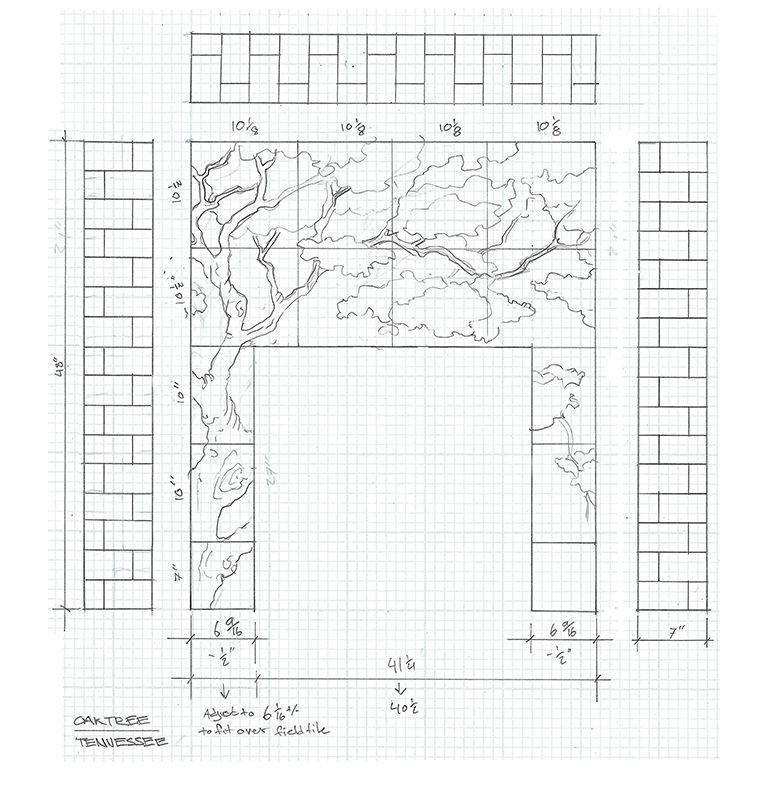
The design is drawn at 108 percent scale to allow for clay shrinkage. Photo courtesy of Beth Haley Design.
-
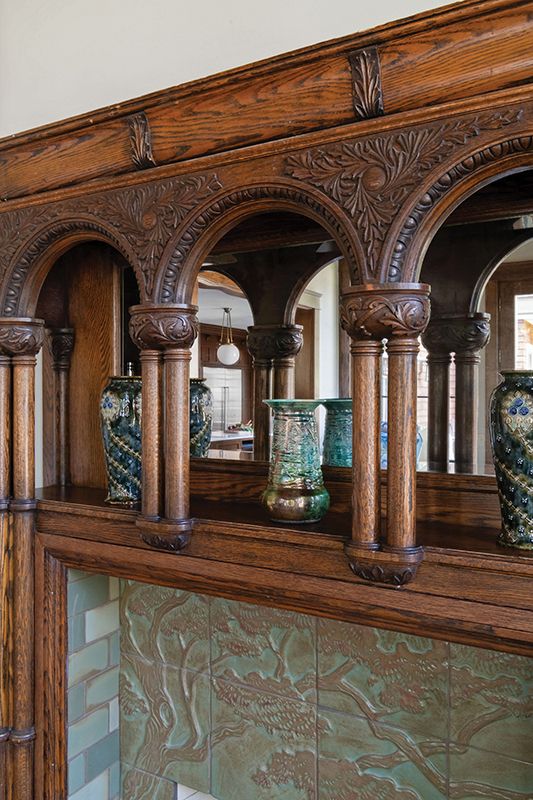
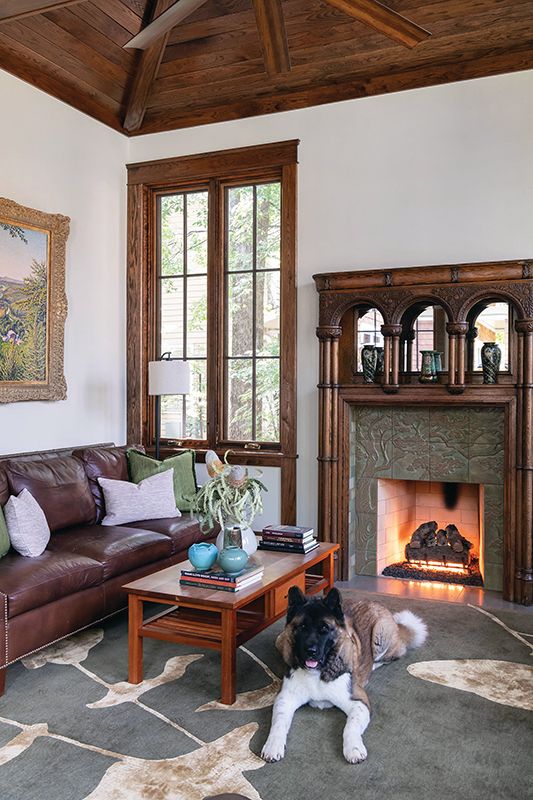
The woodsy bas relief reflects motifs carved into the vintage mantel. Photo courtesy of Beth Haley Design.
-
Mei-Ling Hubbard's hand-carved tile mural was inspired by the client’s own personal taste and color sensibilities.
-
To create this bas-relief tile mural for the fireplace of a 1928 American Foursquare, Mei-Ling Hubbard of Pasadena Craftsman Tile drew the design at full-scale on vellum, then laid the vellum on wet clay. She traced the design onto the clay, then carved it down over several days. Photo courtesy of Beth Haley Design.
-
Rendered in bone and ice blue, the backsplash in this Motawi “Footlights” kitchen is both energetic and easy on the eyes.
-
Alternating the placement and size of the floral accent tiles (shown in Marshmallow) creates movement and a lighthearted air.
-
Josh Blanc of Clay Squared to Infinity impressed a vintage button to create the central pistil in his first decorative-tile design, ‘Medieval Floral’. It’s hand-carved from exterior-grade terra-cotta clay.
-
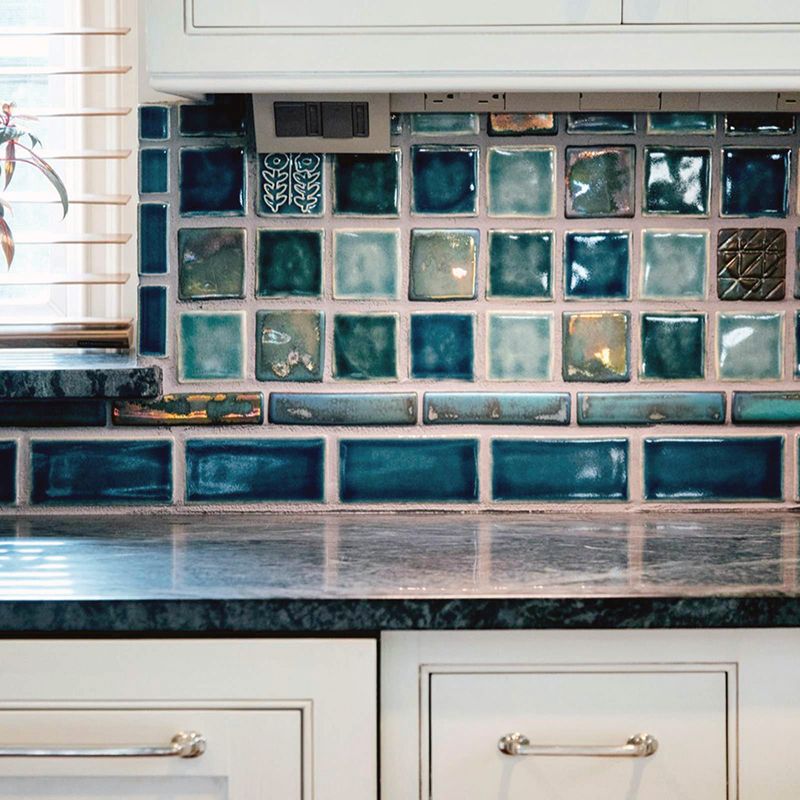
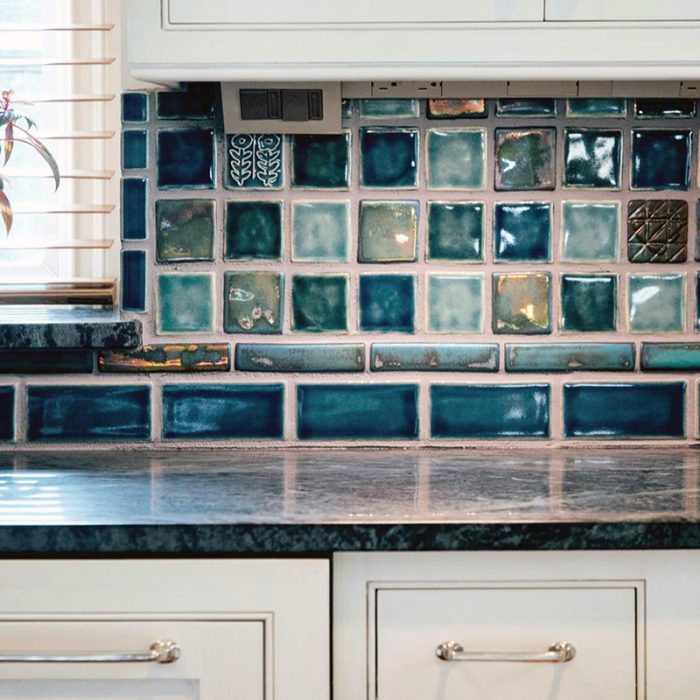
A backsplash of Pewabic’s iridescent tiles is the showstopper in this kitchen. The shimmering, almost liquid appearance results when metallic oxides in the glaze bond chemically to the tile during the firing process.
-
Diana Mausser of Native Tile & Ceramics created a traditional cuenca (raised-line) backsplash for a 1931 Spanish Colonial Revival home in an unusual location—Minnesota. She chose a cooler palette than typical of those in the Southwest. The design features soft grey-blues, dusty rose, and black on a warm cream background. Photo by Brica Wilcox.
-
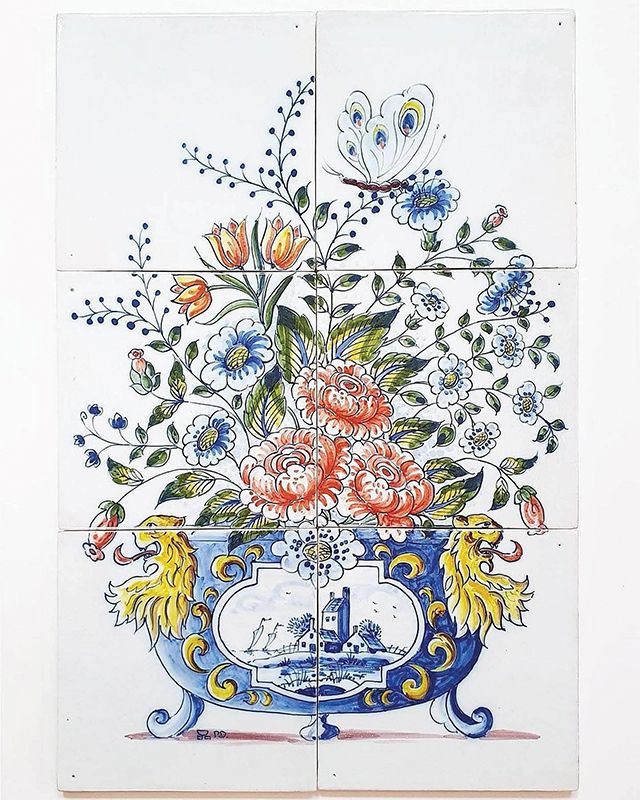
Made up of just six tiles, a bouquet of flowers in blue, red, and tulip-red and -yellow bursts into bloom in a custom mural from Dutch Tile. All tiles are made, using traditional methods, in Holland.
-
Resplendent in an array of greens and blues, the finished fireplace follows the dry layout closely but took a few liberties with the sketch plan.
-
In the dry lay, Cha-Rie Tang followed the general idea of the drawing but rearranged some tiles by eye.
-
Mei-Ling Hubbard’s to-scale drawing shows the bungalow fireplace surround.
-
She first composed a “leg” of the surround in a pleasing color combination.
-
This luxe powder room showcases cuenca-style tiles from the Havana collection in the Bumblebee palette of black, yellow, white, and soft grey in a matte finish. When four tiles are placed together, they form a near-kaleidoscopic pattern of interlocking arabesques to create a sense of rhythm and movement.
-
Edged with a geometric dash-in-circle accent strip, Havana border tiles in soft grey and yellow complete the powder-room wainscot, much as chair rail does for wood or wallpaper.
-
On the floor, ‘Havana’ border tiles enclose a rectangular grid of glossy black tiles, effectively creating a ceramic rug.